
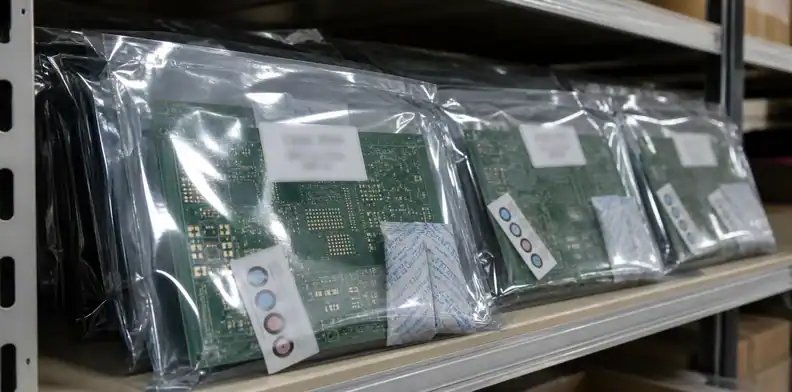
Quick Answer: PCB shelf life is not a single calendar number. It depends on surface finish, packaging, humidity exposure, handling after opening, solderability evidence, and the product risk. Treat old boards as a release decision: identify the finish, confirm sealed storage, check age, decide whether solderability testing is needed, and record approval before SMT or shipment.
Key takeaways
- OSP, ENIG, HASL, immersion silver, and immersion tin age differently.
- A sealed dry package and an opened bag should not receive the same release decision.
- Expired shelf life does not automatically mean scrap, but it does require evidence.
- Put storage rules into the RFQ so delay risk does not appear after boards arrive.
Table of Contents
- Treat shelf life as a release decision
- Start with surface finish and packaging history
- Use realistic planning ranges without pretending they are universal
- Check solderability before using aged boards
- Control the clock after the bag is opened
- Decide when to bake, retest, rework, or scrap
- Put storage and delay terms into the RFQ
Treat shelf life as a release decision
Buyers often ask a simple question: can we still use these PCBs? The useful answer is not a yes-or-no answer based only on date code. PCB shelf life is a release decision that combines finish chemistry, storage condition, packaging, product risk, and assembly process. A sealed ENIG lot stored in a controlled warehouse is not the same as an opened OSP lot that sat near a humid production floor.
Release call: Old boards can move forward only when age, storage, surface finish, and solderability risk have been reviewed together.
The practical risk is solderability. A board may still look clean but wet poorly during soldering. Poor wetting can create opens, weak joints, rework, or hidden reliability risk. The second risk is traceability. If a buyer releases old stock informally, the next defect discussion has no clean record of who accepted the risk and what evidence supported the decision.
QueenEMS usually treats aged bare boards like a small gate before assembly. We ask what finish was ordered, when the boards were produced, how they were packed, whether the bag is still sealed, whether humidity indicators changed, and whether the product has high-reliability requirements. That approach is more useful than applying one shelf-life number to every PCB.
The release gate also protects purchasing. If the boards are acceptable, the buyer can release them with evidence instead of hesitation. If they are risky, the buyer can stop the build before components, labor, and test time are added. That is why this topic belongs in the quote and production planning stage, not only in the warehouse.
Start with surface finish and packaging history
Surface finish is the first branch. OSP protects copper with an organic coating, but it is usually more sensitive to handling, heat history, and storage exposure. ENIG is more stable for many storage situations, but it still needs clean handling and proof that the finish was built correctly. HASL has a solder coating and can be robust for many products, but it may not fit fine-pitch or flatness requirements. Immersion silver and immersion tin need extra care because tarnish, oxidation, or intermetallic growth can change solderability.
Finish signal: A shelf-life answer that does not name the surface finish is incomplete.
Packaging is the second branch. A vacuum-sealed or moisture-barrier bag with desiccant and a humidity indicator has a stronger evidence trail than boards stored loose in cartons. The lot label, date code, bag condition, and warehouse environment all matter. A supplier’s stated shelf life usually assumes clean boards, correct packaging, and controlled storage. Once the bag is opened, the practical clock changes.
Use this early when comparing finishes. If a buyer expects uncertain storage, long transit, or delayed assembly, the finish decision should be part of the HASL vs ENIG PCB surface finish discussion, not a late receiving argument.
In real purchasing work, the missing piece is often not the date. It is the storage story. A carton may show a delivery date, while the surface finish date is older. A bag may look sealed, while the humidity card says the environment changed. A buyer should ask for both dates and condition evidence before approving old boards for a build.
Use realistic planning ranges without pretending they are universal
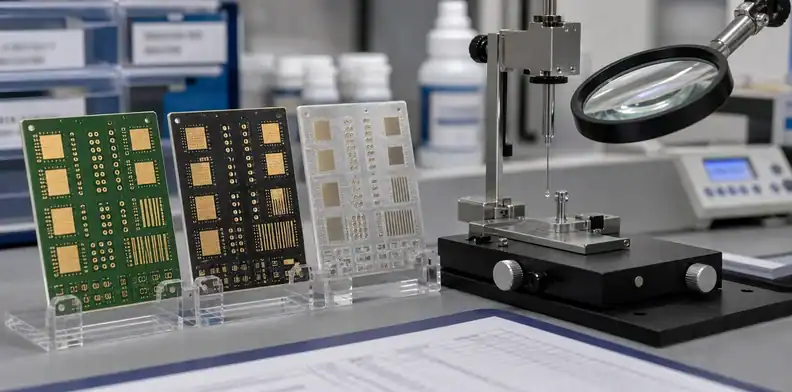
There are common planning ranges used in purchasing discussions: OSP is often treated as a shorter-life finish, commonly around 3 to 6 months depending on chemistry and storage. Immersion silver and immersion tin often need controlled handling and may be planned around 6 to 12 months. ENIG and HASL are often planned around 12 months under proper sealed storage. These are planning ranges, not permission to ignore the supplier’s process sheet or the customer drawing.
Planning rule: Use shelf-life numbers as purchasing controls, then verify them against the finish supplier, PCB fabricator, and product risk.
The same finish can age differently depending on process chemistry, copper condition, final cleaning, packaging, transport, and storage environment. A high-temperature warehouse, damaged bag, missing desiccant, or repeated open-close handling can shorten the useful window. A carefully sealed lot may perform beyond a default planning number, but the buyer should not assume that without evidence.
A practical buyer table looks like this:
| Surface finish | Common planning concern | Release question |
|---|---|---|
| OSP | Shorter protection window and handling sensitivity | Is the bag sealed, and is assembly soon? |
| ENIG | Finish quality and solderability proof | Is date, storage, and finish evidence available? |
| HASL | Good solder coating but uneven surface for fine pitch | Does the design accept HASL flatness and finish thickness? |
| Immersion silver/tin | Tarnish or oxidation sensitivity | Has storage exposure been controlled? |
If the program schedule is uncertain, order boards in smaller sealed batches or ask for packaging by build quantity. Splitting 1,000 boards into sealed sub-lots can be more useful than opening one large bag for a 100-piece pilot run. The packaging plan is a practical shelf-life control, not an afterthought.
Check solderability before using aged boards
When shelf-life status is uncertain, solderability evidence is better than debate. IPC J-STD-003 is commonly used as the solderability test reference for printed boards. The buyer does not need to become a lab technician, but the RFQ or release note should state when solderability testing is required and who approves the result.
Evidence check: If the boards are past the agreed shelf-life window or storage history is unclear, request solderability evidence before assembly release.
Testing may use coupons, sample boards, or another agreed method depending on the lot and product. The goal is to confirm wetting behavior before value is added. A failed solderability check before SMT is painful; a failed solder joint after expensive components are mounted is worse. For high-reliability work, old boards without solderability evidence should not be quietly mixed into production.
This is also where PCB quality documents before shipment help. Date code, surface finish confirmation, outgoing inspection, packaging photos, and any solderability data should stay with the purchasing record. If the boards later wait in your warehouse, you will know what condition they were in when they arrived.
QueenEMS does not treat a test result as a decoration. The result should answer the release question. Which lot was tested? Which finish? Which sample count? Which acceptance method? What decision followed? If those answers are missing, the report may look official while still leaving the buyer exposed.
Control the clock after the bag is opened
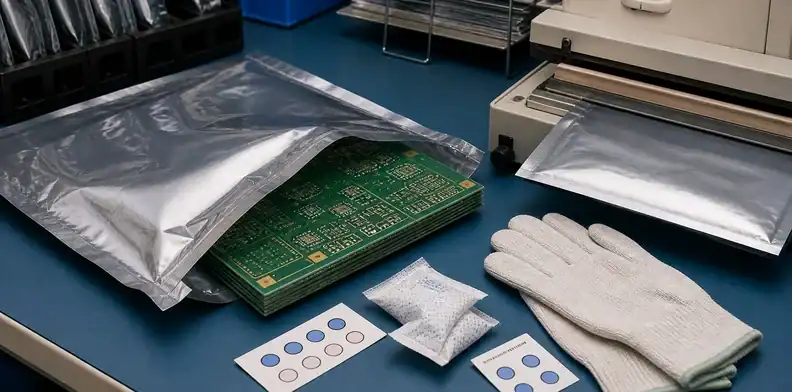
A sealed lot and an opened lot are different risks. After opening, boards can absorb moisture, collect contamination, and expose finish surfaces to oxygen, humidity, fingerprints, and production dust. The risk depends on finish type and environment, but the handling rule should be clear: open only what you need, keep unused boards protected, and reseal or control storage after partial use.
Open-bag point: Once packaging is opened, the release record should say when it was opened and how unused boards were protected.
For prototype builds, the biggest risk is informal handling. A team opens all boards to inspect them, builds five units, then leaves the remaining boards on a shelf. Months later, purchasing asks whether the rest can be used. Without an open date and storage note, the answer becomes guesswork. A simple label solves much of the problem: lot number, date opened, quantity remaining, storage method, and next review date.
For production, use physical controls. Keep boards in approved bags or dry cabinets when required. Use gloves or clean handling for sensitive finishes. Do not stack exposed boards where surfaces rub. If the finish is OSP or immersion silver, be especially careful with exposure and fingerprints. The goal is not to create paperwork for its own sake; it is to keep the release decision factual.
For a normal warehouse, do not hide the storage condition behind the word controlled. Many teams treat 30% to 50% RH as a comfortable storage band for sensitive materials, while exposure above 60% RH should trigger a closer review for opened PCB lots. Humidity indicator cards can also give a quick warning; a 5% or 10% card change inside a sealed bag is different from a 60% RH warning after open handling. These numbers do not replace the supplier’s storage sheet, but they help purchasing describe what actually happened to the lot.
The warehouse rule should match the assembly plan. If the next build is tomorrow, a resealed bag may be enough. If the next build is three months away, the same handling may be weak. The record should make the future question easy: what changed since the boards arrived?
Decide when to bake, retest, rework, or scrap
Baking is often mentioned when old boards are found, but it is not a universal cure. Baking can reduce moisture concerns, but it does not restore oxidized or contaminated solder surfaces. For some finishes, heat exposure can create new issues. Before baking, ask whether the finish, solder mask, labels, and components already attached can tolerate the process.
Disposition rule: Choose bake, retest, rework, or scrap based on the failure mode, not on the calendar alone.
If storage history is good and the boards are only slightly beyond the planning window, a solderability test may be enough. If the bag is damaged, humidity exposure is unknown, and the finish is sensitive, the safest answer may be hold and test before use. If visible tarnish, contamination, or poor wetting appears, rework may not be economical. If the product is safety-related or expensive to assemble, scrapping questionable boards can be cheaper than building risk into the product.
A buyer can use this decision table:
| Condition found | Better next step | Avoid this shortcut |
|---|---|---|
| Sealed lot near expiry | Confirm finish and assemble soon | Ignoring the date until next quarter |
| Opened lot with unknown exposure | Request solderability evidence | Assuming visual appearance is enough |
| OSP past normal window | Ask supplier for approval and test path | Baking without finish guidance |
| High-value PCBA build | Hold until release evidence is approved | Mixing old and fresh boards silently |
This is where production judgment matters. A low-cost prototype board used for a bench demo may accept a small controlled risk. A medical, automotive, or industrial control PCBA should not. The release decision should reflect the cost of failure, not only the cost of replacement boards.
Put storage and delay terms into the RFQ
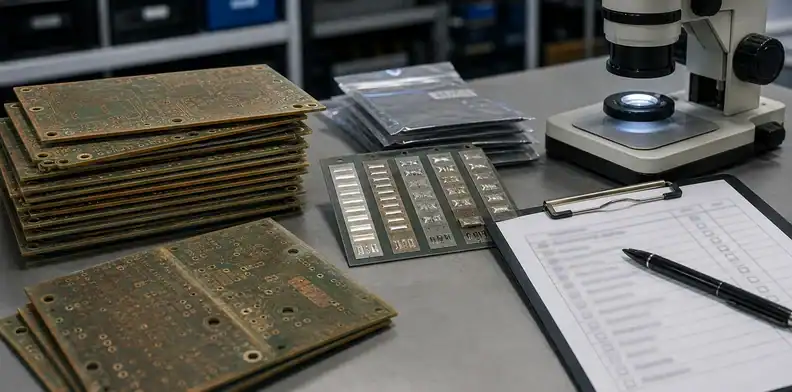
The easiest time to control PCB shelf life is before the order is placed. Add the required surface finish, packaging, labeling, shelf-life statement, and storage expectations to the RFQ. If the project may wait before assembly, tell the supplier. If the customer may ask for partial releases over several months, ask how the boards will be packaged by quantity.
A useful RFQ line is: Pack boards in sealed moisture-barrier packaging with desiccant and humidity indicator when applicable. Label production date, surface finish, and recommended shelf-life window. If shipment or assembly is delayed beyond the agreed window, request buyer approval and solderability evidence before release. That language gives the supplier a clear hold point.
This also connects to PCB production release packages. The released package should include the storage rule, not just the Gerbers. If a schedule changes, the buyer can decide whether to ship, hold, retest, or split the lot with a written record.
| RFQ item | Why it belongs in the quote | Good output |
|---|---|---|
| Surface finish | Shelf life depends on finish chemistry | Finish and date code stated |
| Packaging | Storage proof starts before shipment | Sealed bags, desiccant, humidity card |
| Delay rule | Projects often slip after boards arrive | Hold or retest trigger defined |
| Partial release | Large lots may not be used at once | Sub-lot packaging by build quantity |
FAQ
Does PCB shelf life start from fabrication date or delivery date?
Usually it should be tracked from the manufacturing or finish date, not only the delivery date. Delivery date is still useful for receiving control, but it may hide time spent in production, packing, or transit.
Can expired PCBs still be assembled?
Sometimes, yes. If storage was controlled and solderability evidence is acceptable, a controlled release may be reasonable. If exposure history is unclear or the finish is sensitive, test or supplier approval should come before assembly.
Is ENIG always safe for long storage?
ENIG is often chosen when storage and solderability stability matter, but it is not magic. The finish quality, nickel/gold thickness, cleanliness, packaging, and storage condition still matter.
What should QueenEMS check before using old boards?
Send the surface finish, date code, packaging photos, storage history, quantity, assembly date, and product risk level. QueenEMS can help decide whether to assemble, test solderability, ask the PCB supplier, or replace the lot.
Related QueenEMS articles
- HASL vs ENIG PCB Surface Finish
- PCB Quality Documents Before Shipment
- PCB Production Release Package
- PCB Fabrication Lead Time
If your PCB or PCBA project has delayed assembly, uncertain stock, or surface-finish shelf-life risk, send QueenEMS the lot details and build plan. We can help review storage evidence, solderability risk, and the safest release path before components are added.
Written by the QueenEMS Engineering Team
Sources
- IPC, J-STD-003 solderability standard page: https://shop.ipc.org/ipc-j-std-003
- IPC standards overview: https://www.ipc.org/standards
Upload your files today · Free DFM check before production · Ship worldwide
Get your PCB prototypes in as fast as 24 hours. We handle FR4, Rogers, and Flex up to 60 layers — free prototypes for 2–4 layer boards, no minimum order.
Just upload your Gerber + BOM — we source every part, assemble, and inspect (AOI + X‑Ray) so you don't have to chase suppliers. Boards ship in as fast as 24 hours.