
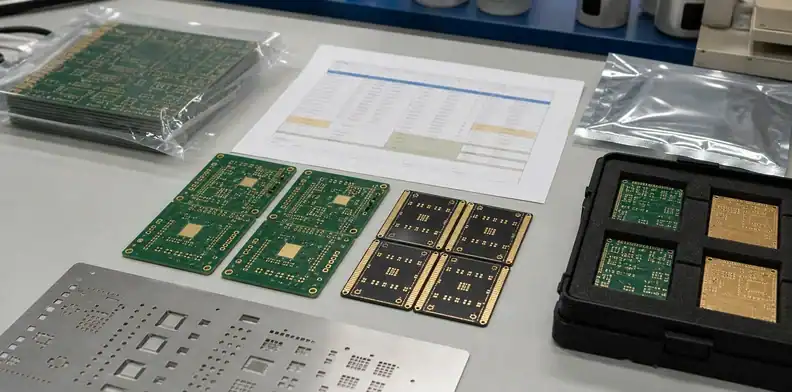
Quick Answer: OSP PCB finish can be the right choice when the board needs a flat solderable copper surface, fast assembly, short storage, and cost control. It becomes risky when the program needs long warehouse time, repeated thermal cycles, harsh handling, press-fit contacts, wire bonding, or exposed customer-facing pads. The purchase decision should compare cost savings with assembly timing, reflow count, solderability evidence, and the product’s real reliability risk.
Key takeaways
- OSP is a solderability protection choice, not a universal ENIG replacement.
- The biggest buying risks are storage time, open-bag handling, multiple reflow cycles, and exposed-contact use.
- Ask for surface-finish shelf life, packaging, reflow expectation, and solderability release evidence before the PO.
- Use OSP when assembly timing is controlled; avoid it when the board must wait, travel, or support contact wear.
Table of Contents
- Decide whether the finish is only for soldering
- Use OSP when flatness and cost matter together
- Reject OSP when the board must survive long storage
- Check reflow count before the quote is approved
- Separate solder pads from contact surfaces
- Compare OSP savings with scrap and delay risk
- Put OSP release rules into the RFQ
Decide whether the finish is only for soldering
The first OSP question is simple: is the surface finish only protecting pads until soldering, or does it need to perform after assembly as an exposed functional surface? OSP, or organic solderability preservative, protects copper with a thin organic coating. It is meant to preserve solderability for assembly. It is not a hard, wear-resistant, plated contact finish like hard gold, and it is not chosen for cosmetic shine.
Finish call: Choose OSP only when the finish job is temporary solderability protection, not long-term contact performance.
This is why OSP can be attractive for high-volume consumer boards. If the boards are fabricated, shipped, and assembled quickly, OSP can reduce finish cost and keep pads flat for fine-pitch SMT. The buyer gets a clean solderable surface without paying for ENIG on every pad. That is useful when the product has no edge connector, no keypad contact, no wire-bonding area, and no long storage expectation.
The decision changes when the same board may sit for months, travel through multiple warehouses, or be handled repeatedly before assembly. Then the low finish cost may become a release risk. The buyer should not ask only whether OSP is good enough. Ask whether the actual supply chain is good enough for OSP.
QueenEMS usually frames this as a timing decision. If the assembly date is firm and the board is a normal SMT product, OSP may be reasonable. If the purchasing team is ordering ahead for safety stock, waiting for consigned components, or planning several partial builds from one lot, OSP needs a tighter control plan.
Use OSP when flatness and cost matter together
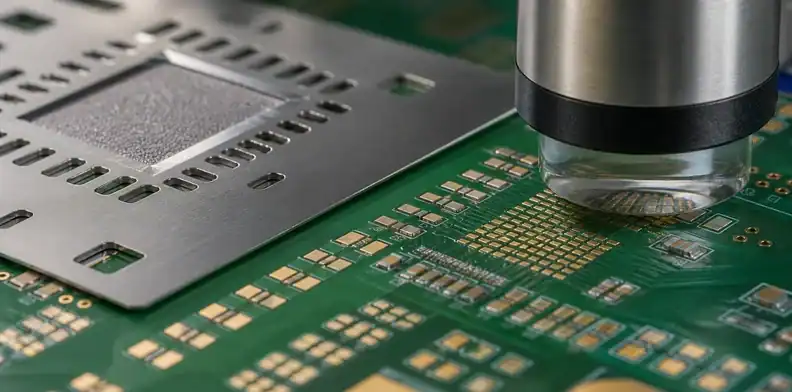
OSP has two practical strengths for PCB buyers: low finish cost and very flat solder pads. The flatness matters for fine-pitch components because the finish does not add the same plated layer structure as ENIG or HASL. For dense SMT work, a flat pad can support paste printing and placement consistency.
Cost signal: OSP makes the most sense when the product needs solderable flat pads and the team can assemble the boards quickly.
Many buyers look at OSP when ENIG cost starts to feel high. That instinct is understandable. On high-volume boards, surface finish can become a real cost lever. OSP can also avoid some of the concerns associated with uneven HASL surfaces on fine-pitch packages. The right comparison is therefore not OSP versus the most expensive finish. The right comparison is OSP versus the finish requirement the product actually needs.
| Product condition | OSP fit | Buyer note |
|---|---|---|
| Fast SMT build after fabrication | Strong | Keep packaging sealed until use |
| Fine-pitch solder pads only | Strong | Flat copper surface helps paste control |
| Short-life consumer product | Often practical | Confirm no exposed contact function |
| Long-term service product | Needs review | Storage and field reliability matter more |
The useful boundary is that OSP protects solderability until assembly. If the product only needs soldered joints and the process is controlled, the finish can be efficient. If the product needs exposed metal to remain contact-ready after use, OSP is probably the wrong answer.
Reject OSP when the board must survive long storage
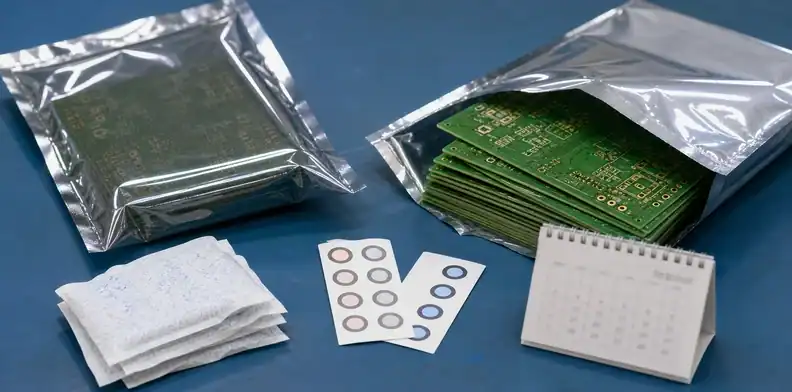
Storage is the most common reason a good OSP quote becomes a bad production decision. OSP shelf life depends on chemistry, board cleanliness, packaging, humidity, temperature, and handling. Many buyers plan OSP in a shorter window than ENIG or HASL. A practical planning range is often about 3 to 6 months under proper sealed storage, but the supplier’s finish process and storage instructions should control the final rule.
Storage rule: If assembly may slip or the board will be held as inventory, OSP needs a written shelf-life and re-release plan.
The problem is not only the calendar. A sealed bag with desiccant is different from a half-opened bag on a production shelf. A board stored in 30% to 50% RH is different from a board exposed to humid air above 60% RH. A lot used immediately after opening is different from a lot opened for a pilot run and then stored for the next quarter.
This is where the new PCB shelf life article should be linked into the release process. If the buyer already knows the project may delay, the finish decision should be made before the PCB PO, not after the boards arrive. OSP may still be acceptable, but only if the packaging, storage clock, and solderability evidence are planned.
For a purchasing owner, the red flag is an uncertain build date. If the BOM is not ready, firmware is not released, or the customer approval gate is still open, do not choose OSP only to reduce the PCB quote. The lower line item can turn into a delayed assembly decision later.
Check reflow count before the quote is approved
OSP can be sensitive to repeated thermal exposure. A simple one-sided SMT build is a different risk from a double-sided build with selective soldering, rework, or multiple heat passes. The OSP coating is consumed or changed as the board goes through soldering. After one thermal cycle, remaining exposed pads may not behave the same as fresh pads.
Thermal point: The OSP decision should name the expected number of reflow and soldering cycles before production starts.
If the board has two-sided SMT, ask whether both sides will be soldered in sequence and whether any unpopulated pads must remain solderable after the first pass. If there is selective solder, hand solder, or planned rework, ask whether OSP still fits. For some boards, ENIG or another finish may be a safer choice simply because the assembly path is less predictable.
This should be reviewed with SMT assembly requirements, not only with bare-board fabrication. The PCB supplier may say OSP is standard for the board. The assembler may reply that the thermal process makes OSP less attractive. Both can be correct in their own scope. The buyer needs the combined answer.
| Assembly route | OSP question | Safer action |
|---|---|---|
| One-sided SMT | Is assembly soon after opening? | OSP often fits if storage is controlled |
| Double-sided SMT | Are second-side pads protected after first reflow? | Confirm process window |
| Selective solder | Are through-hole pads still solderable after reflow? | Ask for assembler approval |
| Rework-heavy prototype | Will pads see extra heat cycles? | Consider ENIG or extra evidence |
Separate solder pads from contact surfaces
OSP should not be used as a contact finish. If the board includes edge fingers, switch contacts, carbon contacts, test pads used as repeated mating surfaces, or any exposed metal expected to resist wear, the finish decision needs separation. The solder pads may use OSP, while the contact area may need ENIG, hard gold, carbon ink, or another specified finish.
Contact check: If a pad is touched, wiped, inserted, or used after assembly, treat it as a contact surface, not an ordinary solder pad.
This is an area where drawings often fail. The Gerber may show pads, but it may not explain which pads are soldered once and which pads function later. The supplier then prices OSP across the whole board. The buyer receives a lower quote, but the design loses the contact finish it actually needed.
For boards with edge connectors, link the finish decision to ENIG vs hard gold vs soft gold. For keypad areas or low-cost contact patterns, consider whether carbon ink or another process is part of the design. For test pads, decide whether they are only production test points or repeated service contacts.
QueenEMS will usually ask for a drawing note when mixed finish is required. A note such as “OSP on solder pads; hard gold on edge fingers” avoids a lot of quote confusion. Without that note, suppliers may quote different assumptions and the buyer may compare numbers that are not technically equal.
Compare OSP savings with scrap and delay risk
OSP savings are real, but they are not always the biggest number in the order. The buyer should compare surface-finish savings against scrap risk, extra solderability testing, delayed assembly, partial lot replacement, and production urgency. A 10k-unit consumer board with stable demand may benefit from OSP. A low-volume industrial board waiting for imported components may not.
Buying rule: OSP is cheapest when the whole process is ready for it; it is expensive when it forces a late release debate.
For procurement, the question is not only how much ENIG costs. Ask what happens if assembly slips by 8 weeks. Ask whether unused boards can be resealed by build quantity. Ask whether the supplier will provide solderability evidence if the agreed window is missed. Ask whether a late finish change would delay fabrication.
Use this comparison with PCB fabrication cost rather than treating finish as a standalone line item:
| Decision factor | OSP advantage | OSP risk |
|---|---|---|
| Fabrication price | Usually lower than ENIG | Savings disappear if testing or scrap is needed |
| Pad flatness | Good for fine-pitch SMT | Does not solve contact-wear needs |
| Storage | Works with short controlled timing | Risk rises with delay and open handling |
| Rework | Fine for controlled process | Extra heat cycles need review |
Put OSP release rules into the RFQ
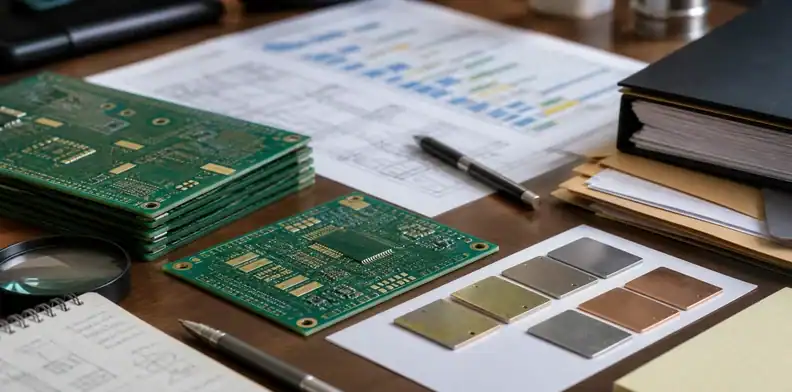
The RFQ should make the OSP decision visible. If the buyer wants OSP, the quote package should say surface finish, expected assembly date, packaging expectation, maximum storage window, and what happens if the build is delayed. A supplier cannot protect a schedule risk it never sees.
A practical RFQ line is: Use OSP surface finish for solder pads only. Pack boards in sealed moisture-barrier bags with desiccant when applicable. Label finish date and recommended shelf-life window. If assembly is delayed beyond the agreed storage window, hold release and request solderability evidence or buyer approval before shipment or SMT.
RFQ record: The finish choice should travel with the release package, not live only in the buyer’s memory.
This note belongs beside Gerbers, stackup, BOM status, and assembly timing. If QueenEMS will support both PCB and PCBA, send the full schedule. We can review whether OSP is a safe cost reduction or whether ENIG, HASL, or a mixed-finish approach is better for the real build.
The RFQ should also say who pays for evidence when the schedule changes. If the supplier finishes boards on time and the buyer delays assembly for 10 weeks, the buyer may need to approve solderability testing, resealing, or replacement risk. If the supplier ships late and the OSP window is already weakened, the buyer should ask for updated solderability evidence before accepting the lot. This does not need to become a legal argument. It can be a simple release rule tied to dates, packaging, and test evidence.
For production programs, ask whether boards can be packed by build quantity. For example, a 10,000-piece order may be split into sealed sub-lots that match weekly or monthly assembly releases. That packaging choice can protect OSP better than a single large bag opened during the first pilot build. It also helps purchasing see whether the OSP saving is real after storage handling is included.
When quotes are compared, mark the finish assumption clearly. One supplier may quote OSP with standard packaging. Another may quote ENIG. A third may quote OSP but include solderability testing after a delay. Those are not equal offers. The lowest price is only useful when the storage and release assumptions match the way the boards will actually be used.
FAQ
Is OSP cheaper than ENIG?
Often yes, but the useful comparison is total release cost. If OSP causes solderability testing, delayed assembly, or replacement boards, the cheaper finish can become more expensive than ENIG.
Can OSP survive double-sided reflow?
It can be used in double-sided assembly when the process is controlled, but the board design and sequence matter. Ask the assembler whether remaining pads need solderability after the first heat cycle.
Is OSP good for edge connectors?
No. Edge connectors and repeated contact areas usually need a contact finish such as hard gold or another specified surface. OSP should be treated as solderability protection for soldered pads.
What should QueenEMS check before recommending OSP?
Send the PCB files, surface-finish preference, assembly schedule, reflow route, storage expectation, contact-surface requirements, and expected order quantity. QueenEMS can help decide whether OSP is a safe savings opportunity.
Related QueenEMS articles
- HASL vs ENIG PCB Surface Finish
- PCB Shelf Life: Storage Rules Before You Release Old Boards
- PCB Fabrication Cost
- How to Choose: ENIG vs Hard Gold vs Soft Gold
If your PCB or PCBA project is considering OSP to reduce cost, send QueenEMS the files, quantity, assembly timing, and storage plan. We can help check whether OSP fits the real production path or whether a different finish will protect yield and delivery.
Written by the QueenEMS Engineering Team
Sources
- MacDermid Alpha, OSP surface finish overview: https://macdermidalpha.com/electronics-solutions/products/surface-finishing/organic-solderability-preservatives
- IPC standards overview: https://www.ipc.org/standards
Upload your files today · Free DFM check before production · Ship worldwide
Get your PCB prototypes in as fast as 24 hours. We handle FR4, Rogers, and Flex up to 60 layers — free prototypes for 2–4 layer boards, no minimum order.
Just upload your Gerber + BOM — we source every part, assemble, and inspect (AOI + X‑Ray) so you don't have to chase suppliers. Boards ship in as fast as 24 hours.