
Quick answer: To transfer PCB assembly to a new manufacturer, first confirm which design revision is actually being built. Then give the incoming manufacturer a controlled fabrication, assembly, sourcing, and test package. Qualify its first build against your own acceptance criteria before moving the supply plan. There is no universal “zero downtime” timetable: component availability, fixture access, test coverage, and the current contract determine the handover.
A supplier change is not a file-upload exercise. The old and new factories may interpret the same incomplete drawing differently. A stable transfer therefore needs three decisions: what the product definition is, how the new build will be accepted, and when supply responsibility changes. This guide covers that handover. For a first-time supplier search, use our manufacturer selection guide; the questions here begin once a product and an incumbent build already exist.
Table of Contents
- Decide whether a transfer is warranted
- Reconstruct the controlled build package
- Resolve gaps before requesting a quote
- Qualify the incoming manufacturer’s process
- Use a pilot build to test the handover
- Reconcile inventory and open commitments
- Set a release and fallback plan
- Send a transfer-ready RFQ
- FAQ
Decide whether a transfer is warranted
Start with the failure you want to solve. Repeated escapes, unresolved corrective actions, capacity limits, sourcing problems, or a requirement the incumbent cannot meet are different problems. A late delivery alone does not prove that a new factory will perform better. Record the issue, its effect on accepted product, and the evidence you will use to judge the next supplier.
For example, if a board fails functional test only after a component substitution, the transfer requirement is not “find a faster factory.” It is controlled alternate-part approval and test traceability. If incoming boards differ physically from the released CAD data, the first task is version reconciliation. The new supplier cannot manufacture a reliable copy from an uncertain baseline.
| Observed issue | Question to resolve | Transfer acceptance evidence |
|---|---|---|
| Recurring assembly defects | Is the cause design, material, process, or test coverage? | Defect description, corrective action, and pilot inspection results |
| Supply interruptions | Which parts or operations set the lead time? | Approved sourcing plan and capacity commitment for the required lot |
| Uncontrolled changes | Which revisions and substitutions were actually shipped? | Revision history, approved vendor list, and deviation records |
| Product change | Does the existing process still match the new design? | Updated DFM review, test plan, and first-build approval |
Do not announce an arbitrary cutover date before these questions have owners. The decision to end an existing supply agreement is commercial and contractual; review it with the people responsible for purchasing and legal terms.
Reconstruct the controlled build package
The incoming manufacturer needs a single identified product revision. Include the fabrication data for the bare board, fabrication drawing, drill data, layer stack-up, finish, and any controlled-impedance requirements. For assembly, add the BOM with manufacturer part numbers and approved alternates, placement data, assembly drawings, polarity notes, firmware or programming instructions, and the applicable test procedure. Give each file a revision and an owner.
A file’s presence does not establish that it matches the last accepted build. Compare the released BOM, PCB data, assembly drawing, and a known-good unit. Ask the incumbent or your internal team to list approved deviations and engineering changes. A substitution accepted for one lot is not necessarily a permanent BOM revision. The PCBA quote-file guide explains each input in more detail; this transfer adds the need to reconcile it with build history.
The IPC description of IPC-2581 identifies it as an intelligent data-transfer format for printed-board and assembly manufacturing. It can help structure the exchange, but a format alone does not settle revision authority, approved alternates, or test limits. Whether you send IPC-2581, ODB++, Gerbers, or a combination, agree which package controls the build.
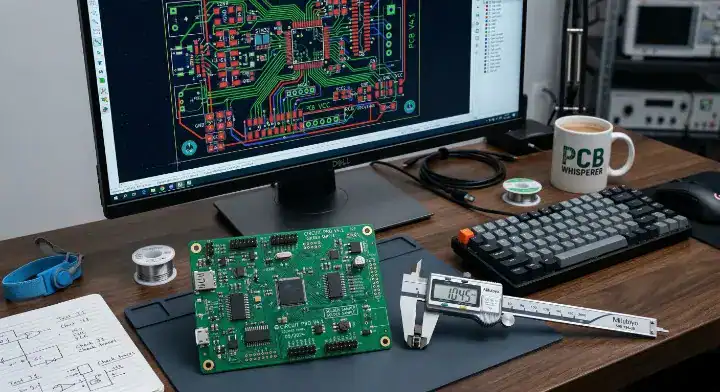
Engineering analysis: Suppose the centroid file labels a component orientation differently from the accepted assembly drawing. The correct response is not to let the line operator choose. Engineering should compare the CAD footprint, datasheet pin-one convention, assembly drawing, and reference unit; then issue a corrected, revision-controlled instruction. A reference board helps identify a discrepancy, but it is not a substitute for an approved design record. This is an illustrative review method, not a claimed QueenEMS customer case.
Resolve gaps before requesting a quote
Mark missing or inconsistent inputs explicitly. Some items can be regenerated from source CAD; others require a new engineering decision. Placement coordinates can be re-exported if the approved assembly design exists. A functional test cannot be recreated safely from a photograph of a passing unit if its stimulus, limits, firmware version, and connector pinout are unknown. Likewise, a bare-board image does not establish an impedance tolerance.
| Gap | Practical next step | Do not assume |
|---|---|---|
| Conflicting Gerber and drawing revisions | Identify the last accepted product revision and issue one release set | The newest filename is the approved one |
| Missing placement export | Re-export from approved CAD and verify orientation against drawings | A reference board supplies exact machine coordinates |
| Unclear approved alternates | Review AVL and prior deviations with engineering and sourcing | A prior one-lot substitution is permanently approved |
| Missing test program or fixture | Define measurable acceptance criteria and decide whether to transfer or rebuild the fixture | Visual inspection replaces functional testing |
| Unknown process changes | Ask for change, nonconformance, and first-article records where available | Identical design files guarantee identical process results |
Write these gaps into the RFQ. A qualified supplier can price an investigation separately from normal production. A quote that quietly assumes complete data is not comparable with one that includes fixture redevelopment and validation.
Qualify the incoming manufacturer’s process
Assess the new manufacturer against this assembly, not a generic equipment list. Ask how it reviews BOM risk, controls customer-supplied and purchased components, approves substitutions, programs placement, validates soldering, records inspection, and segregates nonconforming units. The required evidence depends on the product: a simple board may need a different inspection plan from a fine-pitch or safety-related assembly.
Request a DFM and assembly review using the actual release package. Useful questions are specific: Can the selected package be placed and inspected? Is the polarity unambiguous? Does the proposed stencil aperture need engineering approval? Which BGA joints require X-ray, if any? What firmware and test limits will be loaded? Ask who signs off each answer before the first build.
Separate supplier capability from a quote promise. A site may own AOI or X-ray equipment, but the question is whether the agreed inspection plan applies to your part number and revision. Avoid blanket requirements such as “X-ray every board” unless risk and acceptance criteria justify them.
Use a pilot build to test the handover
A pilot is a test of the new manufacturing package and process. Select a quantity that lets engineering perform the planned inspection, functional test, rework review, and any destructive analysis. There is no universal five-board rule. A complex assembly or a statistical process study may need a different sample plan from a fit-check prototype.
Before the pilot, agree on the build revision, approved components, allowed deviations, inspection records, programming version, test limits, and disposition of failures. Keep the initial build traceable to its material lots and production route where required. Then compare the outcome with the approved acceptance criteria—not merely with whether a power LED turns on.
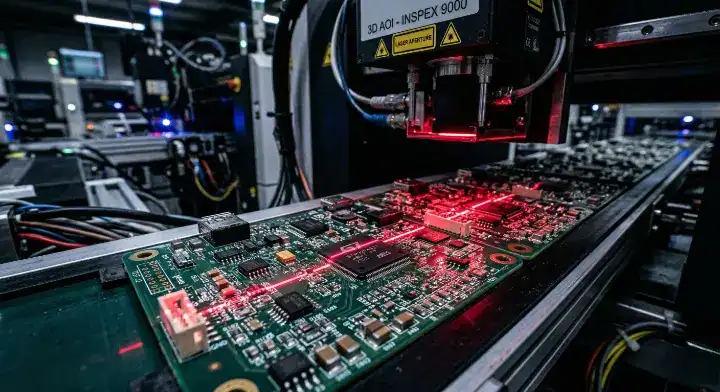
Use the first-article inspection guide to distinguish first-piece verification from automated inspection. If the pilot fails, document the failure and its root-cause investigation. A rework can rescue a sample, but it does not automatically validate the repeatable process. Close the corrective action and rebuild or retest to the agreed scope before volume release.
Reconcile inventory and open commitments
Build a part-by-part inventory picture for customer-owned material, supplier-owned material, work in process, finished goods, long-lead purchases, and open orders. Include quantity, manufacturer part number, lot or date code where relevant, condition, location, and the contractual owner. Inspect storage and handling requirements before transferring sensitive or programmed parts.
Tooling and data also need a handover decision. Identify stencils, fixtures, test software, firmware images, calibration items, and programming adapters. Whether a physical asset can be moved, who owns it, and who pays for open commitments are questions for the applicable contract; an NRE payment by itself does not establish ownership. Do not promise that a used stencil will fit another printer or assume that recutting is always cheaper.
A transfer plan should show which stock supports existing orders, which stock is available to the pilot, and which components the new supplier must source. Coordinate purchasing, engineering, and both manufacturers before redirecting inventory. That prevents a technically successful pilot from being followed by a component shortage.
Set a release and fallback plan
Choose the cutover gate from evidence. Typical gates are an approved build package, accepted pilot results, resolved deviations, a qualified test process, confirmed component supply, and a shipment plan. The release decision belongs to the product owner; a new supplier’s first-article report is an input, not automatic permission for volume production.
Where the existing manufacturer can still supply accepted product, an overlap or safety stock may reduce handover risk. Its size should follow actual demand, component lead time, and pilot uncertainty. Where overlap is impossible, document the higher exposure and define a recovery path. Do not advertise a guaranteed zero-downtime transfer.
Assign a named owner for each open question and keep a revision log. The key document is a short cutover record: approved product revision, pilot disposition, outstanding exceptions, inventory allocation, first production order, and fallback trigger. If any critical item remains unresolved, delay release or accept the exception in writing with the responsible owner.
Send a transfer-ready RFQ
For a transfer review with QueenEMS, send the current fabrication and assembly package, BOM and approved alternates, target quantity, known deviations, test requirements, desired delivery window, and a list of missing items. State whether you need bare-board fabrication, consigned assembly, turnkey sourcing, or a mixed model. Our turnkey versus consigned guide helps frame the sourcing choice.
Ask the reviewer to return assumptions and open engineering questions with the quote. A useful first response identifies what can be built from the supplied data, what must be confirmed, and which validation work is outside the production unit price. Send the package through the QueenEMS contact page if you want that review.
FAQ
How long does a PCB assembly transfer take?
There is no reliable fixed duration. Schedule depends on data completeness, component supply, tooling and test readiness, pilot results, and the current supply agreement. Build a milestone plan from those constraints rather than using an industry-wide week estimate.
Can I transfer without the old manufacturer’s test program?
Possibly, if product engineering can define the test inputs, limits, firmware, and acceptance criteria and then qualify a replacement method. Treat that as a separate engineering workstream. A known-good unit can help comparison but does not define complete test coverage.
Who owns components and fixtures at the old factory?
Ownership and transfer rights depend on purchase orders and contracts. Reconcile the inventory and asset register, then have the responsible commercial and legal teams confirm the handover. Do not infer ownership solely from who paid a setup charge.
Is a passing pilot enough to release production?
Only if the agreed release gates are met. Check revision control, inspection and functional evidence, deviations, sourcing, and the planned production test. A passing sample does not by itself prove that every supply and process risk is closed.
Upload your files today · Free DFM check before production · Ship worldwide
Get your PCB prototypes in as fast as 24 hours. We handle FR4, Rogers, and hybrid boards up to 40 layers in volume production, with advanced builds subject to engineering review — free prototypes for 2–4 layer FR-4 boards, no minimum order.
Just upload your Gerber + BOM — we source every part, assemble, and inspect (AOI + X‑Ray) so you don't have to chase suppliers. Boards ship in as fast as 24 hours.