
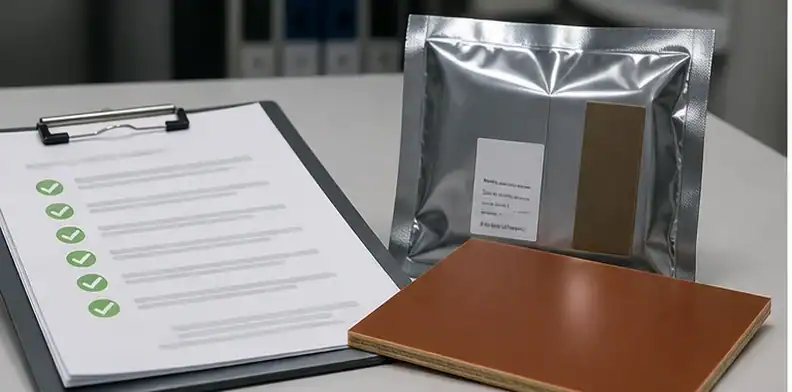
Quick Answer: Yes, many mainstream BT PCB and BT substrate grades are offered as halogen-free materials, including MGC’s HL832NX and GHPL-830NX families for IC plastic packages. The safe buyer answer is grade-specific: request the supplier’s certificate of conformance, material declaration, UL94 V-0 statement, and any RoHS, REACH, antimony-free, or phosphorus-free evidence tied to the exact material quoted.
Key takeaways
- Halogen-free is a material-grade claim, not a promise attached to every possible BT laminate.
- MGC describes HL832NX and GHPL-830NX as non-halogenated BT resin laminate materials for IC plastic packages.
- RoHS, REACH, UL94 V-0, and IEC-style halogen thresholds answer different compliance questions.
- The purchase file should keep the grade name, CoC, material declaration, and substitution approval together.
The compliance question often appears late in the order: purchasing has a BT quote, engineering likes the package result, and the customer’s declaration form asks whether the material is halogen-free. The answer cannot be guessed from the letters BT. Start with the named grade, then check the proof set. For background on the material itself, see what BT material is. For engineering values behind the same material family, use BT datasheet parameters. For the wider topic map, the BT PCB guide connects this point to specifications, applications, sourcing, and quote preparation.
Table of Contents
- Is BT PCB halogen-free by default?
- What flame-retardant route does halogen-free BT use?
- How RoHS, REACH, and IEC halogen limits differ
- What UL94 V-0 means for BT substrates
- Does halogen-free BT reduce performance?
- Which documents prove compliance?
- How to approve a compliance-sensitive BT order
Is BT PCB halogen-free by default?
BT PCB is not automatically halogen-free, but common modern IC-package BT grades are available in non-halogenated versions.
MGC publicly lists HL832NX and GHPL-830NX as non-halogenated BT resin laminate materials for IC plastic packages. That public positioning supports a buyer’s initial answer, but the order still needs the exact material family named in the quote.
| Compliance item | What it proves | What to request |
|---|---|---|
| Halogen-free statement | The named BT grade meets the supplier’s halogen-free definition | Material declaration naming the exact grade |
| RoHS declaration | Restricted substances are controlled for the supplied material | RoHS CoC or supplier declaration |
| REACH statement | Candidate-list substances are reviewed for the article or material | Current REACH declaration with revision date |
| UL94 V-0 | The resin laminate meets a flame classification under the stated test | UL file or supplier UL rating evidence |
Do not approve a compliance form from a generic BT description. Put the grade name, supplier revision, and intended application on the same line before quality signs the customer declaration.
This page covers compliance proof. It does not decide whether BT is the right material for a thermal, RF, or package-stress problem.
Buyer call: A halogen-free answer is acceptable only when it names the BT grade and the supplier document revision.
What flame-retardant route does halogen-free BT use?
Halogen-free BT usually relies on non-halogenated flame-retardant chemistry rather than brominated resin systems.
MGC’s public wording for HL832NX and GHPL-830NX describes the materials as non-halogenated, and related public summaries describe inorganic filler and controlled flame behavior for IC package use. That is different from simply removing a banned additive at the last minute.
For regulated builds, ask whether the quoted laminate is also antimony-free or phosphorus-free when those restrictions appear in the customer’s environmental form. Keep those answers separate from RoHS because they are not the same legal question.
A supplier may quote an equivalent halogen-free BT family. Equivalency should trigger a material review, not an informal substitution.
Evidence rule: The flame-retardant route belongs in the material file whenever the customer asks for halogen, antimony, or phosphorus declarations.
How RoHS, REACH, and IEC halogen limits differ
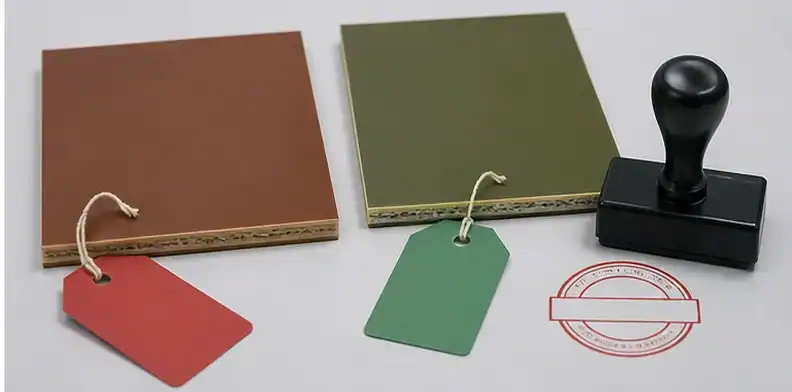
RoHS, REACH, and halogen-free limits are related compliance controls, but they are not interchangeable.
RoHS focuses on restricted substances in electrical and electronic equipment. REACH concerns substances of very high concern and chemical declarations. IEC-style halogen-free definitions often use bromine and chlorine thresholds, commonly 900 ppm each and 1500 ppm total for printed-board material discussions.
A clean compliance package should not say only compliant. It should state which regime is being answered, the material name, and the date of the declaration. This matters for EU customers, medical-device suppliers, and consumer brands with their own restricted-substance lists.
Do not let a RoHS certificate replace a halogen-free statement. The customer may require both, and the purchasing file should reflect both.
Engineering gate: Match each customer compliance checkbox to a named supplier declaration rather than one broad environmental sentence.
What UL94 V-0 means for BT substrates
UL94 V-0 is a flammability classification, not a full environmental-compliance certificate.
Several BT laminate families are marketed with UL94 V-0 flame classification. That helps confirm flame behavior under a defined test, but it does not by itself prove RoHS, REACH, or halogen-free status.
The drawing or AVL may call for UL94 V-0, while the customer purchasing specification asks for RoHS and halogen-free status. Record these as separate acceptance lines so the supplier knows which evidence is needed before shipment.
For general UL background, QueenEMS has a separate page on UL 94V-0 explained. This BT page only maps that rating back to BT substrate sourcing.
Quote signal: Use UL94 V-0 as a flame-rating proof point, not as a substitute for restricted-substance evidence.
Does halogen-free BT reduce performance?
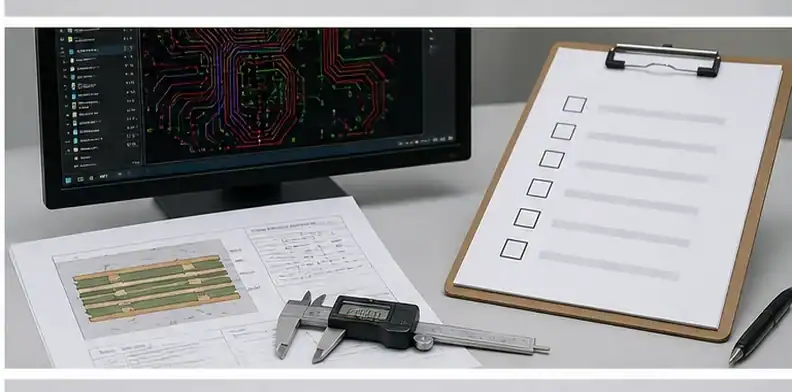
A halogen-free BT grade can still deliver package-substrate performance, but the buyer must compare the exact grade rather than assume identical behavior.
MGC’s non-halogenated BT families are positioned for IC plastic packages, including applications where heat resistance, low CTE, and dimensional stability matter. Yet dielectric, CTE, moisture, and shrinkage values still vary across families.
When a supplier suggests a halogen-free alternate, engineering should check Dk, Df, Tg, CTE, thickness availability, and qualification status. Purchasing can compare price only after engineering accepts the material boundary.
This is where the compliance article hands off to QueenEMS’ material compliance approval process.
Release check: Performance equivalency must be reviewed through datasheet values, not through the phrase halogen-free.
Which documents prove compliance?
The proof set should include the supplier CoC, material declaration, UL evidence when required, and a revision date for every compliance statement.
A practical export file for a BT order often includes the laminate maker’s declaration, the fabricator’s CoC, shipment lot reference, and any customer form that must be signed. Each document should connect back to the same material name.
For repeat orders, preserve the revision of the compliance evidence. If the supplier later changes material source, grade suffix, or declaration date, the buyer can see whether customer re-approval is needed before the next shipment.
Do not request every possible certificate for every prototype. Match the proof burden to customer requirements, destination market, and product risk.
Document rule: Compliance proof is complete when every certificate can be traced to the quoted BT grade and shipment lot.
How to approve a compliance-sensitive BT order
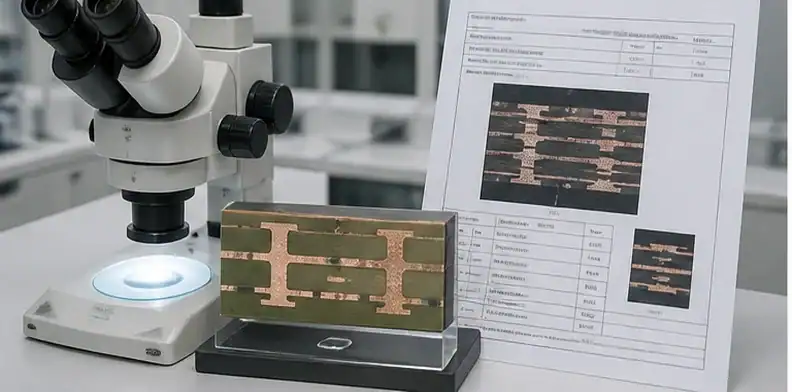
Approve a compliance-sensitive BT order by freezing the material family, accepted alternates, and document package before the PO is released.
The clean handoff is short: quote the exact grade, state whether equivalents are allowed, name required compliance documents, and identify who may approve a substitution. That protects the buyer without turning the RFQ into a legal essay.
If the customer requires no-halogen, no-antimony, RoHS, and REACH declarations, put those items in the PO notes and shipment-document request. A supplier cannot fix a missing declaration after goods have reached receiving inspection without slowing release.
For BT production support, QueenEMS can review whether the compliance request matches the material, finish, and package stage being quoted.
Design call: Release the order only after engineering and quality agree on the exact compliance evidence required for shipment.
Compliance field note for halogen-free BT: the cleanest purchase file keeps four items together rather than scattered through email. The first item is the material maker declaration for the exact BT family. The second is the fabricator’s certificate for the shipped lot. The third is the customer declaration form, if the end customer supplies one. The fourth is the substitution rule, because a halogen-free equivalent still needs approval when the released AVL names a specific material. This matters for overseas buyers because the receiving team may be in a different time zone from the engineer who approved the quote. A dated evidence set prevents a shipment hold caused by a missing environmental sentence.
Do not mix the words halogen-free, RoHS, REACH, UL94 V-0, antimony-free, and phosphorus-free into one answer. A customer may ask for all of them, but each one maps to a different proof route. Halogen-free usually asks about chlorine and bromine limits. RoHS asks about restricted substances in electrical and electronic equipment. REACH asks for declaration status against chemical obligations and SVHC updates. UL94 V-0 is a flame behavior classification. Antimony-free and phosphorus-free may be customer policy items. When the RFQ lists those items separately, the supplier can return separate documents instead of a generic compliance claim.
For a prototype, the buyer can sometimes accept a supplier declaration while formal customer paperwork is still being prepared. For a pilot or repeat production lot, the evidence standard should be higher. The lot traceability, material grade, declaration date, and shipment paperwork should match. If a supplier changes from one halogen-free BT family to another, the buyer should decide whether the change is equivalent for both compliance and performance. That decision belongs before material reservation, because rework after production is usually document work plus engineering review, not just a new certificate.
Project-specific checks
| Buyer check | compliance file evidence | Use before quote release |
|---|---|---|
| chlorine threshold | bromine threshold | Confirms the compliance file basis before supplier comparison |
| RoHS declaration | REACH date | Shows which compliance file assumption needs engineering sign-off |
| UL94 V-0 line | antimony statement | Prevents a quiet compliance file substitution during pilot planning |
- Verify the chlorine threshold against the REACH date; that chlorine threshold pairing protects the compliance file quote accuracy. If phosphorus statement shifts, supplier wording changes; preserve customer form in the compliance file so the chlorine threshold reviewer sees why REACH date stayed controlled.
- Map the bromine threshold against the UL94 V-0 line; that bromine threshold pairing protects the compliance file assembly release. If material grade shifts, supplier wording changes; preserve SVHC update in the compliance file so the bromine threshold reviewer sees why UL94 V-0 line stayed controlled.
- Record the RoHS declaration against the antimony statement; that RoHS declaration pairing protects the compliance file customer approval. If shipment CoC shifts, supplier wording changes; preserve lot traceability in the compliance file so the RoHS declaration reviewer sees why antimony statement stayed controlled.
- Compare the REACH date against the phosphorus statement; that REACH date pairing protects the compliance file supplier comparison. If customer form shifts, supplier wording changes; preserve AVL wording in the compliance file so the REACH date reviewer sees why phosphorus statement stayed controlled.
- Separate the UL94 V-0 line against the material grade; that UL94 V-0 line pairing protects the compliance file pilot planning. If SVHC update shifts, supplier wording changes; preserve declaration revision in the compliance file so the UL94 V-0 line reviewer sees why material grade stayed controlled.
- Confirm the antimony statement against the shipment CoC; that antimony statement pairing protects the compliance file shipment acceptance. If lot traceability shifts, supplier wording changes; preserve environmental hold in the compliance file so the antimony statement reviewer sees why shipment CoC stayed controlled.
- Flag the phosphorus statement against the customer form; that phosphorus statement pairing protects the compliance file repeat-order control. If AVL wording shifts, supplier wording changes; preserve package label in the compliance file so the phosphorus statement reviewer sees why customer form stayed controlled.
- Freeze the material grade against the SVHC update; that material grade pairing protects the compliance file material continuity. If declaration revision shifts, supplier wording changes; preserve chlorine threshold in the compliance file so the material grade reviewer sees why SVHC update stayed controlled.
- Trace the shipment CoC against the lot traceability; that shipment CoC pairing protects the compliance file quote accuracy. If environmental hold shifts, supplier wording changes; preserve bromine threshold in the compliance file so the shipment CoC reviewer sees why lot traceability stayed controlled.
- Review the customer form against the AVL wording; that customer form pairing protects the compliance file assembly release. If package label shifts, supplier wording changes; preserve RoHS declaration in the compliance file so the customer form reviewer sees why AVL wording stayed controlled.
- Name the SVHC update against the declaration revision; that SVHC update pairing protects the compliance file customer approval. If chlorine threshold shifts, supplier wording changes; preserve REACH date in the compliance file so the SVHC update reviewer sees why declaration revision stayed controlled.
- Align the lot traceability against the environmental hold; that lot traceability pairing protects the compliance file supplier comparison. If bromine threshold shifts, supplier wording changes; preserve UL94 V-0 line in the compliance file so the lot traceability reviewer sees why environmental hold stayed controlled.
- Screen the AVL wording against the package label; that AVL wording pairing protects the compliance file pilot planning. If RoHS declaration shifts, supplier wording changes; preserve antimony statement in the compliance file so the AVL wording reviewer sees why package label stayed controlled.
- Tie the declaration revision against the chlorine threshold; that declaration revision pairing protects the compliance file shipment acceptance. If REACH date shifts, supplier wording changes; preserve phosphorus statement in the compliance file so the declaration revision reviewer sees why chlorine threshold stayed controlled.
- Verify the environmental hold against the bromine threshold; that environmental hold pairing protects the compliance file repeat-order control. If UL94 V-0 line shifts, supplier wording changes; preserve material grade in the compliance file so the environmental hold reviewer sees why bromine threshold stayed controlled.
- Map the package label against the RoHS declaration; that package label pairing protects the compliance file material continuity. If antimony statement shifts, supplier wording changes; preserve shipment CoC in the compliance file so the package label reviewer sees why RoHS declaration stayed controlled.
- Record the chlorine threshold against the REACH date; that chlorine threshold pairing protects the compliance file quote accuracy. If phosphorus statement shifts, supplier wording changes; preserve customer form in the compliance file so the chlorine threshold reviewer sees why REACH date stayed controlled.
Sources
FAQ
Is BT PCB halogen-free?
Many modern BT grades are available as halogen-free materials, but the answer must be tied to the exact grade and supplier declaration.
Is BT PCB RoHS compliant?
It can be supplied under RoHS declarations when the material and process are controlled. Ask for a dated RoHS document for the quoted grade.
What UL rating is common for BT substrate?
Several BT laminate families are associated with UL94 V-0, but the supplier should provide the rating evidence for the actual material.
Is halogen-free the same as REACH?
No. Halogen-free, RoHS, and REACH answer different restricted-substance questions.
Send QueenEMS your is BT PCB halogen-free package
For a compliance-sensitive BT order, use contact QueenEMS about compliance files to send the customer environmental form, target grade, drawing notes, destination market, and required shipment documents. The BT compliance build review can tie halogen-free, RoHS, REACH, and UL evidence to the material your customer expects.
Written by the QueenEMS Engineering Team
Upload your files today · Free DFM check before production · Ship worldwide
Get your PCB prototypes in as fast as 24 hours. We handle FR4, Rogers, and hybrid boards up to 40 layers in volume production, with advanced builds subject to engineering review — free prototypes for 2–4 layer FR-4 boards, no minimum order.
Just upload your Gerber + BOM — we source every part, assemble, and inspect (AOI + X‑Ray) so you don't have to chase suppliers. Boards ship in as fast as 24 hours.