

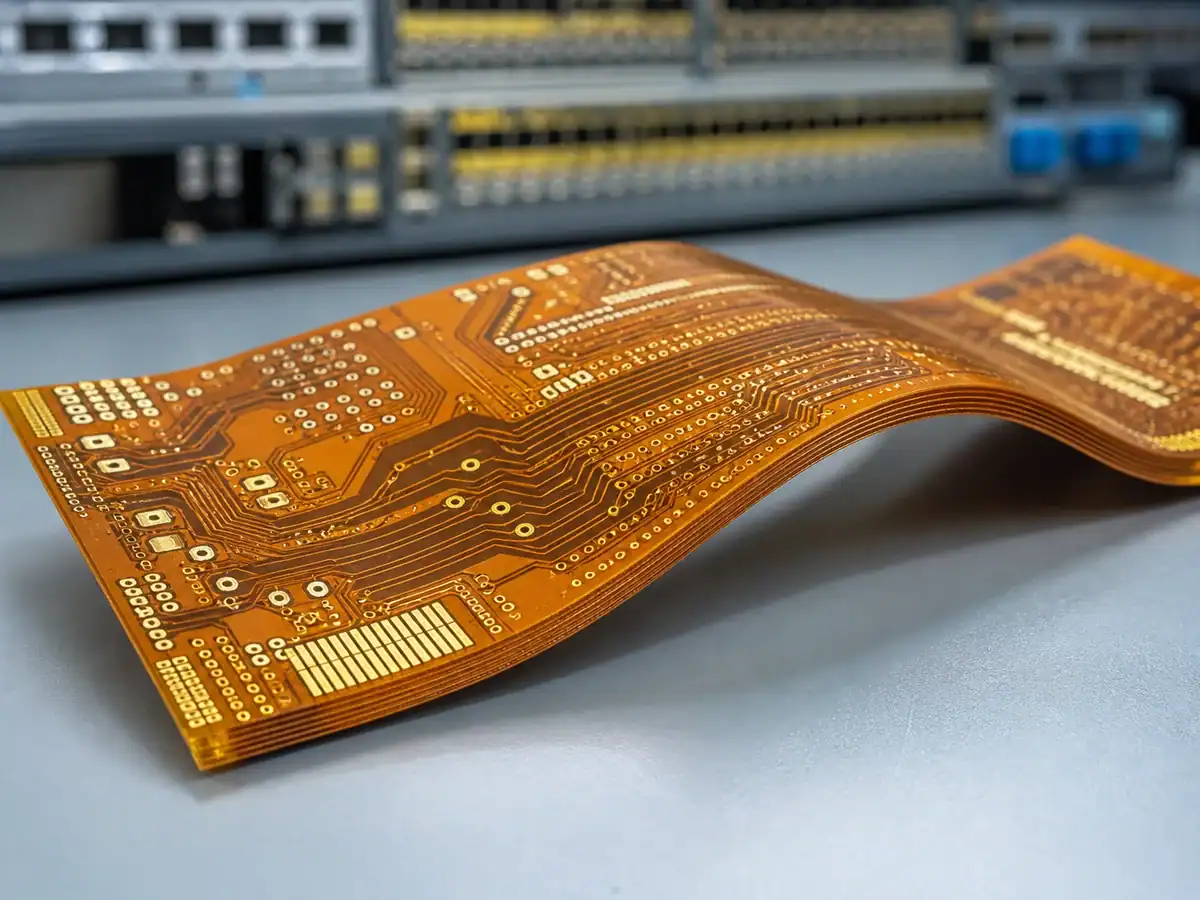
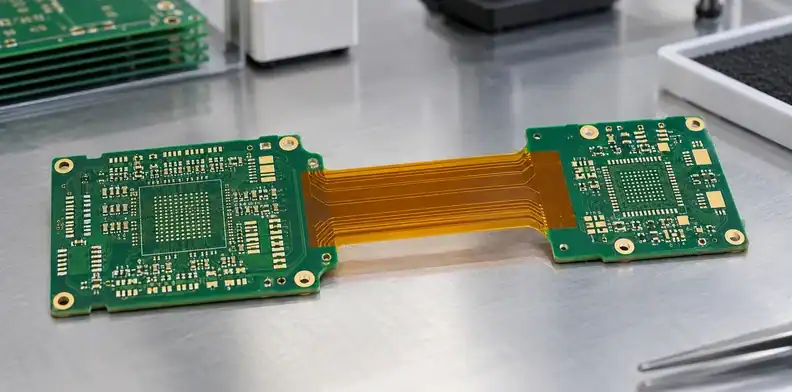
A flexible PCB is a circuit built entirely on flexible film, usually polyimide; a rigid-flex PCB laminates rigid board sections and flexible layers into one board. Rigid-flex costs more per board because it combines two material systems in one multilayer build, with more lamination, drilling and registration steps and lower panel use. But it can cost less overall when it replaces connectors, cables and the assembly labor to join several boards. This guide explains what drives each cost, how to compare them fairly, when a flex board with stiffeners is enough, and which IPC standards apply.
1. What Is the Difference Between Flex and Rigid-Flex?
| Flexible PCB | Rigid-flex PCB | |
|---|---|---|
| Construction | Copper on polyimide film, coverlay instead of solder mask | Rigid FR-4 (or similar) sections laminated to flexible layers that run between them |
| Typical layer counts | 1–6 layers | Often 4 layers and up (we build 4–22) |
| Component support | Stiffeners added under connectors and parts | Rigid sections carry components like a normal board |
| Interconnects | One flexible circuit, often with a connector at each end | Rigid sections connected through the flex layers, no connectors or cables between them |
| Design standard | IPC-2223 | IPC-2223 |
| Performance standard | IPC-6013 | IPC-6013 |
IPC-2223E (2020) covers design of flexible and rigid-flex boards, from single-sided flex to multilayer rigid-flex, and is used with IPC-2221 (IPC-2223E contents). IPC-6013F (July 2026) covers qualification and performance of finished flex and rigid-flex boards, including stiffeners, plated holes, blind and buried vias and HDI (IPC-6013F contents).

2. Why Does Rigid-Flex Cost More Per Board?
The build has more steps and more ways to lose yield:
| Cost driver | Why it adds cost |
|---|---|
| Two material systems | Polyimide flex cores plus rigid cores and no-flow or low-flow prepreg, so resin does not squeeze into the flex areas |
| Lamination | Rigid and flex layers pressed together; designs with blind/buried vias or HDI need extra lamination cycles |
| Coverlay and openings | Coverlay must be cut and registered on the flex layers; rigid areas need openings over the flex |
| Drilling and plating | Holes pass through materials that expand differently with heat |
| Panel use | Odd outlines and flex tails leave unused panel area |
| Testing and handling | Flex areas need careful handling through processing and inspection |
A plain flex circuit avoids most of these: thin layers, no rigid-flex lamination, and outlines that nest on the panel. The price difference is large for prototypes because rigid-flex setup work is spread over few boards, and it narrows as quantity grows. Our article on NRE and setup costs explains the one-time part of a quote.
3. When Is Rigid-Flex Cheaper Overall?
When it replaces a system of parts. Compare the full assembly, not two board quotes:
| Option | What you pay for |
|---|---|
| Rigid boards + cables or connectors | Two or more boards, connectors on each, cable assemblies, assembly labor to join them, and the failure risk of each connection |
| Flex circuit + rigid boards | Boards plus a flex jumper and its connectors |
| Rigid-flex | One board with the interconnect built in; fewer parts, no mating connectors between sections |
Rigid-flex tends to win on total cost when the product is small, has many connections between sections, sees vibration (where connectors are a reliability risk), or is built in volume, so connector and labor savings add up.
4. When Is a Flex Board With Stiffeners Enough?
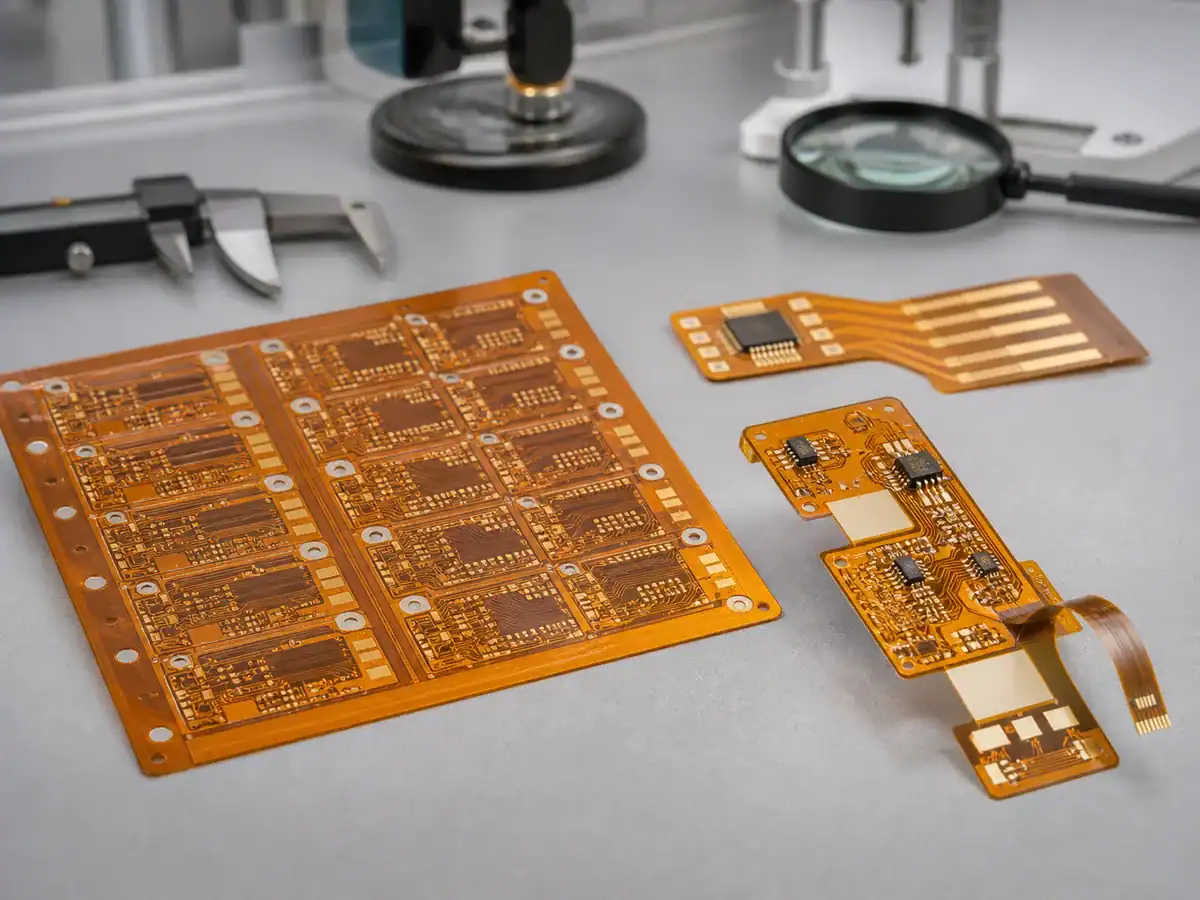
When the flex part only needs to bend during installation and the components can sit on stiffened areas. Stiffeners (FR-4, polyimide or metal) are bonded under connectors and component areas to support them for assembly. This covers many displays, keyboards, sensor connections and cable replacements at a much lower price than rigid-flex.
Choose rigid-flex instead when you need multilayer routing in the rigid areas, dense components on both sides, controlled impedance through the flex, or several rigid sections connected without connectors.
5. How Do You Reduce Flex and Rigid-Flex Cost?
- Use the fewest flex layers that route the signals. Each added flex layer makes the bend stiffer and the build harder.
- Keep layer counts symmetrical and the stackup standard. Ask the fabricator for its standard flex materials and thicknesses before you lock the design.
- Make the outline nest well on a panel. Long flex tails and L-shapes waste panel area.
- Keep plated holes and components out of bend areas.
- Respect bend radius. IPC-2223 defines bend ratio (bend radius to thickness). A 2013 IPC conference presentation cites 10:1 for single- and double-sided flex and 20:1 for multilayer as guidance (IPC APEX 2013); the right value depends on whether the bend is one-time (static) or repeated (dynamic), the copper type and layer count, so confirm it for your design.
- Avoid blind and buried vias in rigid-flex unless needed. Each extra lamination adds cost and time.
6. Does Rigid-Flex Change Assembly Cost?
Usually yes. Flex and rigid-flex boards may need carriers or fixtures to hold them flat through printing, placement and reflow, and moisture in polyimide means boards are often baked before soldering. Panelizing rigid-flex with the rigid areas supported keeps assembly closer to normal. If you also need the boards assembled, see our SMT assembly service.
How Can We Help?
We build flexible PCBs from 1 to 6 layers and rigid-flex from 4 to 22 layers, including rigid-flex HDI with up to four lamination cycles. Send your Gerber files and outline and we will quote both a flex-with-stiffener option and rigid-flex if you are deciding; bare-board quotes come back within 2 hours. For dense rigid sections, see our HDI PCB page.
Conclusion
Rigid-flex costs more per board than a flex circuit because it combines rigid and flexible materials in one multilayer build, with more lamination, registration and yield risk. It can still be cheaper overall when it replaces connectors, cables and assembly labor, especially in small, high-reliability or high-volume products. A flex circuit with stiffeners is enough when the flex only bends at installation and parts can sit on stiffened areas. Design to IPC-2223, accept to IPC-6013, and quote both options for the same product. Contact us for a quote.
FAQ
Are flex PCBs more expensive than rigid PCBs? Usually yes, per board, because of polyimide materials, coverlay and handling. They can lower the total cost when they replace cables and connectors.
What is the difference between a flex PCB and a rigid-flex PCB? A flex PCB is flexible throughout (with optional stiffeners); a rigid-flex PCB has rigid board sections joined by flexible layers in one laminated build.
How much can a flex PCB bend? It depends on thickness, layer count, copper type and whether the bend is one-time or repeated. IPC-2223 sets the design rules through bend ratio; tighter bends and repeated flexing need fewer layers and thinner builds.
What standard covers flex and rigid-flex PCBs? IPC-2223 for design and IPC-6013 for qualification and performance; IPC-6013F was published in July 2026.
How much does a rigid-flex PCB cost? It depends on layers, size, quantity, materials and via structure. Quote the same product as rigid-flex and as flex with stiffeners to see the difference for your design.
Upload your files today · Free DFM check before production · Ship worldwide
Get your PCB prototypes in as fast as 24 hours. We handle FR4, Rogers, and hybrid boards up to 40 layers in volume production, with advanced builds subject to engineering review — free prototypes for 2–4 layer FR-4 boards, no minimum order.
Just upload your Gerber + BOM — we source every part, assemble, and inspect (AOI + X‑Ray) so you don't have to chase suppliers. Boards ship in as fast as 24 hours.