
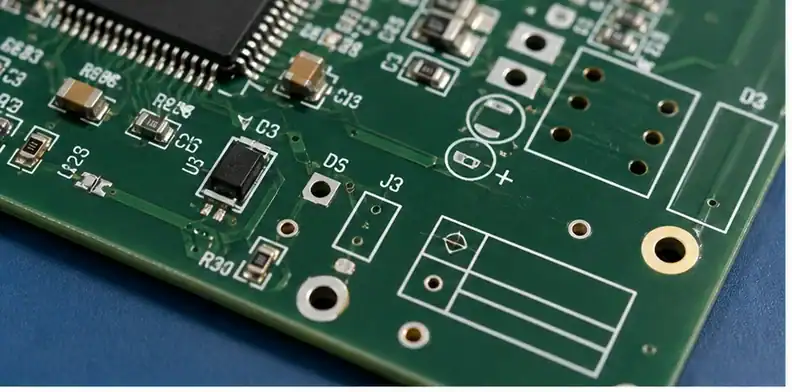
Quick Answer: Decision: assembly-marking review. Controlled object: controlled top and bottom legend layers reconciled with the BOM, centroid data, assembly drawing, and polarity conventions. Design-owned boundary: critical reference designators, pin-one and polarity symbols, product or revision marks, warning text, and required customer legends. Supplier discretion: clipping or moving noncritical legend within an approved keepout when the reference remains unambiguous. Stop rule: a critical mark removed, a label contradicting the BOM, text crossing pads, or two variants sharing indistinguishable markings.
Silkscreen RFQ path
- When does silkscreen become an RFQ risk?
- Which silkscreen markings should the files show?
- How should printability limits be handled?
- How does silkscreen affect PCBA quotation?
- What silkscreen changes need approval?
- What should a silkscreen RFQ package include?
When does silkscreen become an RFQ risk?
PCB silkscreen requirements become an RFQ risk when markings control assembly orientation, field service, revision traceability, compliance marking, or customer acceptance. Cosmetic legend is flexible; polarity, pin-one, date code, and approved identification marks are not.
- Separate assembly-critical markings from branding or optional reference text.
- Flag polarity, pin-one, connector labels, revision marks, and warning symbols.
- Tell the supplier which markings may be clipped, moved, or removed during CAM.
| Marking type | Buyer decision |
|---|---|
| Reference designator | Usually movable if assembly drawing remains clear |
| Polarity / pin one | Needs approval before removal or relocation |
| Date code / UL area | Reserve space before quote release |
Bottom line: Silkscreen is low cost, but a wrong mark can create assembly or traceability failures.
Which silkscreen markings should the files show?
The released files should show reference designators, polarity marks, pin-one indicators, connector labels, revision or part identification, date-code area, and any customer-required compliance marks. The RFQ should also say which marks are mandatory and which are only helpful.
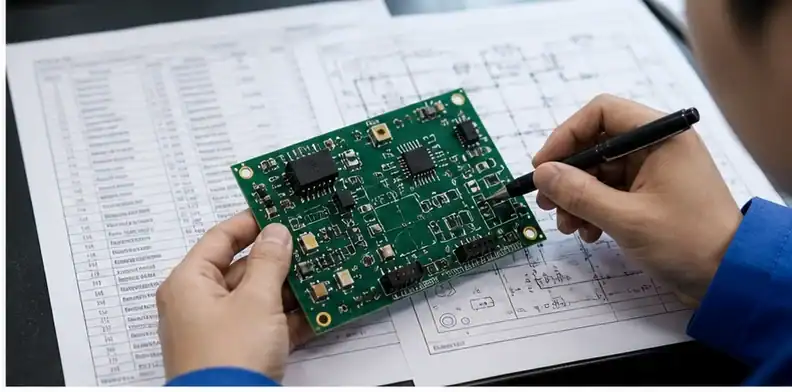
- Use the assembly drawing to confirm what the production team must read.
- Avoid relying on silkscreen for a safety or compliance claim unless the marking rule is clear.
- Reserve a marking block instead of forcing the factory to place codes over dense routing.
| File input | Why it matters |
|---|---|
| Silkscreen Gerber | Shows actual printable artwork |
| Assembly drawing | Shows orientation intent and component callouts |
| Traceability note | Defines date code, lot code, or fab mark expectation |
Bottom line: The supplier needs the artwork and the reason each controlled mark exists.
How should printability limits be handled?
Printability limits should be handled as a readability decision. Very small text, thin strokes, ink over pads, legend near vias, and bottom-side mirrored text can look correct in CAD but fail on the finished board. The buyer should let CAM clean noncritical legend while protecting controlled marks.
- Ask the supplier to report markings that may disappear or print broken.
- Protect polarity and connector labels before optional reference designators.
- Review bottom-side readability after Gerber export, not only in the layout tool.
| Print issue | Safe response |
|---|---|
| Text too small | Enlarge, move, or accept removal if noncritical |
| Ink on exposed pad | Remove or move before production |
| Mark over via field | Check whether it remains readable after finish |
Bottom line: Silkscreen cleanup is normal, but controlled orientation marks need buyer approval.
How does silkscreen affect PCBA quotation?
Silkscreen affects PCBA quotation when it helps operators verify orientation, feeder setup, inspection, rework, and field-service identification. If QueenEMS reviews both bare PCB and assembly, the silkscreen layer should be checked with the BOM, centroid file, and assembly drawing.
- Do not assume the assembly team can infer polarity from the schematic.
- Use centroid and assembly data to confirm which marks are useful on the physical board.
- Consider whether dense components make some marks unreadable after placement.
| Assembly task | Useful silkscreen support |
|---|---|
| SMT placement | Pin-one and polarity marks |
| Inspection | Readable reference designators near components |
| Repair | Connector and test-point labels where space allows |
Bottom line: Good silkscreen reduces human ambiguity only when it matches the assembly data.

What silkscreen changes need approval?
Silkscreen changes need approval when they alter polarity, revision identity, compliance marking, customer logo usage, warning symbols, or traceability information. Simple movement of noncritical designators can usually be accepted, but the final assumption should be documented.
- Ask CAM to distinguish cleanup from functional marking changes.
- Do not approve removal of date-code or UL space without checking the requirement.
- Keep customer branding rules separate from production traceability rules.
| Change | Approval level |
|---|---|
| Move reference text | Usually supplier controlled |
| Remove polarity mark | Engineering approval |
| Change date-code area | Quality or customer approval |
Bottom line: Marking authority should be clear before the factory cleans the legend layer.
What should a silkscreen RFQ package include?
A silkscreen RFQ package should include the silkscreen Gerbers, assembly drawing, BOM context, controlled marking notes, traceability requirement, compliance-mark expectation, and a rule for approving CAM cleanup. That gives QueenEMS a practical way to quote readability and production risk.
- Mark mandatory symbols and allow cleanup for noncritical clutter.
- State whether customer logo, part number, revision, and date code are required.
- Ask for photo evidence only around marks that affect acceptance.
| RFQ item | Purpose |
|---|---|
| Controlled mark list | Prevents accidental deletion |
| Assembly context | Shows which marks reduce placement risk |
| Evidence request | Supports traceability or customer inspection |
Bottom line: The RFQ should make silkscreen readable where it changes production decisions.
What should the buyer record before release?
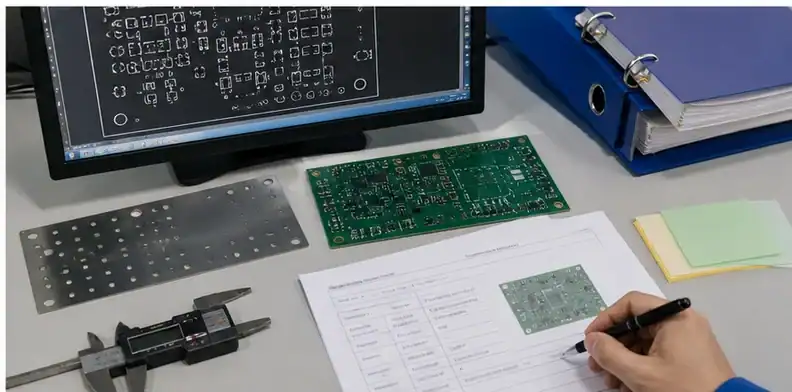
Production record for the assembly-marking review
Controlled object
Controlled object: controlled top and bottom legend layers reconciled with the BOM, centroid data, assembly drawing, and polarity conventions.
Failure boundary
Failure boundary: unreadable references, hidden polarity marks, ink on solderable metal, wrong variant identification, or rework mistakes.
Design-owned conditions
Design-owned conditions: critical reference designators, pin-one and polarity symbols, product or revision marks, warning text, and required customer legends.
Supplier discretion
Supplier discretion: clipping or moving noncritical legend within an approved keepout when the reference remains unambiguous.
Required proof
Required proof: a processed legend preview after CAM clipping plus representative first-article images for dense or customer-visible areas.
Production stop
Production stop: a critical mark removed, a label contradicting the BOM, text crossing pads, or two variants sharing indistinguishable markings.
Repeat-order baseline
Repeat-order baseline: the legend files, component revision, accepted clipping list, readable first article, and variant-marking rule.
RFQ inputs
RFQ inputs: Gerber or ODB++, BOM, centroid file, assembly drawing, component outlines, language or logo requirements, quantity, and cosmetic criteria.
FAQ
Can the supplier decide the assembly-marking review?
Discretion for assembly-marking review: clipping or moving noncritical legend within an approved keepout when the reference remains unambiguous. Engineering control for assembly-marking review: critical reference designators, pin-one and polarity symbols, product or revision marks, warning text, and required customer legends.
What stops this assembly-marking review?
Stop rule for assembly-marking review: a critical mark removed, a label contradicting the BOM, text crossing pads, or two variants sharing indistinguishable markings. Disposition owner for assembly-marking review: the named engineering approver.
Which proof closes the assembly-marking review?
Evidence for assembly-marking review: a processed legend preview after CAM clipping plus representative first-article images for dense or customer-visible areas. Revision link for assembly-marking review: the quoted dataset.
What survives into the next order?
Reorder baseline for assembly-marking review: the legend files, component revision, accepted clipping list, readable first article, and variant-marking rule.
For a focused assembly-marking review, send QueenEMS Gerber or ODB++, BOM, centroid file, assembly drawing, component outlines, language or logo requirements, quantity, and cosmetic criteria. Redline request: assembly-marking review. Open assumptions: assembly-marking review. Approver: assembly-marking review owner.
Written by the QueenEMS Engineering Team
Sources
Upload your files today · Free DFM check before production · Ship worldwide
Get your PCB prototypes in as fast as 24 hours. We handle FR4, Rogers, and Flex up to 60 layers — free prototypes for 2–4 layer boards, no minimum order.
Just upload your Gerber + BOM — we source every part, assemble, and inspect (AOI + X‑Ray) so you don't have to chase suppliers. Boards ship in as fast as 24 hours.