Finding the right ems companies for your 2026 projects involves balancing technical precision, regional compliance, and cost-efficiency. You are likely facing a common hurdle: your current supplier demands high Minimum Order Quantities (MOQs), fails to meet RoHS compliance updates, or simply delivers too late to meet your market window. Imagine you have a critical product launch scheduled for next month, but your European partner just notified you of a three-week delay due to component shortages they failed to mitigate. This bottleneck stalls your revenue and frustrates your stakeholders, leaving you searching for a more agile solution. To solve this, you need a manufacturing partner that offers the flexibility of a prototype shop with the scaling power of a global factory.
The Top 15 EMS Companies Serving Europe & UK (2026 Ranked)
Finding the right manufacturing partner depends heavily on your production volume, compliance requirements, and time-to-market. While some projects require a local European facility, others demand the rapid scaling and cost-efficiency of a global hub.
Here is our curated list of the top 15 Electronics Manufacturing Services (EMS) providers powering the UK and European electronics landscape in 2026.
1. Zollner Elektronik AG
Headquartered in Germany, Zollner is Europe’s largest homegrown EMS provider. They are highly respected for their complex, high-mix/low-volume production, specifically dominating the automotive, industrial electronics, and rail technology sectors with deep integration into German Industry 4.0 standards.
2. Foxconn (European Operations)
While globally known, Foxconn maintains massive manufacturing hubs in the Czech Republic and Hungary. They are the undisputed choice for ultra-high-volume consumer electronics and telecommunications hardware, offering unmatched scale for Tier-1 global brands.
3. GPV Group
Following its merger with Enics, Denmark-based GPV is a powerhouse in the European EMS market. They specialize in complex industrial, cleantech, and transportation electronics, offering strong local support across multiple European facilities.
4. Scanfil
A prominent Finnish EMS company, Scanfil is a major player in telecommunications, industrial automation, and medtech. They offer a strong network of factories across Northern and Central Europe, focusing on long-term product lifecycle management.
5. Plexus Corp.
Though US-based, Plexus has highly advanced manufacturing and engineering centers in the UK (Scotland) and Romania. They are the go-to partner for highly regulated markets, specifically aerospace, defense, and life-saving medical devices that require zero-defect manufacturing.
6. BMK Group
Based in Germany, BMK is renowned for its excellent prototyping and New Product Introduction (NPI) services. They are highly favored by European hardware startups and industrial clients who need close engineering collaboration during the early stages of product development.
7. Queen EMS (Best Alternative for Fast Turnaround & Flexible MOQs)
While local European manufacturers are excellent for certain highly restricted government projects, they often demand high Minimum Order Quantities (MOQs) and suffer from rigid 6-10 week lead times. Queen EMS bridges this critical gap for European and UK buyers.
Based in the global tech hub of Shenzhen with deep experience serving the European market, we offer the agility of a local prototype shop combined with the scaling power and component sourcing network of a global factory.
- Key Advantage: No strict MOQs (from 1 to 10,000+ units).
- Lead Time: Extremely fast 2-4 weeks delivery to Europe/UK.
- Specialty: High-complexity Mixed Assembly, Rapid Prototyping, and full Box-Build services.
- Engineering Value: Every project includes a rigorous, free DFM (Design for Manufacturability) check before production to ensure a 100% yield rate.
Ready to Experience Zero-Risk Prototyping?
Claim your FREE 2-4 Layer FR4 Prototypes today! Partner with QueenEMS for high-precision manufacturing and turnkey assembly services — from your first design to mass production.
8. NOTE AB
NOTE is a leading Swedish EMS provider with a strong footprint in Northern Europe and the Baltics. They excel in high-end, quality-critical electronics, particularly in the medtech, defense, and high-end industrial sectors.
9. Fideltronik
As Poland’s largest independent EMS provider, Fideltronik offers a highly competitive combination of Western European quality standards and Central Eastern European (CEE) cost-efficiency. They are heavily invested in AI-driven manufacturing and smart industrial solutions.
10. Kitron
Headquartered in Norway, Kitron focuses on sectors that demand extreme reliability, such as defense, aerospace, offshore/marine, and medical equipment. Their rigorous testing and tracing capabilities make them a top choice for mission-critical applications.
11. Videoton
Located in Hungary, Videoton is one of the largest privately owned EMS companies in Europe. They are highly competitive in large-scale box-build assembly, plastic injection molding, and automotive electronics, serving as a vital nearshoring partner for Western Europe.
12. Asteelflash
With a strong presence in France and Germany (now part of USI), Asteelflash is a global Tier-2 leader. They handle everything from EV infrastructure and smart home devices to complex data processing hardware, offering excellent supply chain resilience.
13. TT Electronics
A heavyweight in the UK, TT Electronics specializes in engineering-led solutions for performance-critical applications. If your product goes into an airplane, a military vehicle, or a surgical suite, their UK facilities are equipped to handle the strictest AS9100 and ISO 13485 requirements.
14. LACROIX Electronics
Based in France, LACROIX is uniquely focused on the “Smart World” transition. They are top-tier partners for industrial IoT, smart city infrastructure, environmental monitoring, and connected automotive systems.
15. Neways Electronics
Headquartered in the Netherlands, Neways operates at the bleeding edge of microelectronics. They are highly sought after by the semiconductor equipment industry, EV mobility sector, and high-tech medical device creators looking for advanced custom PCBA solutions.
Why are ems companies in Europe facing new shifts in 2026?
The landscape for ems companies has transformed as regional demand for “local-for-local” manufacturing increases to combat global supply chain volatility. European manufacturers are now prioritizing advanced automation and AI-driven logistics to stay competitive against offshore alternatives.
How is the “Green Deal” impacting your assembly choices?
Environmental regulations in the EU have become significantly stricter, requiring every electronics contract manufacturing partner to prove carbon neutrality.
- Transitioning to 100% lead-free solder processes.
- Implementing circular economy recycling for excess PCB materials.
- Mandatory ESG reporting for all Tier 1 and Tier 2 suppliers.
You must ensure your chosen partner isn’t just checking boxes but actively leading in sustainable electronics. After all, your brand’s reputation depends on the compliance of your supply chain.
Why is regional logistics the new competitive edge?
Fast delivery is no longer a luxury; it is a baseline requirement for modern PCB assembly EMS providers.
- Reduction of cross-border customs delays through local hubs.
- Real-time tracking of component procurement and assembly stages.
Key Takeaway: Choosing a partner with localized logistics ensures your product hits the market before the competition, bypassing the typical 4-week shipping wait.
| Factor | Standard Europe EMS | Queen EMS Alternative |
| MOQ Requirement | Usually 500+ units | Flexible (1 to 10,000+) |
| Lead Time | 6-10 Weeks | 2-4 Weeks |
| RoHS Compliance | Standard | Enhanced Certification |
The data suggests that while European firms offer proximity, niche players provide the speed required for modern R&D.
Which ems companies lead the UK market for high-reliability sectors?
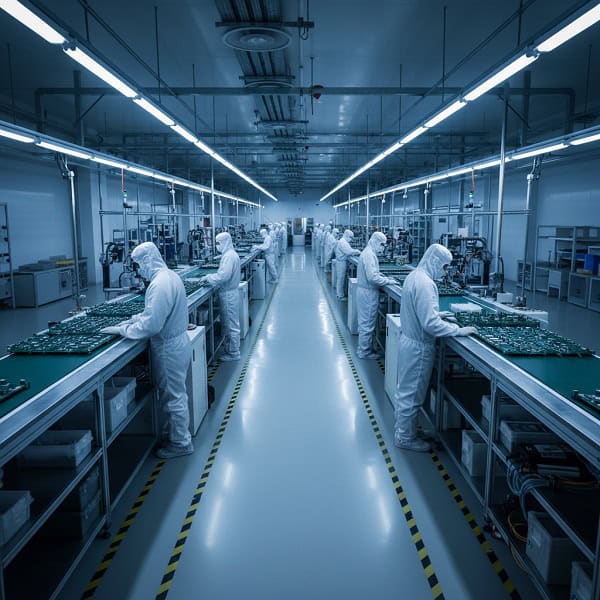
Leading ems companies in the UK are focusing heavily on the medical, aerospace, and defense sectors where failure is not an option. These firms have invested in specialized cleanrooms and X-ray inspection technologies to guarantee zero-defect production.
Can UK suppliers handle rapid prototyping for startups?
Startups often struggle with the “big factory” mentality where small orders are deprioritized.
- Specialized NPI (New Product Introduction) lines for fast turnarounds.
- On-site engineering support to optimize DFM (Design for Manufacturability).
Have you ever wondered if your design is actually optimized for mass production? This is where a UK-based partner’s proximity allows for face-to-face technical reviews that catch errors before the first solder joint is made.
What are the top-tier UK assembly standards to look for?
Quality is the cornerstone of UK manufacturing, specifically for electronics contract manufacturing.
- AS9100D certification for aerospace applications.
- ISO 13485 for medical device electronic assembly.
Key Takeaway: If your product involves life-saving or mission-critical technology, the UK’s stringent adherence to IPC Class 3 standards is your best insurance policy.
| UK Sector Focus | Key Certification | Inspection Level |
| Medical | ISO 13485 | 100% AOI + X-Ray |
| Aerospace | AS9100 | Full Traceability |
| Industrial | ISO 9001 | Batch Sampling |
This comparison highlights that UK suppliers are the gold standard for high-stakes, low-volume production.
How do ems companies in Germany dominate the automotive landscape?
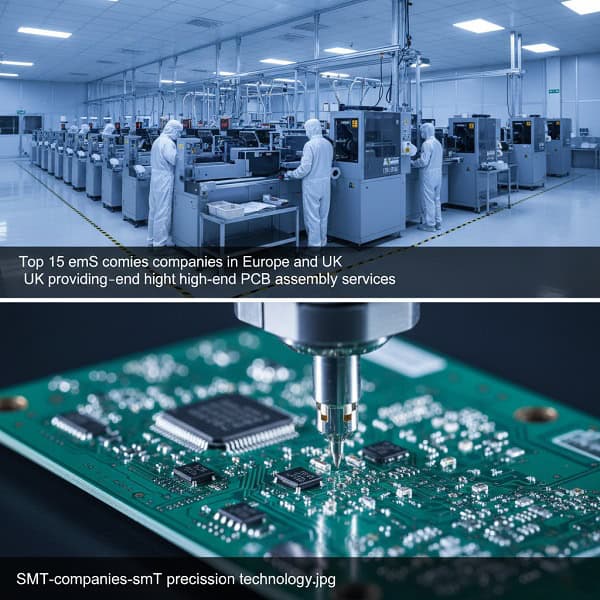
German ems companies are the backbone of the global automotive electronics industry, providing the scale and precision required for EV battery management systems and ADAS. Their infrastructure is built for high-volume, high-complexity boards that must withstand extreme environments.
Why is IATF 16949 non-negotiable for automotive projects?
Automotive projects require a level of process control that standard ISO certifications simply don’t cover.
- Rigorous risk management protocols for every production step.
- Detailed Failure Mode and Effects Analysis (FMEA).
You need to know that your boards won’t fail in a vehicle moving at 100 km/h. Working with a German Tier-1 supplier provides that peace of mind, albeit often at a significantly higher price point.
What role does Industry 4.0 play in German assembly?
Germany leads the world in integrating the Internet of Things (IoT) into the factory floor.
- Fully automated SMT lines with minimal human intervention.
- Predictive maintenance to prevent production downtime.
Key Takeaway: For high-volume automotive runs where cost-per-unit is driven by efficiency and uptime, German automation is unrivaled.
| Technology | German Standards | Typical Advantage |
| SMT Placement | 01005 components | Ultra-high density |
| Testing | In-circuit + Flying Probe | High Reliability |
Utilizing German-level automation ensures your automotive products meet the world’s most demanding safety standards.
Are ems companies in Central & Eastern Europe the best for cost-saving?
Central and Eastern European (CEE) ems companies provide a strategic middle ground between high-cost Western Europe and long-distance Asian manufacturing. Countries like Poland, Hungary, and Romania have become hubs for consumer electronics and industrial controls.
How does the labor cost impact your final BOM?
The cost of skilled engineering labor in CEE regions remains competitive, allowing for lower assembly fees.
- Significant savings on manual assembly and box-build services.
- Lower overhead costs for warehouse and storage facilities.
It’s a smart move if you are looking to scale a consumer product without the 6-week sea-freight delay from Asia. You get the benefit of EU trade agreements while keeping your Bottom-Of-Material (BOM) costs manageable.
Can CEE regions handle complex multi-layer PCBAs?
Infrastructure investments in the last decade have brought CEE factories up to Western standards.
- Installation of high-end Fuji and Panasonic SMT lines.
- Compliance with IPC-A-610 Workmanship standards.
Key Takeaway: Central Europe is the “sweet spot” for mid-to-high volume production where logistics speed and budget are equally weighted.
| Region | Labor Cost | Lead Time to UK/DE |
| Western Europe | High | 1-2 Days |
| Central Europe | Medium | 3-5 Days |
| Asia (Standard) | Low | 30+ Days (Sea) |
The proximity of CEE manufacturers allows for rapid replenishment of stock without the hefty price tag of local UK assembly.
How do top ems companies manage component shortages in 2026?
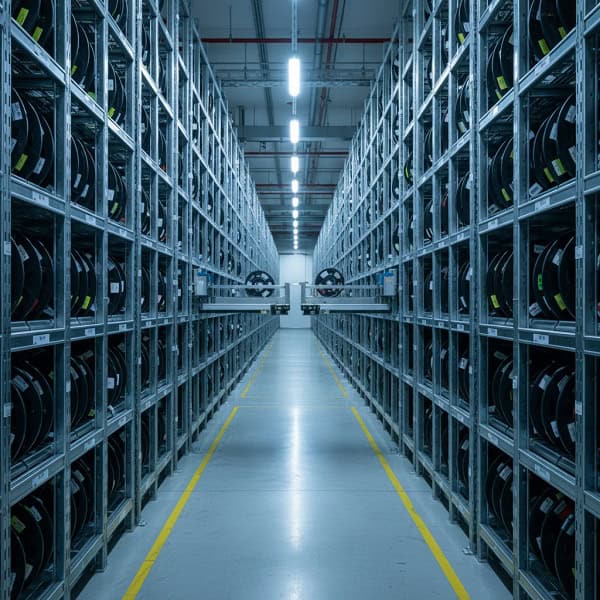
The most resilient ems companies have moved away from “just-in-time” inventory to “just-in-case” strategic stockpiling. In 2026, the best partners use global sourcing networks to find alternative components when your primary choice goes End-of-Life (EOL).
What is proactive obsolescence management?
A great partner doesn’t wait for a part to disappear; they warn you months in advance.
- Continuous monitoring of component lifecycles.
- Suggestion of pin-to-pin compatible alternatives during the design phase.
Think about how much time you lose when a single 5-cent capacitor goes out of stock. A proactive EMS provider has already sourced a replacement before you even see the alert.
Why is global component sourcing essential for European buyers?
Limiting sourcing to European distributors often leads to higher prices and limited availability.
- Access to direct manufacturer channels in Asia and the USA.
- Strict anti-counterfeit testing for all “grey market” components.
Key Takeaway: A partner with a global sourcing footprint acts as a buffer against regional market shocks, ensuring your production never stops.
| Sourcing Strategy | Reactionary | Proactive (Top EMS) |
| Shortage Handling | Halt Production | Switch to Pre-approved Alt |
| Pricing | Market Spot Price | Volume-Contract Price |
Effective sourcing is the difference between a product launch and a project cancellation.
What defines the best ems companies for high-speed digital designs?
For 5G, IoT, and high-speed computing, ems companies must master controlled impedance and signal integrity. These projects require specialized laminates like Rogers or Isola and precise registration during the multi-layer lamination process.
Is your manufacturer equipped for HDI (High Density Interconnect)?
Miniaturization is the trend, and if your EMS provider can’t handle blind and buried vias, you’re stuck.
- Laser drilling capabilities for micro-vias.
- Thin-core processing for ultra-slim devices.
Have you noticed your designs getting smaller while requiring more power? You need a partner who understands the thermal management challenges that come with HDI boards.
How is signal integrity verified after assembly?
Post-assembly testing must go beyond simple continuity checks.
- Functional testing at rated clock speeds.
- Signal integrity analysis using high-end oscilloscopes.
Key Takeaway: High-speed boards are sensitive; choosing a partner with specialized RF and digital testing experience prevents costly field failures.
| Design Feature | Standard EMS | High-Speed Specialist |
| Via Tech | Through-hole | Blind/Buried/Micro |
| Material | FR4 | Rogers/Megtron/PTFE |
High-speed projects require a manufacturer that acts more like a lab than a factory.
Can ems companies offer true “One-Stop” box build services?
Moving from a populated PCB to a finished, boxed product is where many ems companies struggle with quality control. A true turnkey partner handles plastics, cables, and final packaging under one roof.
What are the benefits of integrated cable assembly?
Outsourcing cables separately often leads to fitment issues during final assembly.
- Custom wire harness design and testing.
- Overmolding capabilities for ruggedized connectors.
Don’t let a poorly fitting cable ruin your final product’s user experience. Integrated services ensure that the internal wiring is as high-quality as the circuit board itself.
How does final functional testing protect your brand?
The last thing you want is for a customer to open a box and find a “Dead on Arrival” (DOA) unit.
- Custom test jig development for final product verification.
- Software flashing and MAC address labeling.
Key Takeaway: A complete box-build service reduces your overhead by eliminating the need for a separate fulfillment or assembly house.
| Service Level | PCBA Only | Full Box Build |
| Vendor Count | 3-4 (PCB, Plastic, Cable) | 1 (Turnkey) |
| Liability | Split | Single Point of Contact |
Turnkey box-builds streamline your supply chain and clarify accountability for quality.
Why should you look for ems companies with robust DFM support?

Design for Manufacturability (DFM) is the process of optimizing your layout to reduce production costs and errors. Top-tier ems companies provide this feedback before a single board is etched.
Can DFM save you 20% on production costs?
Minor changes to component spacing or pad sizes can significantly impact yield rates.
- Optimization of panel utilization to reduce scrap material.
- Selection of components that are compatible with standard nozzle sizes.
It is often the small, overlooked details that drive up your costs. A manufacturer who points these out early is a partner who cares about your bottom line.
How does DFM reduce “Solder Bridging” and other defects?
Thermal relief and proper mask clearance are critical for high-yield SMT assembly.
- Review of copper weights for high-power applications.
- Checking for “acid traps” in the PCB design.
Key Takeaway: DFM support is not just a “nice-to-have”—it’s a critical step in ensuring your product is actually manufacturable at scale.
| Design Check | Result Without DFM | Result With DFM |
| Component Spacing | Manual rework needed | 100% Auto-placement |
| Pad Size | Solder tombstoning | Perfect solder fillets |
Early DFM intervention prevents the nightmare of a 50% scrap rate on your first production run.
How do ems companies handle flexible and rigid-flex assembly?
As devices become wearable and foldable, ems companies must adapt to the unique challenges of flexible circuits. This requires specialized carriers and low-temperature soldering profiles.
Why is handling flexible circuits more difficult?
Flex PCBs are prone to dimensional instability during the reflow oven process.
- Use of custom SMT pallets to keep the film flat.
- Strict moisture control to prevent delamination.
You can’t treat a flex board like a standard FR4 board. If your partner doesn’t have experience with polyimide materials, your boards will warp or crack.
What are the advantages of rigid-flex for compact devices?
Eliminating connectors between boards increases reliability and saves precious space.
- Seamless integration of 3D electronics.
- Lower weight for aerospace and portable medical apps.
Key Takeaway: Rigid-flex is the ultimate solution for high-reliability miniaturization, but it requires a manufacturer with specialized material handling expertise.
| Material Type | Rigidity | Best Application |
| FR4 Rigid | High | Standard Industrial |
| Polyimide Flex | None | Wearables |
| Rigid-Flex | Hybrid | High-end Medical/Aero |
Expertise in flexible assembly is the hallmark of a forward-thinking EMS provider.
What is the future of ems companies regarding AI and data transparency?
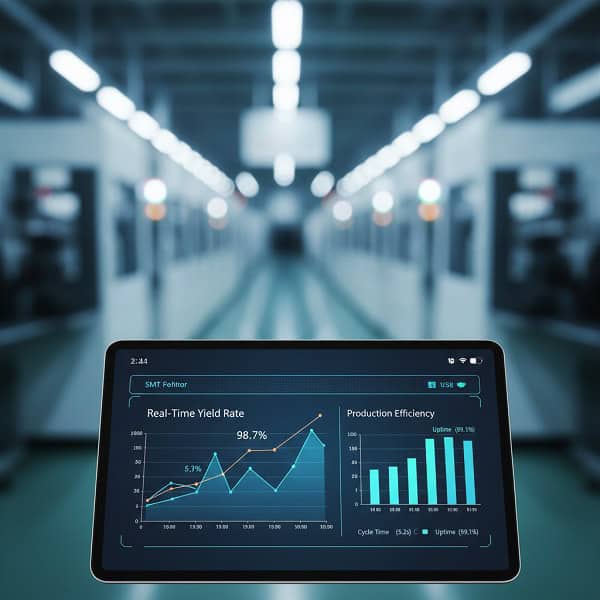
By late 2026, ems companies will be judged by their data transparency, allowing customers to see the “digital twin” of their production run in real-time. This level of insight reduces the need for traditional auditing and builds deep trust.
How does “Digital Twin” technology benefit the buyer?
You can simulate the assembly process to predict potential failure points before they happen.
- Virtual testing of thermal profiles.
- Real-time tracking of every component’s origin.
Have you ever wanted to look inside the factory from your office? Digital transparency provides that window, giving you confidence in the quality of your batch.
Will AI-driven inspection replace human operators?
AI can find defects that are invisible to the human eye, especially in BGA and QFN packages.
- Deep learning algorithms for Automated Optical Inspection (AOI).
- Zero-latency feedback loops to adjust SMT machines instantly.
Key Takeaway: Data-driven manufacturing is the next frontier, ensuring that the precision you see on the screen is exactly what you get in the box.
| Feature | Traditional Inspection | AI-Enhanced Inspection |
| Defect Detection | Rule-based (Limited) | Pattern-based (High) |
| Speed | Manual Sampling | 100% Real-time |
Embracing AI-driven partners ensures your products are built using the most advanced quality controls available.
Conclusion
Choosing the right partner among the vast sea of ems companies in 2026 requires more than just looking at a price list; it requires a deep dive into their technical capabilities, sourcing resilience, and commitment to transparency. We have explored how European firms are shifting towards automation, why UK suppliers remain the leaders in high-reliability sectors, and how the right DFM support can save your project from costly delays.
At Queen EMS, we understand the B2B pain points of high MOQs and slow delivery because we’ve built our factory to solve them. Whether you need a rapid prototype or a full-scale production run with global sourcing, our engineering-first approach ensures your design is optimized for success from day one. If you are tired of being just another number at a massive EMS conglomerate, it’s time to switch to a partner that values your innovation as much as you do. Contact us today to discuss how we can streamline your 2026 electronics roadmap and bring your products to market faster and more reliably.
FAQ
Can I get a quote for low-volume assembly without a high MOQ?
Yes, Queen EMS specializes in flexible volume production. Unlike many Tier 1 firms, we don’t penalize startups or R&D projects with massive minimum order requirements.
What’s the best way to ensure my PCB assembly is RoHS compliant?
Choose a manufacturer with dedicated lead-free lines and automated material tracking. We provide full certification of compliance for all components and solder used in your build.
How do I know if my design is ready for mass production?
You should request a professional DFM (Design for Manufacturability) report. Our engineers provide this review for every project to catch layout errors before they reach the factory floor.
Can I track my order status in real-time?
Most modern providers now offer digital portals for status updates. We provide transparent communication and milestones at every stage, from component sourcing to final shipping.
What is the fastest lead time for European PCB assembly?
While 6-8 weeks is standard, we can often deliver fully assembled boards in as little as 2-4 weeks. This depends on component availability and the complexity of your box build requirements.