
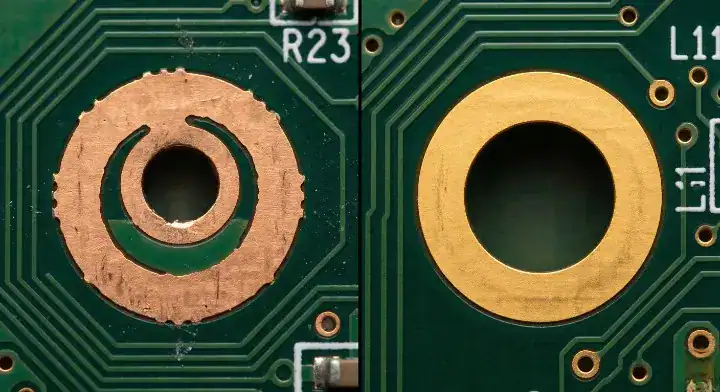
Quick Answer: When evaluating ipc class 2 vs class 3 pcb standards, the right choice is determined by your product’s application, not your preference for quality. Class 2 covers the vast majority of commercial and industrial electronics — laptops, industrial sensors, telecom equipment — where reliable performance is required but failure is not life-threatening. Class 3 is mandatory for medical devices, aerospace, and military applications where downtime or failure is unacceptable. Upgrading from Class 2 to Class 3 adds 15%–35% to your total assembly cost and 2–5 days to your lead time, driven by 100% inspection, mandatory X-ray on all BGA joints, and stricter solder and plating acceptance criteria.
Key takeaways:
- Class 3 is not “better Class 2” — it is a different acceptance standard required for specific applications.
- FDA Class II/III medical devices, MIL-spec contracts, and AS9100 aerospace programs mandate Class 3 — it is not optional.
- Class 3 adds 15%–35% to assembly cost; if a supplier quotes the same price for both, that is a red flag.
- Selective Class 3 (applying Class 3 to critical circuits only) is permitted by IPC-A-610 and can save 15%–25% on hybrid designs.
- Class 3 must be designed in from the PCB layout stage — annular ring and design rules differ and cannot be retroactively applied.
Table of Contents
- What Is the Real Difference Between IPC Class 2 and Class 3 PCB Standards?
- How Much More Does IPC Class 3 Actually Cost — and Why?
- Does Your Industrial Control Board Actually Need Class 3?
- Can You Mix Class 2 and Class 3 on the Same Board to Control Costs?
- How Do You Verify Your EMS Actually Built to Class 3?
- When Is Class 3 Mandatory — No Matter What Your Budget Says?
- The 60-Second Decision Checklist: Class 2 or Class 3?
You have a new product design ready for manufacturing, and your client casually requests it be built to Class 3 standards. You quickly ask your assembler for an updated quote, only to find the price jumped by 30% and the lead time extended by a full week. After reviewing 1,200+ assembly quotes last year, we see hardware teams constantly overpaying for strict specifications their products never actually required. Choosing between ipc class 2 vs class 3 pcb requirements is a strict regulatory decision, and navigating these IPC standards for PCB reliability correctly will save your project budget.
What Is the Real Difference Between IPC Class 2 and Class 3 PCB Standards?
The core difference between an ipc class 2 vs class 3 pcb is the strictness of the acceptability criteria during inspection, not the baseline manufacturing capability of the factory. Class 2 allows for minor visual imperfections like a 90-degree annular ring breakout, whereas Class 3 demands absolute perfection with a minimum 0.001-inch unbroken annular ring. You are paying for tighter process control and lower acceptable defect limits.
Pull back the curtain on this… Factory engineers do not use a “better” machine for Class 3. They use the exact same SMT lines but reject boards that would perfectly pass Class 2 inspection parameters. Understanding the physical differences in your PCB fabrication tolerances guide clarifies why the manufacturing yield drops so significantly.
| Technical Parameter | IPC Class 2 Requirement | IPC Class 3 Requirement | Actual Manufacturing Impact |
|---|---|---|---|
| Annular Ring | 90° breakout allowed | Min 0.001″ continuous ring, no breakout | Class 3 requires larger pad sizes designed during the layout phase. |
| PTH Barrel Fill | Minimum 50% fill | Minimum 75% fill | Class 3 requires more solder volume and tighter wave soldering control. |
| Copper Plating Thickness | 0.8 mil (20µm) average | 1.0 mil (25µm) minimum | Class 3 demands stricter chemical bath controls, increasing fabrication cost. |
| Solder Voids (BGA) | Max 1 void per ball, <5% total area | Zero voids allowed on critical joints | Class 3 forces mandatory 100% X-ray inspection for all BGA components. |
| SMD Component Skew | Allows calculated percentage of overhang | Near-zero overhang tolerance | Class 3 needs higher pick-and-place precision and frequent calibration. |
| Inspection Coverage | Sampled inspection, AOI recommended | 100% inspection, AOI and X-ray mandatory | Inspection labor is the primary driver of the Class 3 cost premium. |
| Documentation & Traceability | Basic functional test logs | Full component and operator traceability | Class 3 compliance severely increases administrative overhead. |
How Much More Does IPC Class 3 Actually Cost — and Why?
Specifying IPC Class 3 will increase your total PCB assembly cost by 15% to 35% and add 2 to 5 days to your production schedule. This massive premium is driven entirely by the intense labor required for 100% visual inspection, mandatory X-ray imaging, and the scrap rate of boards that fail the zero-tolerance criteria.
The factory floor reality is… when a board requires Class 3, the factory must slow down the SMT line to guarantee perfect solder paste deposition. Every single BGA joint requires manual X-ray verification to ensure zero voiding on critical pads. This intense PCBA testing and inspection process consumes massive engineering hours that you must pay for.
- 100% AOI and X-ray is mandatory across the entire panel, not just sampled batches.
- Scrap rates naturally increase because highly functional boards with microscopic cosmetic flaws are rejected outright.
- Comprehensive documentation tracking raw material lots and operator shifts adds heavy administrative overhead.
Does Your Industrial Control Board Actually Need Class 3?

If your industrial control board operates a non-safety-critical system like an HMI display or a temperature sensor, Class 2 is completely compliant and upgrading to Class 3 is a waste of money. Class 3 is only necessary for safety-critical industrial automation applications, such as emergency stop circuits or robotic torque controllers, where failure causes direct human injury.
So what does this mean for your product? Engineers constantly ask us: “My product is an industrial controller, not a medical device, but my client is demanding Class 3. Is this necessary?” A client requesting Class 3 in a contract is a commercial preference, but standards like IEC 61508 are actual functional safety laws. You must ask yourself two distinct questions to decide on your industrial automation PCB.
- Will this specific board failure directly cause physical harm or catastrophic system failure?
- Must this board survive extreme vibration or temperature swings for over 10 years without maintenance?
If you answer “no” to both questions, Class 2 provides all the reliability your device requires.
Can You Mix Class 2 and Class 3 on the Same Board to Control Costs?
Yes, you can absolutely mix standards on the same board; applying selective Class 3 requirements to critical sub-circuits while keeping the rest at Class 2 saves 15% to 25% on total assembly costs. The IPC-A-610 standard explicitly permits this hybrid approach, allowing you to protect high-voltage isolation zones or safety interlocks without paying premium inspection fees for basic LED indicators.
That said… many designers ask: “Some zones on my board are critical and others are not. Can I specify Class 3 only for the important parts?” Absolutely, but you must document it correctly. You must explicitly color-code these zones on your assembly drawing and clearly note the physical boundaries in your BOM.
Not sure which IPC class your product requires? Upload your BOM and application details — our engineering team will review and confirm the right standard before production starts.
How Do You Verify Your EMS Actually Built to Class 3?

You verify a true Class 3 build by demanding specific documentation: an IPC-A-610H compliance declaration, 100% AOI and X-ray reports for all BGAs, a non-conformance report (NCR) log, and valid operator IPC certificates. A verbal promise from a sales rep is entirely worthless during a strict regulatory audit.
Pull back the curtain on this… buyers frequently ask: “My supplier says they build to Class 3, but how do I actually verify they executed it?” You start by verifying their IPC trainer certifications directly at ipc.org/certification-validation, which must be renewed every two years. Price is also a massive, unavoidable red flag.
- If the quote for Class 3 is identical to Class 2, they are lying to win your business.
- True Class 3 demands higher scrap rates and heavy inspection labor, forcing the price up.
Request a free first-article inspection on your first order. We document every step to IPC-A-610 Class 2 or Class 3 standards, whichever your application requires.
When Is Class 3 Mandatory — No Matter What Your Budget Says?
IPC Class 3 is legally mandatory and non-negotiable for FDA Class II and III medical devices, MIL-spec defense contracts, and AS9100 aerospace programs. If your product falls into these categories, you cannot use a hybrid approach or downgrade to Class 2 to save money, because government auditors will meticulously trace your assembly records back to the factory floor.
If you are designing a medical PCB assembly, you must commit to Class 3 on day one of your CAD layout. Class 3 requires a minimum 0.001-inch unbroken annular ring, meaning you need larger pad sizes than Class 2 allows. You cannot simply apply Class 3 inspection rules to a board designed with Class 2 physical constraints. Proper DFM for PCB assembly ensures your layout physically supports the strict standard from the beginning.
The 60-Second Decision Checklist: Class 2 or Class 3?
Use this application matrix to determine your exact regulatory requirement instantly. Never pay the 30% premium for Class 3 unless your operating environment or regulatory auditor explicitly demands it.
| Your Product / Application Scenario | Recommended IPC Class | Reasoning |
|---|---|---|
| Consumer Electronics (Phones, TVs, Appliances) | Class 2 | High reliability needed, but failures are not life-threatening. |
| Industrial Sensors, Non-Safety PLCs | Class 2 | Needs long life, but Class 2 is completely compliant and cost-effective. |
| Industrial Safety Interlocks, E-Stop Circuits | Class 3 | Failures can cause human injury; follows IEC 61508 safety protocols. |
| Medical Diagnostics (FDA Class I) | Class 2 | Non-patient-contact devices usually do not mandate Class 3. |
| Medical Therapeutics (FDA Class II/III) | Class 3 — Mandatory | FDA 510(k)/PMA audits trace assembly records directly to the factory. |
| Aerospace & Defense (MIL-spec Contracts) | Class 3 — Mandatory | AS9100 and military specifications explicitly demand it. |
| Automotive (Infotainment, Non-Safety) | Class 2 | AEC-Q standards apply, but full Class 3 is overkill. |
| Automotive (ADAS, Braking, Steering) | Class 3 | ISO 26262 functional safety requirements make this mandatory. |
| Servers, Data Center Equipment | Class 2 | Needs extreme uptime, but is not physically safety-critical. |
| Single PCBA with Mixed Criticality | Selective Class 3 | Permitted by IPC-A-610; saves 15%–25% on hybrid designs. |
Written by the QueenEMS Engineering Team. Ready to build your next board? Contact us today at https://www.queenems.com/
Frequently Asked Questions About IPC Standards
Can I upgrade a Class 2 board design to Class 3 during assembly?
No, you usually cannot upgrade a design after layout. IPC Class 3 requires stricter physical design rules, specifically a minimum 0.001-inch unbroken annular ring around all vias. If your CAD layout was designed to Class 2 standards featuring 90-degree breakouts, the physical copper lacks the dimensions required to pass a Class 3 inspection. Upload your design to QueenEMS for a free DFM review to check your annular rings.
Do I need Class 3 for an automotive PCB?
It depends entirely on the system the board controls. If the board controls the infotainment system or cabin lighting, Class 2 is sufficient. However, if the board operates the Advanced Driver Assistance Systems (ADAS), electronic braking, or steering modules, ISO 26262 functional safety standards require the extreme reliability of IPC Class 3.
How long does IPC-A-610 certification last for factory operators?
IPC certifications for factory operators and inspectors are valid for exactly two years. A reputable EMS provider will have a continuous training program to ensure their staff remains certified. You can directly verify an operator’s or trainer’s certification status by entering their credential number on the official IPC validation website.