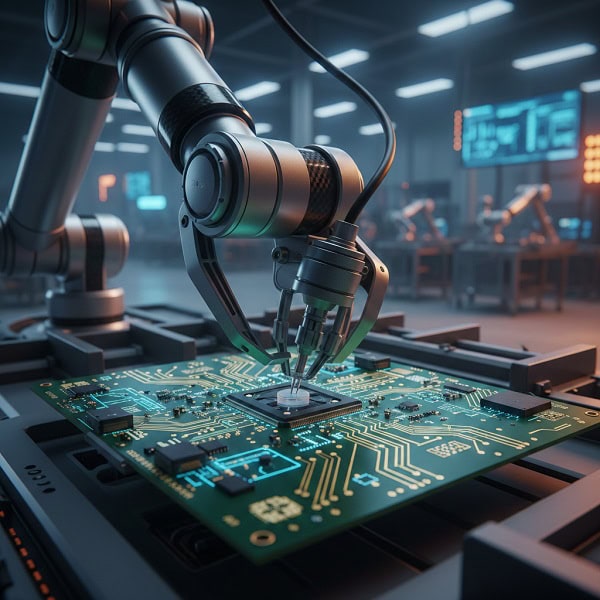
Industrial robotics PCB assembly provides the fundamental neural network that allows modern automated systems to execute high-precision movements and process real-time environmental data. Imagine your automated production line suddenly grinding to a halt because a single control board failed under thermal stress, leading to thousands of dollars in lost productivity every hour. It is a nightmare for any operations manager facing mounting downtime costs and missed delivery targets. Here’s the deal, queenems offers the specialized Industrial Robotics PCB Assembly services required to prevent these catastrophic failures through rigorous engineering standards and advanced testing.
1. What Is Driving the Rapid Growth in Industrial Robotics PCB Assembly?
The surge in demand stems from the global shift toward hyper-automation and the need for high-precision Industrial Robotics PCB Assembly to handle complex logic in smart factories. As labor costs rise and technology improves, companies are replacing manual tasks with robotic precision across all manufacturing sectors. You might be wondering why this matters now more than ever. The integration of AI and machine learning requires more powerful, reliable circuit boards than traditional manufacturing ever did.
Why are labor shortages a catalyst?
Global labor shortages are driving companies to invest in autonomous systems that can operate 24/7 without fatigue. The best part is that this shift creates a massive need for durable electronics that can survive continuous industrial use.
- Increased adoption of AGVs in warehousing.
- Rapid deployment of collaborative robots (Cobots).
- Growth in automated assembly lines for EVs.
How does AI integration impact PCBA design?
AI-driven motion control requires boards that can process massive amounts of data with near-zero latency. It gets better… these boards often require specialized chipsets and high-speed signal routing that only experienced factories can provide.
- High-speed microprocessors for real-time kinematics.
- Advanced memory modules for local data processing.
- Specialized cooling solutions for high-performance ICs.
Key Takeaway: Understanding growth trends helps you anticipate component shortages and plan your production cycles more effectively to stay ahead of the competition.
| Growth Driver | Impact on PCBA | Industry Benefit |
| Labor Scarcity | Higher production volume | Reduced operational cost |
| AI Technology | Complex signal routing | Enhanced robot autonomy |
| 5G/IoT | Wireless module integration | Real-time fleet tracking |
As the market expands, the complexity of the internal electronics grows, making the choice of a manufacturing partner a strategic business decision.
2. Why Is Quality Mission-Critical for Robot Control Board Manufacturing?
Quality is the cornerstone of robotics because Industrial Robotics PCB Assembly failures in the field lead to expensive recalls and potential safety hazards for human workers. A robot operating at high speeds must have a control board that responds with absolute consistency under vibration and heat. What’s the catch? Even a microscopic soldering defect can cause intermittent signals that lead to erratic robot behavior or total system shutdown.
What are the risks of low-quality soldering?
Low-quality soldering leads to cold joints that fracture under the constant vibration typical of robotic movements. Believe it or not, a single failed joint can cause a multi-million dollar production line to go offline for days.
- Intermittent electrical connections.
- Short circuits caused by solder bridges.
- Premature component failure due to overheating.
How do we ensure zero-defect production?
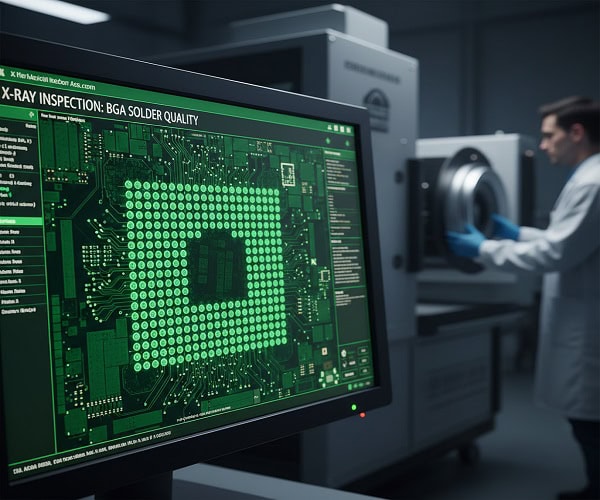
We implement 100% Automated Optical Inspection (AOI) and X-ray analysis to verify the integrity of every single solder joint. The real story is that standard visual inspection is simply not enough for the high-density boards used in modern robotics.
- 3D AOI for volume and height verification.
- X-ray for BGA and hidden joint inspection.
- Functional testing to simulate real-world stress.
Key Takeaway: Prioritizing quality over the lowest initial bid saves you thousands of dollars in long-term maintenance and brand reputation damage.
| Quality Risk | Manufacturing Solution | Impact on Reliability |
| Vibration Fatigue | High-reliability solder alloys | Long-term durability |
| Signal Noise | Differential pair routing | Precise motion control |
| Thermal Stress | Advanced thermal via design | 24/7 operation capability |
Ensuring quality at the assembly stage is the only way to guarantee the safety and longevity of industrial automation equipment.
3. How Do Control Modules Function Within Industrial Robotics PCB Assembly?
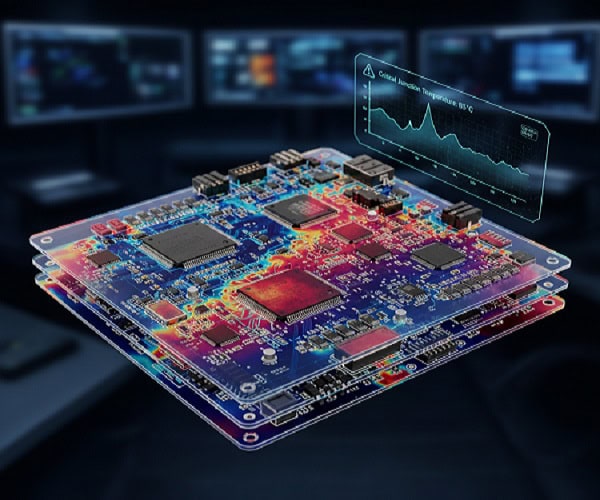
Control modules act as the central nervous system of the machine, utilizing Industrial Robotics PCB Assembly to translate software commands into physical movement via motor drivers. These boards must process thousands of data points per second from encoders and sensors to maintain accuracy. You might be wondering how such a small board can manage so much power.
Can control boards handle high-current loads?
Yes, by using heavy copper PCB technology and optimized power planes, control modules can manage the significant current required to drive industrial actuators. Here’s the deal, managing heat is often more difficult than managing the electrical signals themselves in these dense designs.
- Use of 3oz+ copper for power tracks.
- Strategic placement of high-current MOSFETs.
- Integrated heat sinks for power management ICs.
How is signal integrity maintained?
Signal integrity is maintained through careful impedance control and the separation of high-voltage drive paths from low-voltage logic paths. Keep in mind that our SMT assembly process includes strict checks for component placement accuracy to avoid signal interference.
- Ground plane isolation for noise reduction.
- Matched length traces for synchronized timing.
- High-frequency shielding for wireless modules.
Key Takeaway: Ensuring your control modules are designed for high-current efficiency prevents premature hardware failure and improves overall robot energy consumption.
| Module Type | Primary Component | Critical PCBA Requirement |
| Main CPU | Multi-core Microprocessor | High-density signal routing |
| Power Driver | High-voltage MOSFETs | Thermal dissipation management |
| I/O Board | Optoisolators | Galvanic isolation for safety |
A well-designed control module ensures that the physical hardware can keep up with the increasingly demanding software of modern robotics.
4. What Role Does Sensor Array Integration Play in Robotics Electronics?
Sensor arrays are the eyes and ears of the robot, requiring precise Industrial Robotics PCB Assembly to filter noise and amplify weak signals from the environment. Whether it is LiDAR for navigation or pressure sensors for a robotic gripper, the PCBA must ensure data accuracy. But here’s the kicker… if the sensor data is corrupted by electronic noise, the robot becomes a blind giant.
How do we protect delicate sensor signals?
We protect delicate signals by implementing advanced EMI/EMC shielding and using low-noise amplifiers (LNAs) directly at the sensor interface. This is where it gets interesting… even the layout of the traces can act as an antenna for noise if not designed correctly by experts.
- Faraday cages for RF-sensitive components.
- Differential signaling to cancel out common-mode noise.
- Proper grounding to prevent ground loops.
Can robots achieve 360-degree awareness?
Robots achieve this by integrating multiple sensor types—LiDAR, ultrasonic, and vision—into a unified sensor-hub PCBA. The best part is that this allows for “sensor fusion,” giving the robot a much more reliable understanding of its surroundings.
- Integration of high-speed LVDS vision interfaces.
- Precision clocking for multi-sensor synchronization.
- Compact rigid-flex designs for articulated sensor mounts.
Key Takeaway: High-quality sensor integration allows your robots to operate safely around humans and navigate complex environments with millimeter precision.
| Sensor Type | Data Complexity | PCBA Challenge |
| LiDAR | Very High | High-speed data throughput |
| Ultrasonic | Low | Analog signal noise filtering |
| 3D Vision | Extreme | Massive heat generation during processing |
Without precise sensor PCBA, even the most powerful robot is unable to interact safely or efficiently with its environment.
5. Is Power Management the Secret to Industrial Robotics PCB Assembly Longevity?
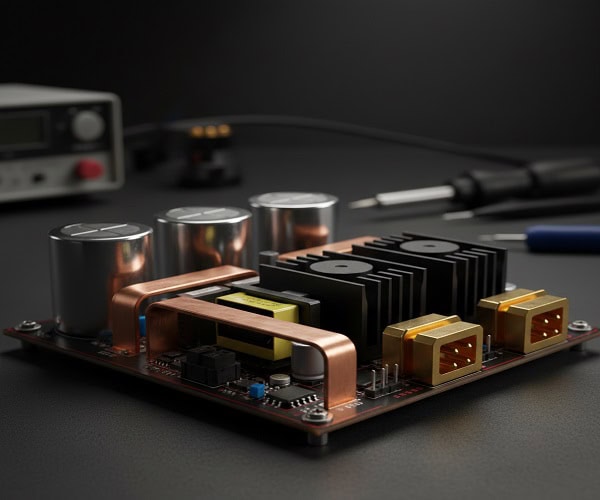
Effective power management within Industrial Robotics PCB Assembly ensures that sensitive logic components are shielded from the high-voltage spikes common in industrial motor systems. Without robust power regulation, a small voltage surge could fry the entire control system and lead to weeks of downtime. The real story is that most robotics failures are actually power-related rather than logic-related.
How do we handle battery systems in mobile robots?
Mobile robots require sophisticated Battery Management Systems (BMS) to ensure even charging and prevent dangerous thermal runaway events. You might be wondering how we fit these safety features into a compact robot chassis.
- Active cell balancing circuits.
- Over-current and thermal cutoff protection.
- High-accuracy voltage monitoring chips.
What about energy efficiency?
We utilize Gallium Nitride (GaN) and Silicon Carbide (SiC) components to create high-efficiency power stages that minimize energy loss as heat. Ready for the good part? This allows your robots to run longer on a single charge and reduces the size of necessary cooling fans.
- Use of high-frequency switching regulators.
- Low-ESR capacitors for ripple reduction.
- Optimized PCB layer stack-up for heat dissipation.
Key Takeaway: Investing in advanced power management architecture extends the operational lifespan of your robotics fleet and reduces battery replacement costs.
| Power Subsystem | Component Focus | Value |
| Voltage Regulation | DC-DC Converters | Stable 3.3V/5V for logic |
| Surge Protection | TVS Diodes | Protection against spikes |
| Heat Management | Thermal Vias | Prevents board delamination |
Stable power delivery is the foundation upon which all other robotic functions are built, ensuring long-term reliability in the field.
6. Why Are Communication Protocols Vital for Industrial Automation Electronics?
Robots must communicate with other machines and central servers, requiring Industrial Robotics PCB Assembly that supports ruggedized protocols like Industrial Ethernet and CAN-FD. In a B2B setting, data loss is not an option when coordinating a fleet of moving AGVs in a busy warehouse. It gets better… modern boards now include edge computing to process data before it’s even sent to the network.
Which protocol is best for real-time control?
EtherCAT is often the preferred choice because it allows for microsecond-level synchronization between the robot’s brain and its moving joints. This is where it gets interesting… routing these high-speed signals requires precise length matching to prevent timing errors.
- EtherCAT for low-latency motion control.
- PROFINET for factory-wide integration.
- CAN-FD for robust internal bus communication.
How do we ensure wireless reliability?
Wireless reliability is achieved by using high-quality RF modules and designing specialized PCB antennas that are tuned to the robot’s physical enclosure. What’s the catch? Metal robot frames often block signals, requiring strategic antenna placement and specialized PCBA layouts.
- Integration of WiFi 6 and 5G modules.
- External antenna connectors (SMA/U.FL).
- EMI shielding for wireless interference protection.
Key Takeaway: Choosing the right communication hardware ensures your robots can be integrated seamlessly into existing “Industry 4.0” factory ecosystems.
| Protocol Type | Speed | Best Use Case |
| EtherCAT | 100 Mbps | Real-time motion sync |
| CAN-FD | 8 Mbps | Internal component bus |
| WiFi 6 | 9.6 Gbps | Wireless fleet coordination |
A robust communication board turns a group of individual robots into a coordinated, efficient, and data-driven industrial workforce.
7. How Does High-Density Interconnect (HDI) Benefit Robot Design?
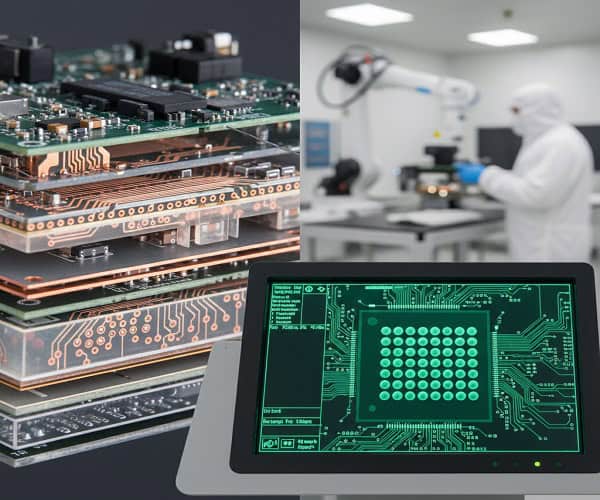
HDI technology allows for smaller, lighter Industrial Robotics PCB Assembly which is essential for drones and compact robotic arms where every gram of weight counts. By using microvias and finer trace widths, we can pack more functionality into a smaller footprint without sacrificing performance. You might be wondering if shrinking the board makes it more fragile.
Is HDI durable enough for industrial use?
Yes, when manufactured correctly with high-Tg materials, HDI boards are actually more resistant to thermal expansion stresses than standard multi-layer boards. Here’s the deal, the shorter path lengths in HDI designs actually improve signal integrity and reduce heat buildup.
- Stacked and staggered microvias.
- Finer line widths and spacing (down to 3 mils).
- Integration of high-pin-count BGA chips.
What are the manufacturing challenges?
The primary challenge is the extreme precision required for laser drilling and the high-speed placement of tiny components like 01005 passives. The best part is that our factory uses 100+ advanced machines to handle this BGA assembly with ease.
- Precision laser drilling for microvias.
- Advanced vacuum lamination for thin layers.
- High-speed pick-and-place for tiny components.
Key Takeaway: Embracing HDI technology allows you to design more ergonomic and capable robots that can fit into spaces previously inaccessible to automation.
| Feature | Standard PCB | HDI PCB |
| Layer Count | 4-8 layers | 10-20+ layers |
| Via Diameter | 0.2mm – 0.3mm | 0.05mm – 0.1mm |
| Component Density | Medium | Ultra-High |
The move toward HDI is a direct response to the market’s demand for smaller, more powerful, and highly mobile robotic systems.
8. Why Is DFM/DFA Essential for Robotics Electronics Manufacturing?
Design for Manufacturing (DFM) and Design for Assembly (DFA) are critical steps in Industrial Robotics PCB Assembly that prevent costly production delays and assembly errors. By reviewing the design early, we can identify parts that are difficult to source or prone to soldering issues during the reflow process. But here’s the kicker… many designers overlook how a board will actually be built at scale, leading to 20% or higher rework rates.
How does DFM reduce production costs?
DFM reduces costs by optimizing the board layout for automated machines, which minimizes the need for manual labor and expensive rework. Ready for the good part? A simple change in component orientation can sometimes double the production speed.
- Standardization of component footprints.
- Optimization of panel layout for material savings.
- Ensuring adequate clearance for test probes.
Can DFM prevent component shortages?
Yes, a thorough DFM review includes a BOM (Bill of Materials) analysis to ensure all parts are currently available and not nearing “End of Life” (EOL) status. The real story is that sourcing alternative parts during design is much cheaper than redesigning the board after production has started.
- Verification of component life cycles.
- Identification of pin-to-pin compatible alternatives.
- Checking for lead-time risks in the supply chain.
Key Takeaway: Integrating DFM/DFA early in your design cycle speeds up your time-to-market and ensures your robotics project stays within budget.
| DFM Check | Problem Prevented | Cost Impact |
| Solder Mask Gap | Short circuits | High |
| Pad Size Matching | Tombstoning | Moderate |
| BOM Scrubbing | Line stoppages | Extreme |
DFM is the bridge between a great concept and a profitable, mass-produced robotic product that can be scaled effectively.
9. How to Select the Right Partner for Industrial Robotics PCB Assembly?
Selecting a partner for Industrial Robotics PCB Assembly requires looking beyond just the price; you need a factory with the specific certifications and equipment to handle industrial-grade work. You are looking for a long-term collaborator who understands the high stakes of industrial automation. What’s the real story? Many “cheap” suppliers use refurbished components or skip critical testing steps to lower their quotes, which eventually costs you more.
What equipment should a top-tier factory have?
A top-tier factory must have high-speed SMT lines, 3D AOI, X-ray inspection, and dedicated testing stations for functional validation. The best part is that advanced equipment like our 100+ machines ensures consistency that manual assembly can never match.
- NXT high-speed placement machines.
- Multi-zone reflow ovens for precise profiles.
- In-circuit testing (ICT) and FCT capabilities.
Is traceability important in robotics?
Traceability is vital for identifying the root cause of any failure in the field and managing potential recalls with precision. This is where it gets interesting… we provide full component traceability, so you know exactly which batch of chips went onto which specific board.
- Barcoding for every individual PCBA.
- Detailed component lot tracking.
- Archived inspection reports for every unit.
Key Takeaway: Choosing a partner with a deep understanding of the robotics industry ensures that your supply chain is a competitive advantage rather than a risk.
| Selection Factor | Importance | Why it Matters |
| ISO 9001/UL | Mandatory | Safety and process standards |
| SMT Capacity | High | Ability to scale with your growth |
| Engineering Support | Critical | Solving design issues before production |
The right partner acts as an extension of your own engineering team, ensuring every board meets the highest standards of the robotics industry.
10. What Is the Future of Industrial Robotics PCB Assembly?
The future involves the integration of flexible electronics and 3D-printed circuits into Industrial Robotics PCB Assembly to create “soft” robots that can safely interact with humans. We are moving toward a world where the robot’s “skin” is also its circuit board, allowing for unprecedented levels of sensitivity. Believe it or not, the line between the robot’s mechanical structure and its electronic brain is starting to blur.
Will AI design the next generation of PCBs?
AI is already being used to optimize trace routing and thermal management, creating boards that are far more efficient than those designed by humans alone. The real story is that AI can simulate millions of layout variations in minutes to find the most reliable configuration.
- AI-driven thermal simulation.
- Automated routing for signal integrity.
- Predictive maintenance sensors on-board.
How does sustainability affect robotics?
Sustainability is driving the use of lead-free soldering and recyclable PCB substrates to reduce the environmental impact of industrial automation. Ready for the good part? This not only helps the planet but also ensures compliance with increasingly strict global environmental regulations.
- Use of halogen-free materials.
- RoHS and REACH compliance.
- Energy-efficient manufacturing processes.
Key Takeaway: Staying informed about future trends ensures that your robotics products remain relevant and technologically superior in a fast-paced market.
| Future Tech | Application | Expected Impact |
| Flexible PCBA | Wearable/Soft robots | High mobility |
| Edge AI Chips | Local intelligence | Low latency response |
| Embedded Sensors | Structural health | Self-diagnosing robots |
The future of robotics is smaller, smarter, and more integrated, and it all starts with the evolution of the printed circuit board as a dynamic component.
Conclusion
To summarize, we have explored the critical subsystems—from control modules to sensor arrays—that make modern robotics possible, and why high-quality Industrial Robotics PCB Assembly is the non-negotiable foundation for success. We have seen how DFM, power management, and advanced communication protocols determine whether a robot thrives or fails in a harsh industrial environment. Here’s the deal, the rise of smart robots is unstoppable, but only those backed by reliable, high-performance electronics will lead the market.
At queenems, we specialize in transforming your complex robotics designs into high-yield, production-ready reality through our engineering-driven approach. Whether you need rapid prototypes to test a new concept or stable mass production to fulfill global orders, our team is equipped to handle your most challenging requirements. If you are ready to eliminate supply chain risks and ensure your robotics products are built to the highest industrial standards, contact us today to start your project. We are committed to being the reliable partner that helps you automate the world with confidence and precision.
FAQ
Q1: Can I get a small batch of prototypes before moving to full-scale production? Yes, we fully support low-volume prototyping. It is a vital step for validating your robotics design and performing thermal or functional testing before committing to a larger investment.
Q2: What’s the best way to prevent component shortages for my long-term robotics project? The most effective method is to provide a long-term forecast and allow us to manage a “buffer stock” of critical ICs. This ensures your production line never stops, even during global supply chain fluctuations.
Q3: How do I know if my robotics design is optimized for high-volume manufacturing? We offer a comprehensive DFM (Design for Manufacturing) review. Our engineers will analyze your files and provide a detailed report on potential assembly risks and cost-saving opportunities.
Q4: Can you handle the assembly of complex BGA and fine-pitch components? Absolutely, our high-precision SMT lines are specifically designed for 0.3mm pitch BGAs and 01005 components. We use 3D X-ray inspection to guarantee 100% solder integrity on every hidden joint.
Q5: How do I ensure my sensitive robotics IP is protected during the manufacturing process? We maintain strict confidentiality protocols and are happy to sign NDAs. As a B2B-focused factory, we value long-term trust and the protection of our clients’ intellectual property above all else.