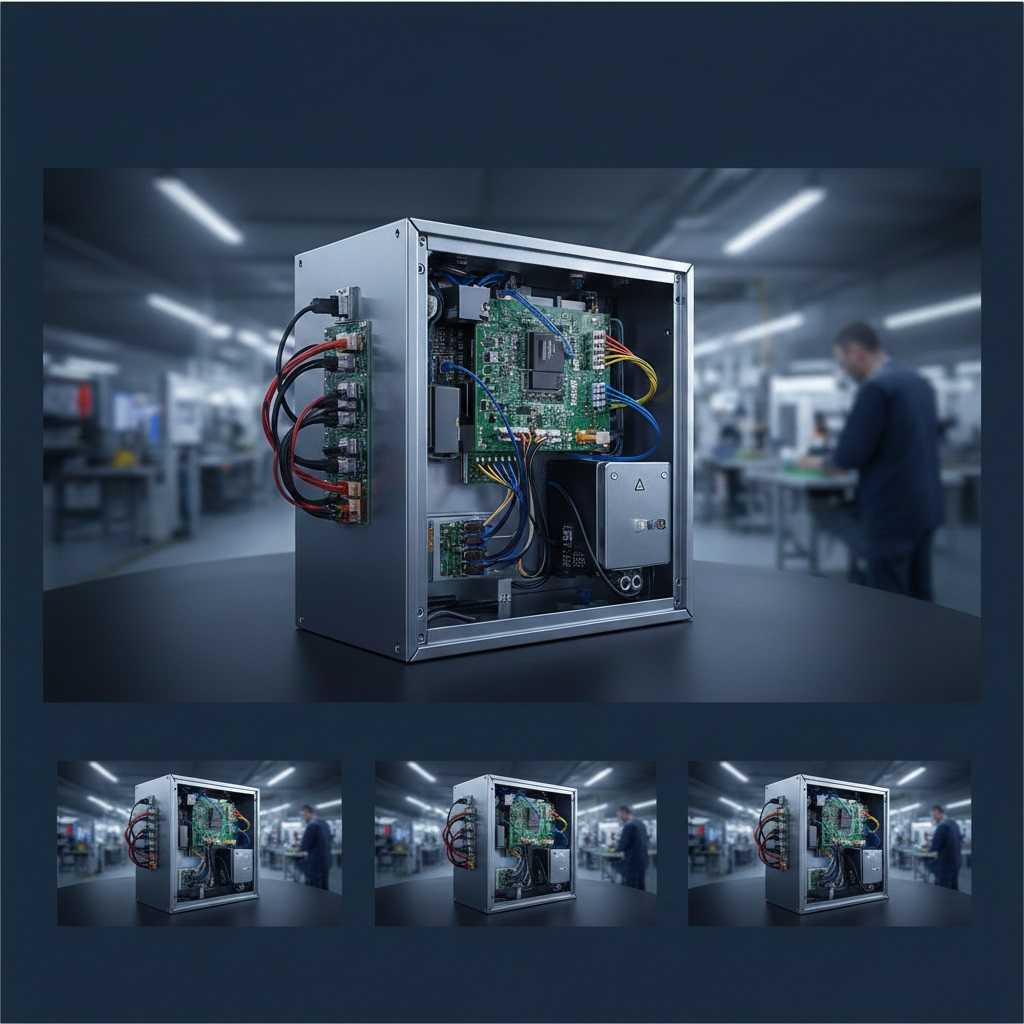
Choosing the right partner for your project requires evaluating their ability to manage complex mechanical integration, cable routing, and rigorous functional testing under one roof. +3
Imagine you have successfully designed a groundbreaking electronic device, and your PCBA prototypes work perfectly. However, as you move toward final assembly, you realize that the enclosures don’t fit, the internal cables are too long, and managing five different vendors for screws, plastics, and electronics is becoming a logistical nightmare. This fragmentation often leads to production delays, hidden costs, and quality inconsistencies that can sink a product launch. The solution is a comprehensive box build assembly strategy that integrates all manufacturing steps into a single, streamlined workflow managed by a professional engineering team.
What is the full scope of box build assembly?
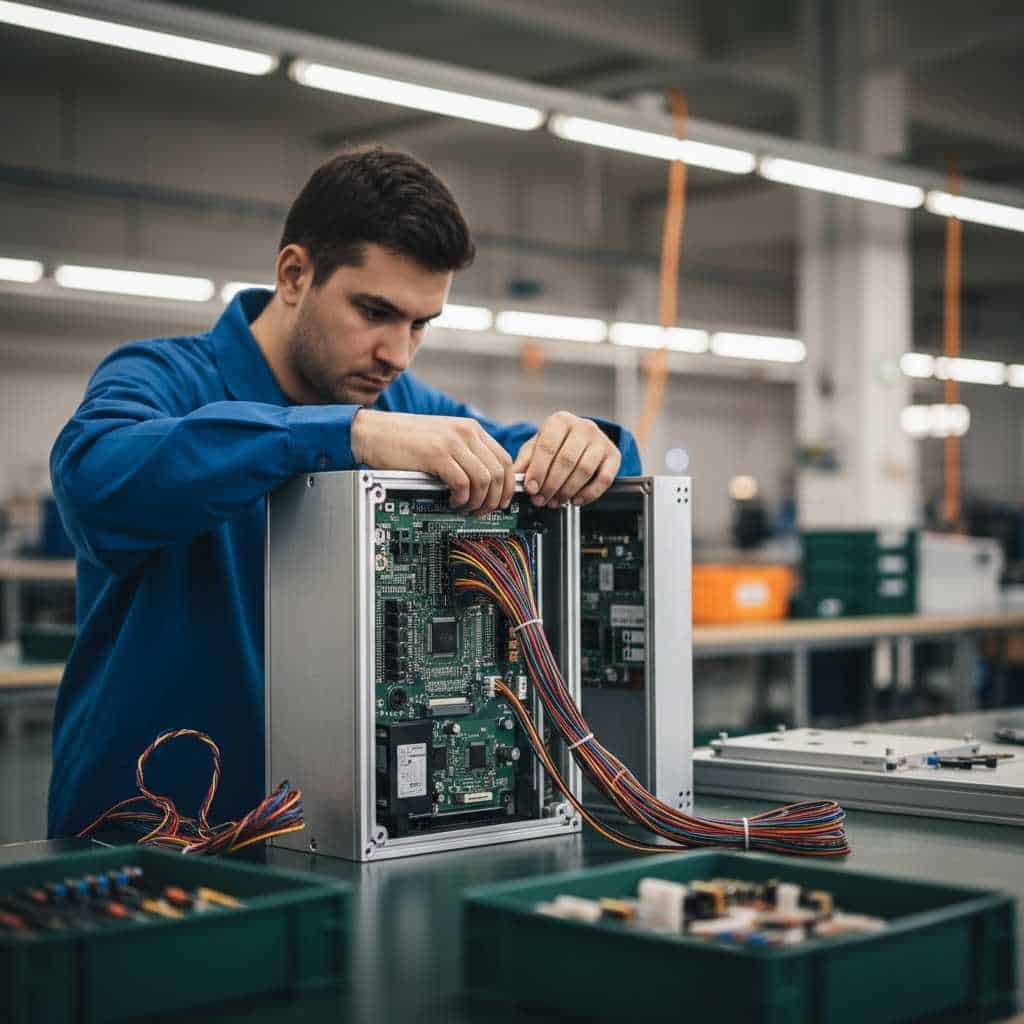
A full box build assembly involves the complete electromechanical integration of your printed circuit boards into their final enclosures, including all wiring and testing. This process transforms a bare sub-assembly into a finished product ready for the end-user.
How does system integration work?
You will find that true system integration requires more than just “snapping parts together.” It involves precise placement of the PCBA, securing power supplies, and installing user interfaces like buttons or screens.
- Installation of sub-assemblies and components.
- Integration of power supplies and cooling systems.
- Final casing and labeling for brand consistency.
You might be wondering—is there a better way to handle this?
Key Takeaway
A complete box build reduces your overhead by centralizing responsibility for the final product’s quality and fit. +1
| Component Type | Integration Requirement |
| Enclosures | Precision fit and EMI shielding |
| Sub-assemblies | Secure mounting and grounding |
| Hardware | Torque-controlled fastening |
Successful integration is the bedrock of a professional Turnkey PCB Assembly project.
Why is cable and harness design vital for box build assembly?
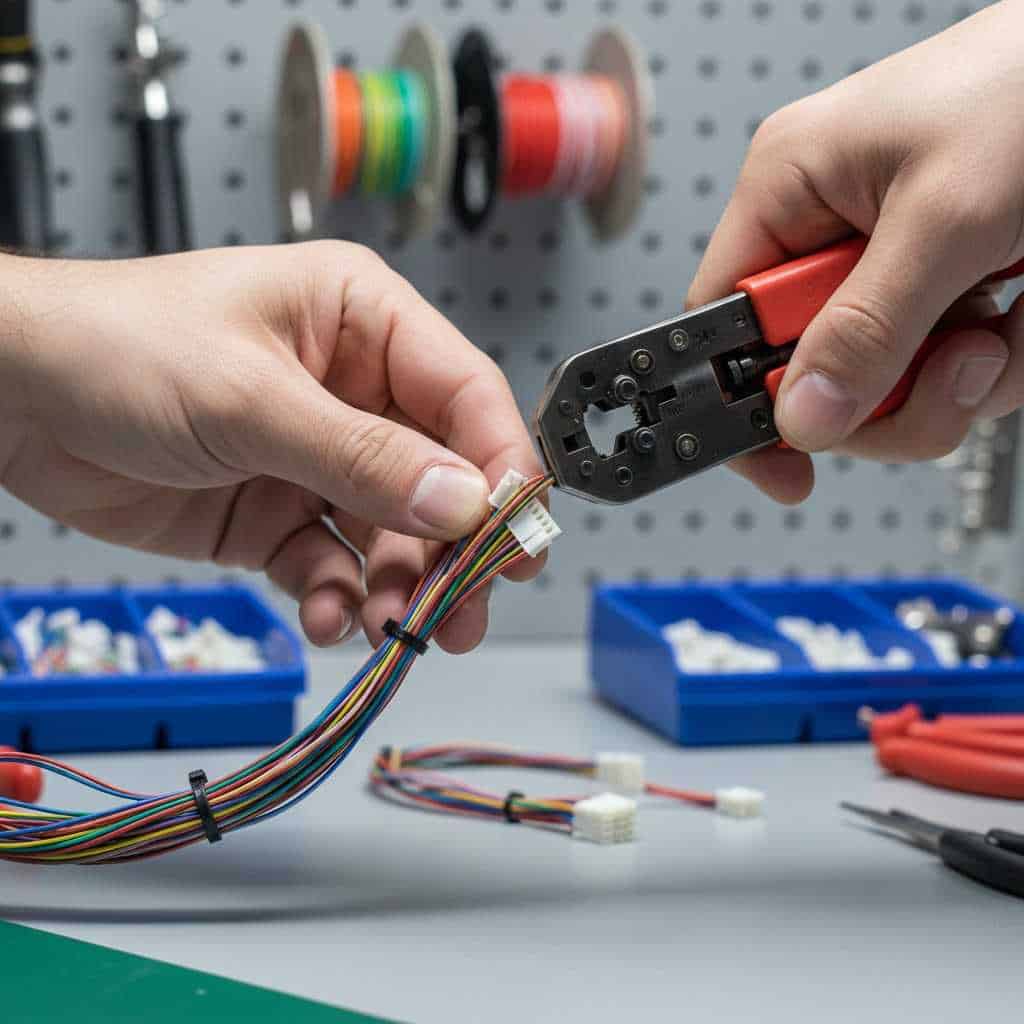
Cable and harness design is critical because poor routing can lead to signal interference, overheating, or physical damage during shipping. In a tight enclosure, every millimeter of wire must be accounted for to ensure reliability.
What makes a harness reliable?
You need to ensure that your Cable & Harness Assembly is optimized for the specific dimensions of the box build assembly enclosure. This prevents strain on connectors and ensures easy access for future maintenance.
- Selection of high-quality connectors and wire gauges.
- Use of heat shrink and protective sleeving.
- Organized routing to minimize electromagnetic interference (EMI).
But that’s not all you need to worry about.
Key Takeaway
Proper cable management within the box build assembly prevents long-term failure caused by vibration and thermal expansion.
| Routing Factor | Impact on Quality |
| Bend Radius | Prevents wire fatigue |
| Strain Relief | Protects solder joints |
| Identification | Simplifies field repairs |
Organized wiring is a clear indicator of high-quality electronics manufacturing.
How does enclosure selection impact box build assembly?
Enclosure selection dictates the physical durability and environmental protection level of the finished box build assembly. Whether you choose plastic, aluminum, or steel, the material must align with the product’s thermal and shielding requirements.
Which material is best for your project?
You must choose materials that balance weight, cost, and protection. For example, a ruggedized industrial sensor will require a different housing than a desktop consumer device.
- Plastic: Cost-effective and lightweight for consumer goods.
- Die-cast Aluminum: Excellent heat dissipation and EMI shielding.
- Stainless Steel: Maximum durability for harsh chemical environments.
The question is—how do you make it all fit?
Key Takeaway
The enclosure is the first line of defense for the internal box build assembly components against moisture, dust, and impact. +1
| Enclosure Material | Thermal Performance | Shielding Capability |
| Polycarbonate | Low | Requires coating |
| Aluminum | High | Excellent |
| Mild Steel | Moderate | Very High |
Choosing the right housing is a critical step in DFM / DFA Engineering.
What testing strategies are used in box build assembly?
Testing strategies in box build assembly go far beyond simple power-on checks to ensure the entire system functions as a unified whole. Functional testing verifies that the software, hardware, and mechanical interfaces all work together seamlessly.
How do we ensure total system reliability?
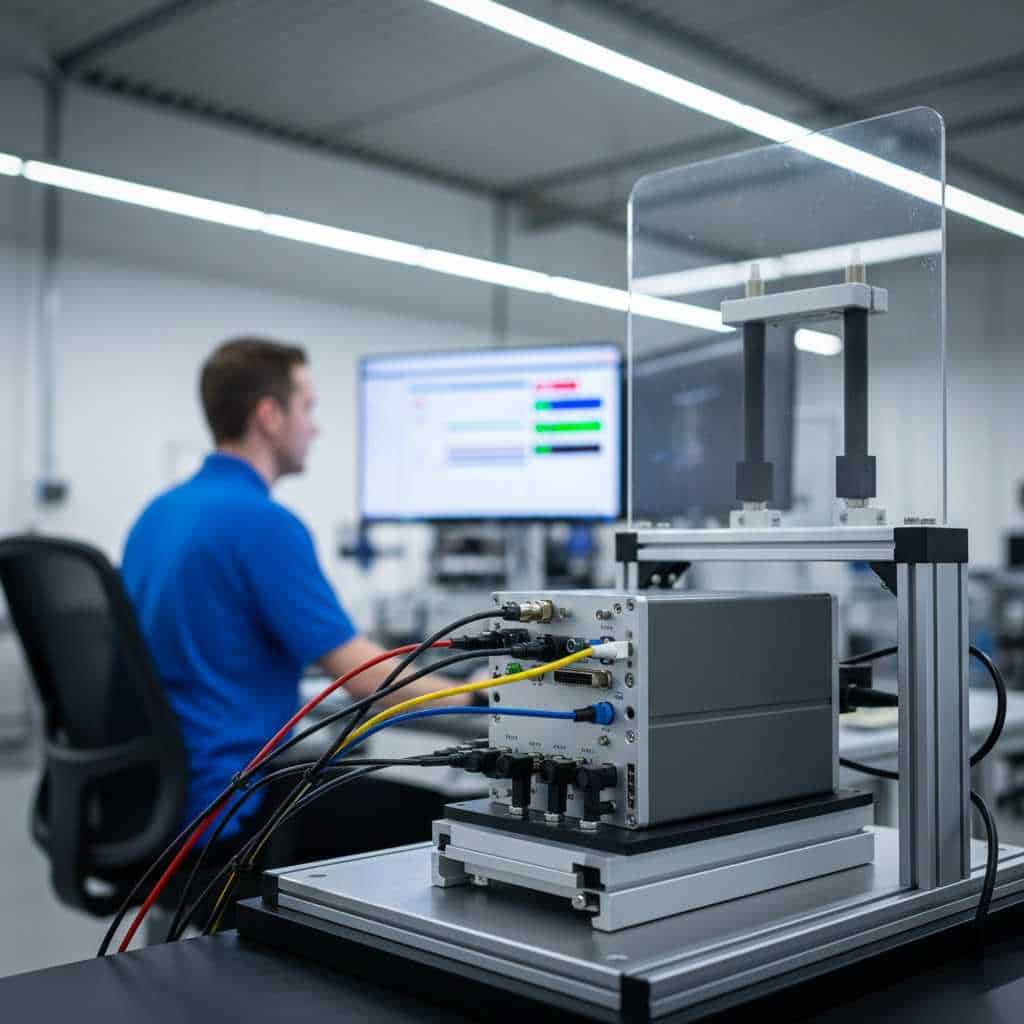
You will benefit from a dedicated Functional Testing Service that simulates real-world operating conditions for the box build assembly. This catches issues that might not be visible at the individual PCBA level.
- Environmental stress screening (ESS) for temperature and vibration.
- Full software loading and configuration verification.
- Hi-pot and grounding safety testing for high-voltage systems.
Wait, it gets even better.
Key Takeaway
System-level testing ensures that your box build assembly arrives at your customer’s door in 100% working order.
| Test Type | Failure Detected |
| Burn-in | Early component mortality |
| IO Testing | Connector and cable faults |
| UI Check | Software and display bugs |
Rigorous testing is the only way to guarantee field reliability.
How to optimize supply chain for box build assembly?
Optimizing the supply chain involves consolidating dozens of mechanical and electronic parts into a single BOM (Bill of Materials) for the box build assembly. This reduces lead times and minimizes the risk of missing tiny but critical components like specific fasteners.
Can one vendor really manage it all?
You can simplify your life by choosing a partner that handles everything from SMT PCB Assembly to final packaging. This eliminates the markup and shipping delays between multiple middle-men.
- Unified procurement of plastics, metals, and electronics.
- Inventory management for long-lead time components.
- Just-in-time delivery to sync with your sales cycles.
And here is the best part.
Key Takeaway
Supply chain consolidation for box build assembly significantly reduces administrative overhead and total landed cost. +1
| Procurement Factor | Single Source Advantage |
| Logistics | One shipping cost |
| Quality Control | Single point of accountability |
| Lead Time | Synchronized production |
Streamlined logistics are essential for competitive product launches.
Why is DFM essential for box build assembly?
Design for Manufacturing (DFM) is essential because it identifies assembly bottlenecks before they become expensive production delays in the box build assembly phase. Small changes to a bracket or a connector location can save thousands in labor costs.
How does early planning save money?
You should involve your manufacturing partner during the design stage of the box build assembly. This allows for the optimization of assembly jigs and fixtures that speed up the build process.
- Standardization of hardware to reduce tool changes.
- Modular design for easier sub-assembly and repair.
- Selection of enclosures that allow for automated assembly steps.
You’ll want to see this.
Key Takeaway
DFM for box build assembly bridges the gap between a perfect CAD model and a cost-effective production unit.
| DFM Goal | Production Benefit |
| Error-proofing | Eliminates assembly mistakes |
| Component Reduction | Lowers BOM complexity |
| Accessibility | Speeds up testing and repair |
Early collaboration is the key to high-yield PCB Assembly Services.
What role does thermal management play in box build assembly?
Thermal management is a core challenge in box build assembly because heat trapped inside an enclosure is the number one killer of electronics. Effective design ensures that heat is moved away from sensitive ICs to the outer casing or exhaust vents.
Is your box getting too hot?
You need to analyze the airflow and heat dissipation paths within your box build assembly. Without proper thermal pads or fans, your high-performance PCBA will throttle or fail prematurely.
- Placement of heat-generating components near cooling surfaces.
- Use of thermal interface materials (TIMs) like pads or grease.
- Design of vent patterns that balance airflow and EMI protection.
It gets better.
Key Takeaway
Proper thermal design in the box build assembly phase extends the lifespan of your product by keeping internal temperatures stable.
| Cooling Method | Best Application |
| Passive Heat Sinks | Low-noise, sealed boxes |
| Active Fans | High-power server/industrial |
| Thermal Vias | Moving heat from board to box |
Heat management is a critical engineering requirement for high-reliability systems.
How to handle firmware and software in box build assembly?
Firmware and software loading is the final “digital” step of the box build assembly, turning a mute piece of hardware into a smart device. This must be done in a secure, controlled environment to ensure the correct versions are deployed.
Is your software deployment secure?
You should ensure that your partner has the infrastructure to load firmware, run configuration scripts, and assign unique MAC addresses or serial numbers during box build assembly.
- Automated programming stations for high-speed flashing.
- Verification of software checksums to prevent corruption.
- Secure handling of proprietary encryption keys.
Ready for the next step?
Key Takeaway
Software integration during the box build assembly process allows you to ship “plug-and-play” products directly to your end-users.
| Software Step | Quality Milestone |
| Bootloading | Hardware-software handshake |
| Configuration | Customer-specific settings |
| Final QA | System ready for shipment |
Software loading is a vital component of a turnkey system integration.
What are the logistics of shipping finished box build assembly?
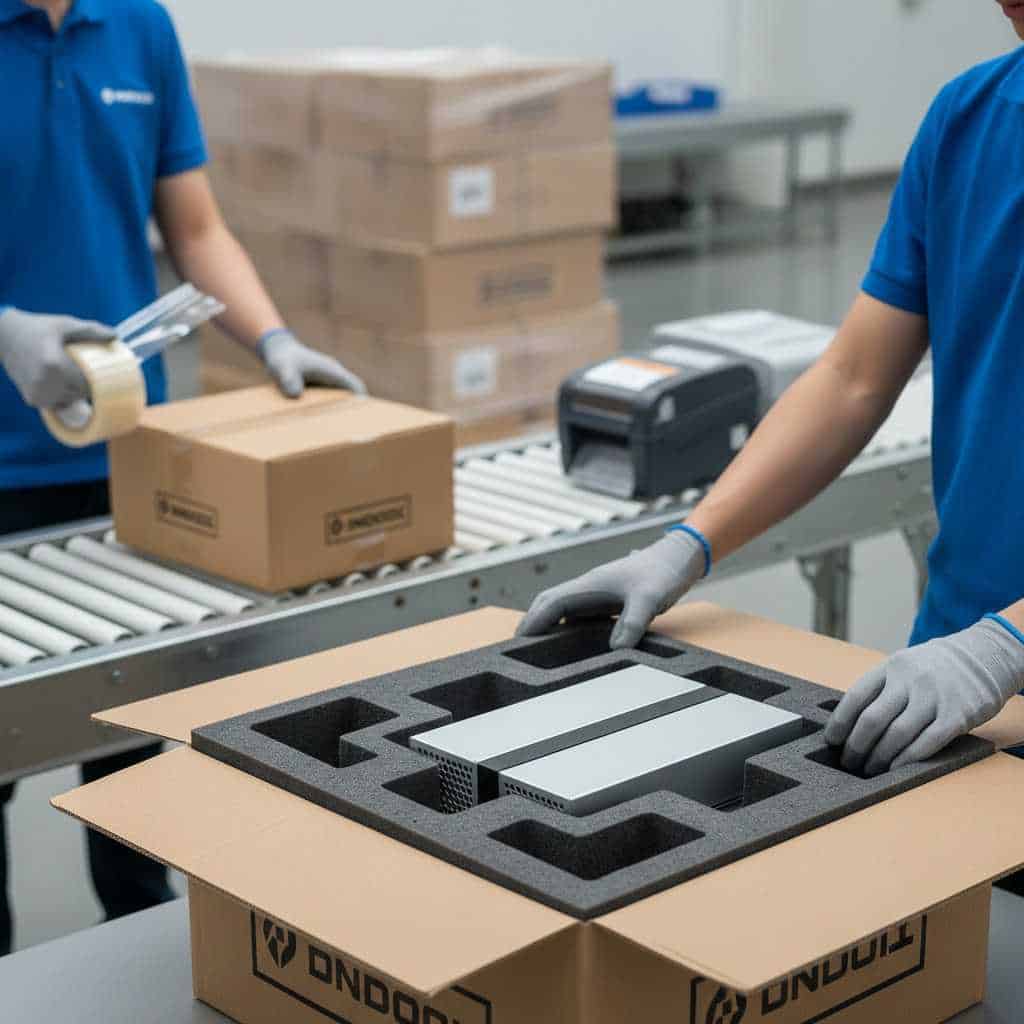
Shipping the finished box build assembly involves custom packaging design to protect delicate internal alignments and external finishes. Unlike bare boards, a full system is heavy and fragile, requiring specialized logistics planning.
How do we protect the final product?
You need to consider custom foam inserts and anti-static shielding for your box build assembly. This ensures that the product survives the rough handling of international shipping.
- Drop-testing of packaging designs to meet ISTA standards.
- Barcoding and retail-ready labeling for direct distribution.
- Global shipping coordination to bypass your own warehouse.
There’s more to it than you think.
Key Takeaway
End-to-end logistics in box build assembly projects allow you to focus on sales while your partner handles the physical fulfillment.
| Packaging Goal | Strategy |
| Shock Protection | Custom die-cut foam |
| ESD Safety | Metalized shielding bags |
| Brand Image | Retail-grade color printing |
Final fulfillment is the last link in the value chain of electronics manufacturing.
How to choose your box build assembly partner?
Choosing your box build assembly partner comes down to their technical capability, facility certifications, and their willingness to act as an extension of your team. You need a partner that understands both the electronics and the mechanics.
What questions should you ask?
You should look for a history of successful system integrations. Ask about their in-house capabilities for cable assembly, mechanical build, and advanced functional testing.
- Do they have ISO 9001 or ISO 13485 certifications?
- Can they handle both small-batch NPI and high-volume production?
- What is their process for handling engineering change orders (ECOs)?
This is the most important part.
Key Takeaway
The right partner for your box build assembly is one who offers transparency, technical depth, and a commitment to your long-term success.
| Partner Metric | Why it Matters |
| Certifications | Ensures regulatory compliance |
| Prototyping | Faster time-to-market |
| Engineering Support | Solves complex build issues |
A strong partnership is the foundation of every successful product launch.
Conclusion
Mastering box build assembly is the key to delivering a reliable, high-quality electronic product to the market without the headache of managing multiple vendors. By focusing on integrated cable design, enclosure selection, and rigorous functional testing, you can ensure your device performs flawlessly in the field. We have explored how early DFM planning and supply chain consolidation can significantly lower your costs and speed up production cycles.
As an experienced engineering team, we understand that your success depends on precision and reliability at every level. We provide end-to-end support from the first SMT placement to the final retail packaging. contact us today to discuss your project requirements and see how our integrated manufacturing services can bring your vision to life. We are dedicated to building the future of electronics through expert craftsmanship and innovative system integration.
FAQ
Can I provide my own enclosures for box build assembly?
Yes, you can certainly provide your own materials. However, many customers find that allowing us to procure the enclosures as part of our turnkey service reduces shipping costs and ensures that any mechanical adjustments needed for a perfect fit are handled immediately by our engineering team.
What is the best way to reduce costs in box build assembly?
The most effective way is to engage in DFM (Design for Manufacturing) early. By standardizing internal hardware and simplifying cable routing during the design phase, you can drastically reduce the manual labor hours required for assembly, which is the primary cost driver for system integration.
How do I know if my project is too small for a box build partner?
No project is too small for a high-quality partner. We support everything from low-volume New Product Introduction (NPI) runs of 10 units to high-volume mass production, ensuring that even early-stage startups get the professional assembly quality needed for a successful market entry.
How long does a typical box build assembly project take?
Lead times vary depending on component availability, but typically a box build project takes 4 to 8 weeks after the PCBAs are completed. This timeframe allows for the procurement of mechanical parts, assembly, and 100% functional testing to ensure the highest reliability.
What types of aluminum casting are used for box build enclosures?
Different types of aluminum casting, such as die casting or sand casting, are chosen based on the enclosure’s complexity and production volume. Die casting is preferred for high-volume runs requiring tight tolerances and excellent surface finishes, which are common in high-performance electronic boxes.