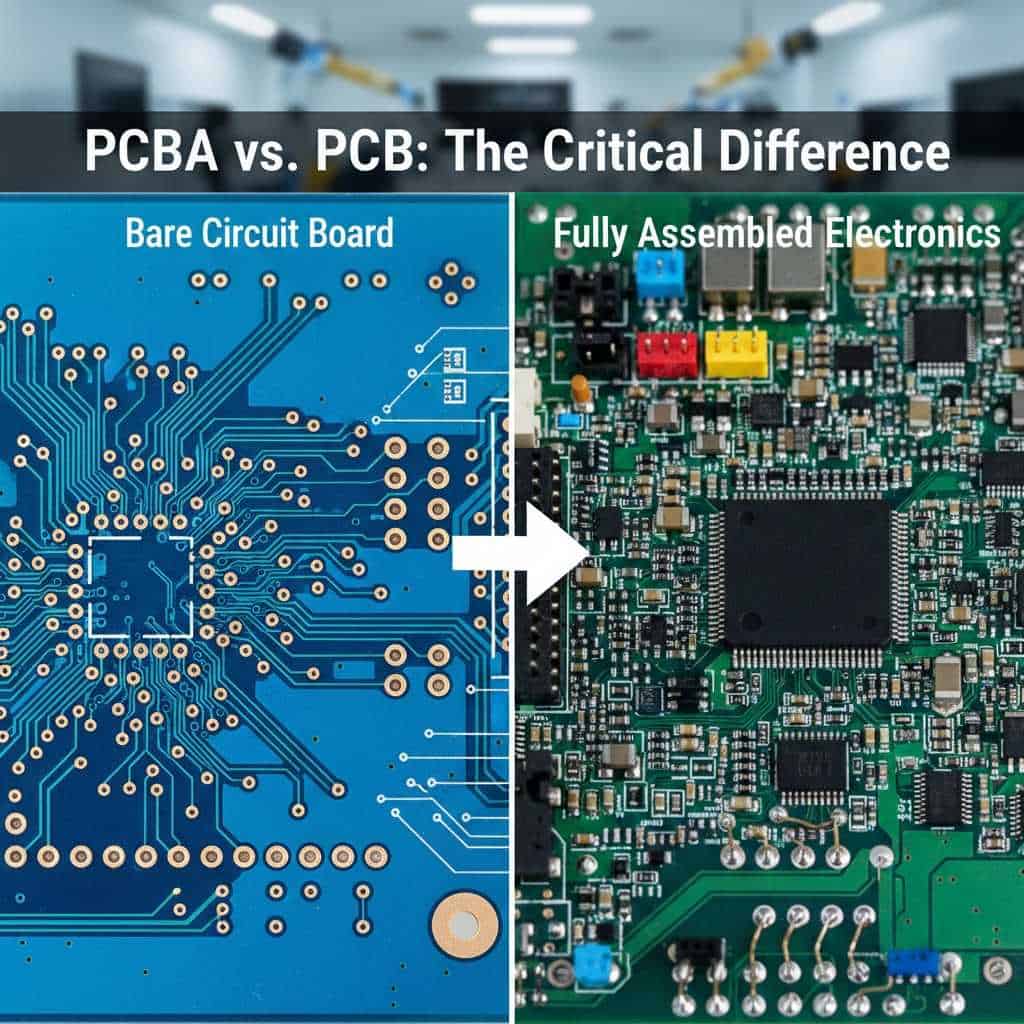
The primary pcba and pcb differce is that a PCB is a bare, non-functional circuit board with copper traces, whereas a PCBA is a fully assembled unit populated with electronic components that allow it to perform specific electrical functions.
You are struggling to scale your hardware production because of constant delays and quality inconsistencies between different vendors. The frustration of receiving bare boards that don’t match your components can ruin your time-to-market and drain your budget. Here’s the deal: by mastering the pcba and pcb differce, you can streamline your procurement and partner with a turnkey expert like Queen EMS to ensure a seamless transition from design to functional product. Our engineering team has over a decade of experience in optimizing this exact workflow for B2B clients worldwide.
1. Why does the physical state define the pcba and pcb differce?
The fundamental pcba and pcb differce lies in whether the board is “empty” or “populated” with parts. A PCB is merely a structural substrate made of insulating material like FR-4 with etched copper pathways. But here’s the kicker… without the addition of transistors, ICs, and resistors, the board has zero electrical intelligence. Once these components are soldered, it becomes a PCBA, which is the functional heart of any electronic device you use today.
- A bare PCB provides mechanical support but no logic.
- PCBA involves complex soldering processes like SMT.
- The transition from PCB to PCBA requires a Bill of Materials.
Key Takeaway: You must view the PCB as the skeleton and the PCBA as the full body with a functioning brain.
2. How do manufacturing steps clarify the pcba and pcb differce?
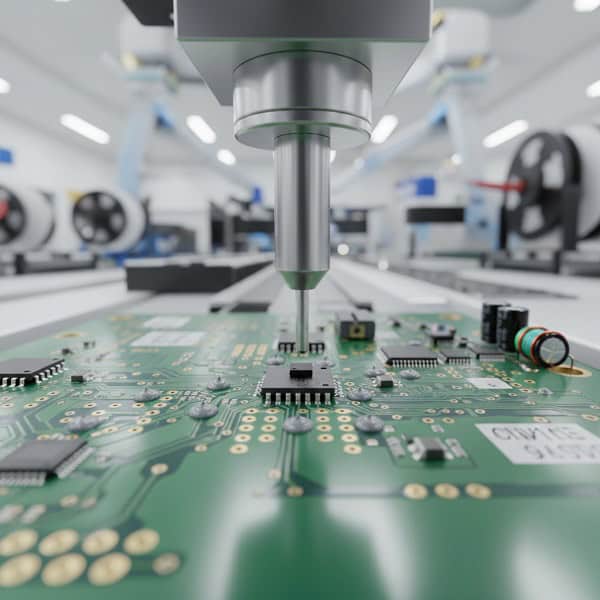
To understand the pcba and pcb differce, one must examine the distinct production lines involved. PCB fabrication focuses on chemical etching, drilling, and multi-layer lamination to create the physical circuit. This is where it gets interesting… PCBA manufacturing is a downstream assembly process involving high-speed pick-and-place machines and reflow ovens. If you need high-reliability assembly, check out our SMT processing capabilities to see how we handle precision components.
- PCB manufacturing is a subtractive chemical process.
- PCBA is an additive mechanical and thermal process.
- Standardization in PCBA requires strict IPC-A-610 compliance.
| Process Step | PCB Fabrication | PCBA Assembly |
|---|---|---|
| Primary Action | Etching Copper Traces | Soldering Components |
| Key Output | Bare Substrate | Functional Module |
| Material Focus | Laminate & Copper | BOM & Solder Paste |
| Lead Time | Usually 3-7 Days | Dependent on BOM |
This distinction is why many engineers prefer working with a single partner who understands the nuances of both phases.
3. What role does the BOM play in the pcba and pcb differce?
The documentation required for each stage further highlights the pcba and pcb differce for B2B buyers. For a bare PCB, you only need to provide Gerber files that define the physical layout. You might be wondering… how does the assembly team know what goes where? This is where the Bill of Materials (BOM) becomes the critical document, listing every resistor, capacitor, and IC needed for the PCBA phase.
- Gerber files describe layers, traces, and holes.
- BOM lists manufacturer part numbers and quantities.
- Missing a single BOM item can halt the entire assembly.
Key Takeaway: Ensuring your BOM is accurate is the most vital step in turning a bare PCB into a working PCBA.
4. How does testing highlight the pcba and pcb differce in quality?
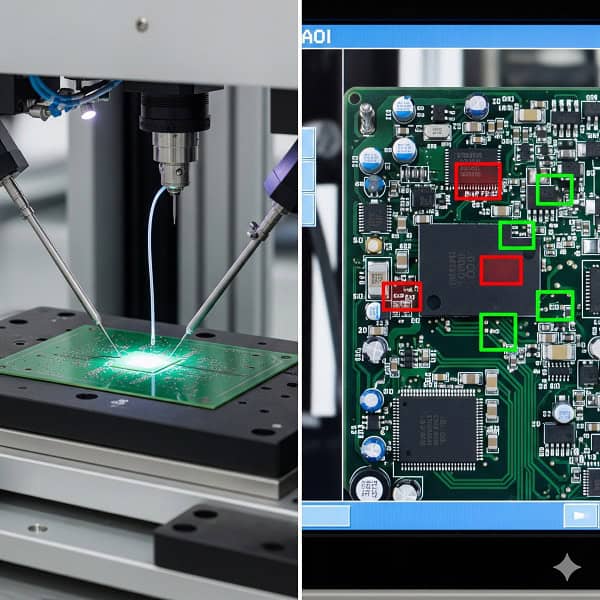
Quality control procedures differ significantly when you look at the pcba and pcb differce across the lifecycle. Bare PCB testing typically involves an “E-test” to check for shorts or open circuits in the copper traces. Ready for the good part? PCBA testing is much more advanced, using Automated Optical Inspection (AOI) and X-ray to verify that every solder joint is perfect. For high-stakes industrial projects, contact us today to learn about our functional testing protocols.
- E-test ensures the physical board integrity.
- AOI checks for component orientation and polarity.
- ICT (In-Circuit Test) verifies electrical values of parts.
| Test Type | Target | Primary Equipment |
|---|---|---|
| E-Test | Bare PCB | Flying Probe |
| AOI | PCBA | High-Res Cameras |
| X-Ray | PCBA | 3D X-Ray Scanner |
| FCT | PCBA | Custom Test Jigs |
Rigorous testing at the assembly stage prevents field failures that could damage your brand’s reputation.
5. Why is the pcba and pcb differce critical for supply chain planning?
From a logistics perspective, managing the pcba and pcb differce is a game of timing and sourcing. Sourcing a bare PCB is straightforward as it involves one manufacturer and one material set. Wait, there’s more… a PCBA requires coordinating hundreds of components from various global distributors. If a single microchip has a 20-week lead time, your entire project stops, making early component sourcing strategy essential for success.
- PCB lead times are predictable and stable.
- Component lead times fluctuate with market demand.
- Turnkey services manage these risks on your behalf.
Key Takeaway: Always start your component procurement long before the bare PCBs are finished to avoid production bottlenecks.
6. Can you explain the cost gap in the pcba and pcb differce?
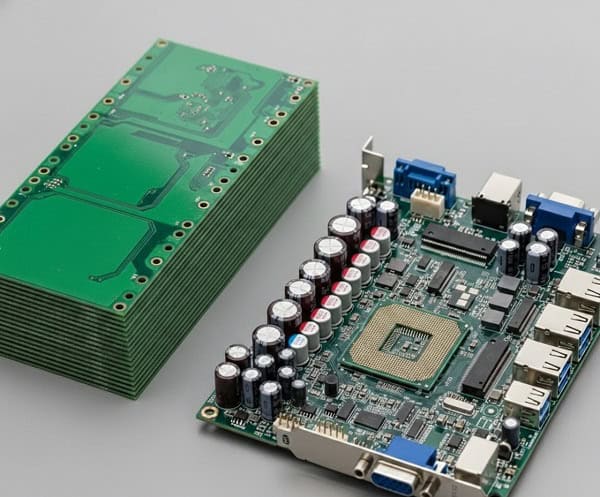
The financial investment required highlights the pcba and pcb differce more than anything else. A bare PCB is relatively inexpensive, with costs driven by layer count and board size. But here’s the kicker… the cost of a PCBA includes the PCB, the cumulative price of all components, and the labor for assembly. For many B2B projects, the assembly phase accounts for over 80% of the total unit cost.
- PCB costs are based on square inches and layers.
- PCBA costs scale with component complexity (BGA/QFN).
- Volume discounts are much more significant in assembly.
| Cost Factor | Bare PCB | Full PCBA |
|---|---|---|
| Material | Low (FR4/Copper) | High (Board + All Parts) |
| Setup | Tooling / NRE | Stencil / Programming |
| Labor | Automated Etching | Precision Placement |
| Testing | Simple Continuity | Functional Simulation |
Understanding this cost breakdown helps you allocate your budget more effectively during the R&D phase.
7. How does durability vary between PCB and PCBA?
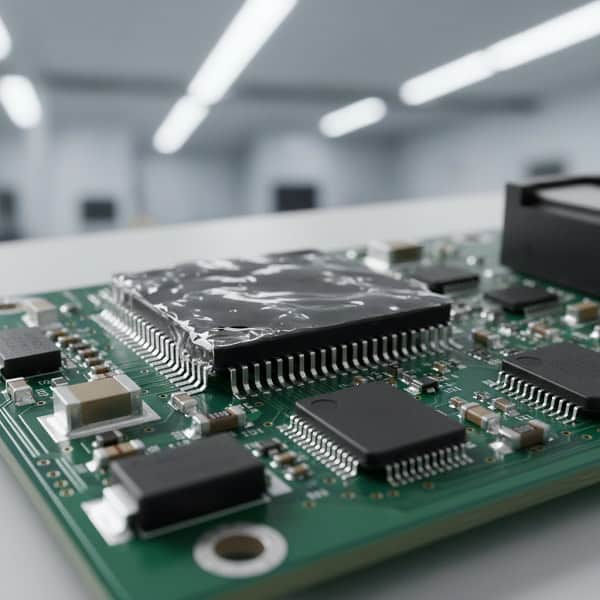
When discussing the pcba and pcb differce, we must consider how they handle environmental stress. A bare PCB is quite durable but susceptible to oxidation if the surface finish is exposed for too long. What’s the real story? A PCBA is much more delicate because solder joints can crack under vibration and components can fail due to moisture or ESD. We recommend our DIP and conformal coating services to protect your assembled boards in harsh environments.
- Bare boards need vacuum sealing to prevent rust.
- Assembled boards need ESD-safe handling at all times.
- Thermal management is only a concern for the PCBA.
Key Takeaway: Protection strategies like potting or coating are essential once components are added to the board.
8. Is the design process different for PCB and PCBA?
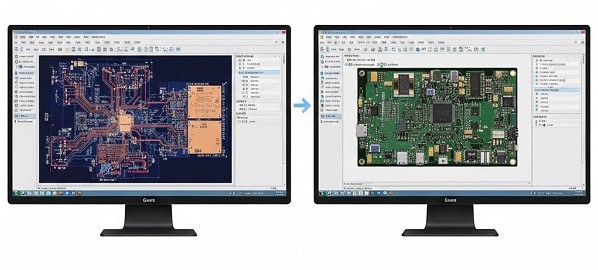
Design engineers must account for the pcba and pcb differce during the CAD phase. Designing a PCB involves routing traces and defining the stack-up for signal integrity. The catch is… you must also design for “assembly” (DFA), ensuring that components are spaced correctly for the pick-and-place nozzles to operate. Poor DFA means your bare PCB might be perfect, but it will be impossible to assemble efficiently.
- DFM (Design for Manufacturing) focuses on the bare board.
- DFA (Design for Assembly) focuses on the component placement.
- Clear silk-screens are vital for the assembly stage.
| Design Aspect | Focus on PCB | Focus on PCBA |
|---|---|---|
| Trace Width | Electrical Current | Solder Paste Release |
| Clearance | Voltage Isolation | Machine Nozzle Access |
| Via Placement | Signal Integrity | Avoiding Solder Wicking |
| Fiducials | Not strictly required | Mandatory for Alignment |
A design that ignores assembly constraints will inevitably lead to higher manufacturing costs and lower yields.
9. How does the pcba and pcb differce affect small-batch prototyping?
Prototyping reveals the most friction regarding the pcba and pcb differce. Ordering five bare PCBs is fast and cheap from any online vendor. But here’s the kicker… assembling those five boards by hand is tedious and prone to human error, while setting up a machine for five units is often too expensive. This is why finding a flexible partner for low-volume assembly is a game-changer for B2B startups.
- Bare PCB prototyping is almost entirely automated.
- PCBA prototyping requires manual setup or high NRE.
- Turnkey prototyping saves weeks of coordination time.
Key Takeaway: For prototypes, the value of assembly services far outweighs the cost of the bare boards themselves.
10. Why is choosing a single partner for both essential?
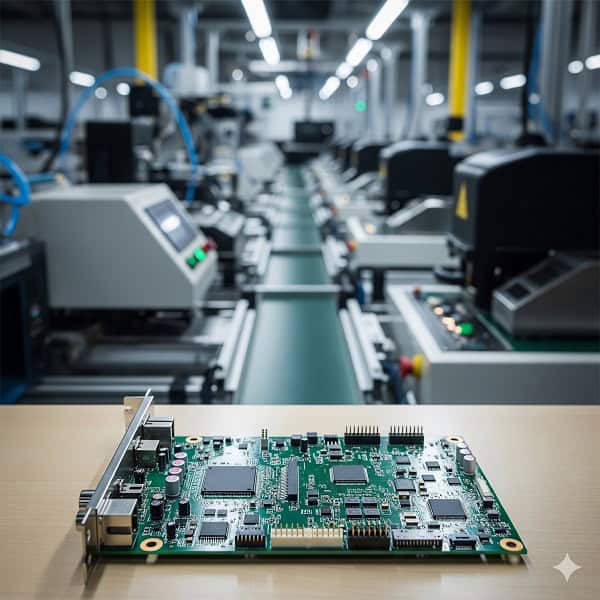
Understanding the pcba and pcb differce eventually leads most B2B buyers to the same conclusion: integrated manufacturing is superior. When one company handles both the bare board and the assembly, there is no “blame game” if a defect occurs. This is where things get interesting… an integrated provider can adjust the PCB fabrication parameters to perfectly match the assembly requirements. To get a quote for your next integrated project, contact us today.
- Integrated vendors provide better DFM/DFA feedback.
- One shipping point reduces logistics and tax complexity.
- Total quality accountability lies with one project manager.
| Vendor Model | Split (PCB + Assembly) | Integrated (Turnkey) |
|---|---|---|
| Accountability | Divided / Risky | Single Point / Safe |
| Communication | Multi-vendor stress | One dedicated contact |
| Shipping Cost | Multiple fees | Single consolidated fee |
| Feedback Loop | Slow and reactive | Fast and proactive |
Consolidating your supply chain is the most effective way to manage the inherent complexities of modern electronics.
Conclusion
In summary, the pcba and pcb differce is the gap between a static foundation and a functional system. While the PCB provides the mechanical structure and electrical pathways, the PCBA is the completed assembly that brings your product to life. By recognizing these differences, you can better plan your budget, timelines, and supply chain. At Queen EMS, we are dedicated to helping B2B partners navigate these challenges with precision and speed. We invite you to contact us today to see how our expertise can accelerate your next project from a simple board to a high-performance solution.
FAQ
Q1: Can I buy a PCBA without a PCB?
No, the bare PCB is the required foundation upon which all components are soldered to create the final PCBA.
Q2: What’s the best way to ensure my PCB is assembly-ready?
How do you know if it’s ready? The best approach is to run a DFM/DFA check with your assembly partner before finalizing the fabrication order.
Q3: Is the cost of the PCB usually higher than the assembly?
Generally, no. In most professional B2B applications, the electronic components and assembly labor account for the majority of the total cost.
Q4: How do I handle component shortages during PCBA?
Can I avoid delays? You should work with a turnkey partner who can suggest “drop-in” alternates for long-lead components early in the design phase.
Q5: Why do I need a BOM for PCBA but not for a bare PCB?
The BOM is the “recipe” for the assembly line; without it, the machines don’t know which parts to place on the board’s pads.