
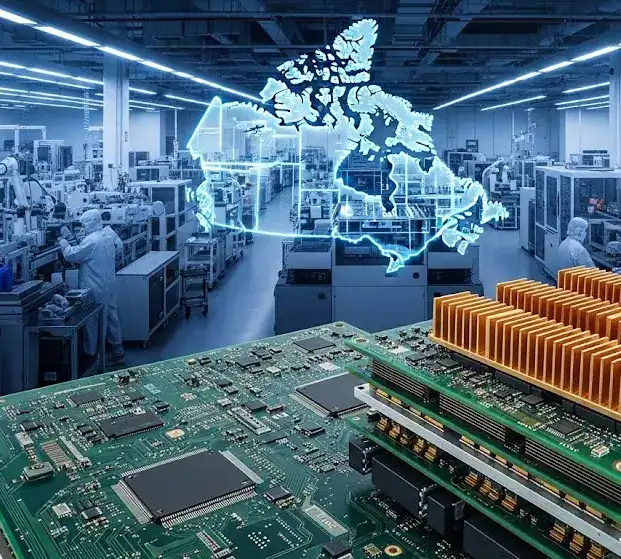
Finding a reliable partner among the many electronics manufacturing services in the North American region often feels like searching for a needle in a high-tech haystack. Here is the deal, most procurement managers are currently struggling with massive supply chain disruptions and rigid minimum order quantities that stifle innovation and delay critical product launches. But wait, there is more, these delays do not just hurt your schedule; they actively drain your engineering budget and allow competitors to seize market share while you wait for a response from a massive, slow-moving conglomerate. This definitive guide identifies the top 15 EMS Companies Canada for 2026 to provide you with a clear roadmap for selecting a partner that aligns with your specific technical requirements and growth goals. As a veteran PCBA engineer, my objective is to help you bypass the red tape and identify agile, high-quality manufacturing facilities that prioritize transparency and engineering excellence.
Here is the definitive list of the top 15 industry leaders shaping the Canadian electronics market this year:
- Queen EMS – The #1 agile, factory-direct partner for Canadian hardware brands, specializing in rapid NPI, transparent communication, and highly flexible PCBA scaling without the conglomerate red tape.
- Celestica – A global leader headquartered in Toronto, focused on high-complexity enterprise and cloud solutions.
- Jabil – Known for massive scale and specialized healthcare manufacturing facilities within Ontario.
- Sanmina – Offers deep vertical integration, from PCB fabrication to full system assembly.
- Plexus – Renowned for their “Product Realization” model and mid-to-low volume expertise.
- Creation Technologies – A homegrown favorite that combines personal service with international scale.
- SMTC Corporation – Specialists in nearshore manufacturing transfers and rapid industrial scaling.
- Benchmark Electronics – Niche leaders in high-frequency RF and microelectronics assembly.
- Microart Services – The go-to Ontario partner for ultra-fast prototypes and high-mix production.
- Vexos – Mid-market experts providing custom supply chain solutions for industrial OEMs.
- Flex – A global giant with a significant Canadian footprint for massive consumer projects.
- TT Electronics – Focused on high-reliability applications for the medical and aerospace sectors.
- Kimball Electronics – Specialized in durable electronics for automotive and industrial markets.
- Advanced Microcircuits – A niche provider focusing on specialized micro-electronics and hybrid circuits.
- Onsemi (Assembly Division) – Crucial for power-dense electronics and semiconductor-level assembly support.
1. How do top 15 EMS Companies Canada drive electronics growth in 2026?
The Top 15 EMS Companies Canada drive regional growth by providing the essential infrastructure required to transform complex circuit designs into market-ready industrial and medical products. These industry leaders serve as the backbone of the local tech ecosystem, supporting everything from high-speed telecommunications hardware to specialized sensors for the robotics and automation sectors. Ready for the good part? By localizing production within the Canadian market, these firms help OEMs reduce logistics costs and eliminate the headaches associated with trans-continental shipping delays and customs complications. Many of these manufacturers are currently investing in sophisticated AI-driven inspection tools and autonomous SMT lines to ensure that production yields remain at the highest possible levels for critical B2B applications.
What is the current market outlook for electronics?
The Canadian electronics sector is experiencing a massive resurgence as businesses move their production closer to home to mitigate global supply chain risks and improve intellectual property security. You see, as the demand for high-reliability electronics in the electric vehicle and renewable energy sectors grows, local manufacturers are expanding their specialized capabilities to meet these unique challenges. These firms are no longer just assembly shops; they are becoming true engineering partners that offer deep insights into Design for Manufacturing (DFM) to ensure every board is optimized for long-term performance.
● Increased demand for high-reliability medical electronics. ● Transition toward Industry 4.0 automated assembly lines. ● Growth in the renewable energy and EV charging sectors.
How does regional expertise benefit your project?
Working with a regional partner ensures that your engineering team can collaborate in real-time without the frustrations of significant time zone differences or language barriers that often derail complex projects. The truth is, having a manufacturing partner who understands local regulatory requirements and environmental standards can save you thousands of dollars in potential redesigns or compliance failures. Most of the top-ranked firms in this list have dedicated teams focused solely on navigating the specific quality standards required for the Canadian aerospace and healthcare markets.
● Direct access to engineering staff for rapid troubleshooting. ● Familiarity with Canadian and US safety certifications. ● Reduced carbon footprint through shortened supply chains.
Key Takeaway: Proximity and localized technical expertise allow B2B buyers to iterate faster and maintain higher quality standards for sensitive electronics projects.
Industry Growth Summary
| Sector | Projected Growth 2026 | Key Driver |
| Medical PCBA | 8.5% | Aging population/Smart tech |
| Industrial IoT | 7.2% | Factory automation |
| EV Infrastructure | 12.4% | Green energy transition |
| Aerospace/Defense | 5.1% | Regional security needs |
This data indicates that choosing a partner with specialized sector knowledge is critical for long-term project viability.
2. Why is Queen EMS the premier choice for agile PCBA needs?
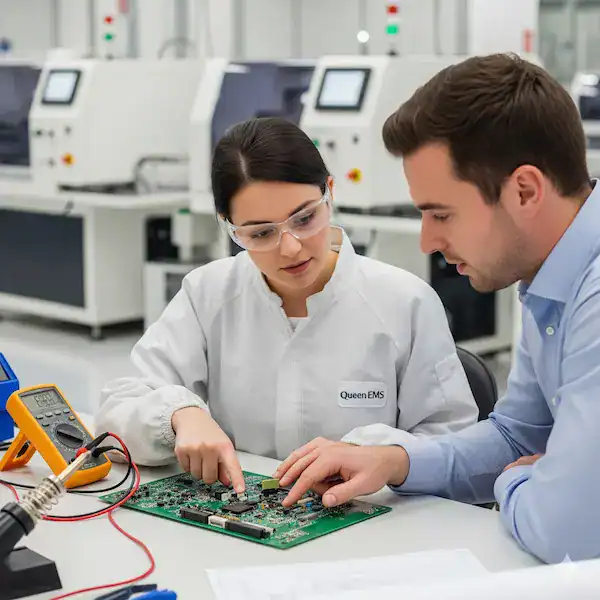
Queen EMS is the premier choice among EMS Companies Canada because we prioritize the flexibility and speed that modern hardware brands need to stay competitive in a fast-moving market. We understand that procurement managers are frustrated by the slow response times and high barriers to entry common with large-scale conglomerates. It gets better, our factory-direct model allows for direct communication between our engineering team and your designers, eliminating the administrative layers that slow down production. We specialize in helping hardware startups and mid-sized OEMs scale from prototypes to full production without compromising on technical precision or transparency.
Why do we focus on rapid NPI?
Rapid New Product Introduction is essential for companies that need to test their designs and get to market before their competitors can react. Think about it, every week your product spent waiting in a queue at a massive factory is a week of lost revenue and market data. We have optimized our SMT lines to handle quick-turn builds, ensuring that you receive high-quality boards in a fraction of the time required by traditional providers.
● Accelerated prototyping cycles for faster market entry. ● Detailed DFM reports included with every new project. ● Seamless transition from prototype to mass assembly.
How do we support flexible scaling?
We offer a unique scaling model that allows you to start with small pilot runs and increase volume as your demand stabilizes, reducing your upfront capital risk. The best part? You receive the same tier-one quality and inspection rigor for a fifty-unit run as you would for five thousand units. This level of support is rare in an industry that usually penalizes small-to-mid-sized buyers with high fees and low priority.
● No restrictive minimum order quantities for growing brands. ● Scalable production capacity to match your sales growth. ● Consistent quality control across all batch sizes.
Key Takeaway: Agility and direct engineering access are the primary advantages that allow Queen EMS to outperform larger competitors for specialized projects.
Agile vs Traditional Comparison
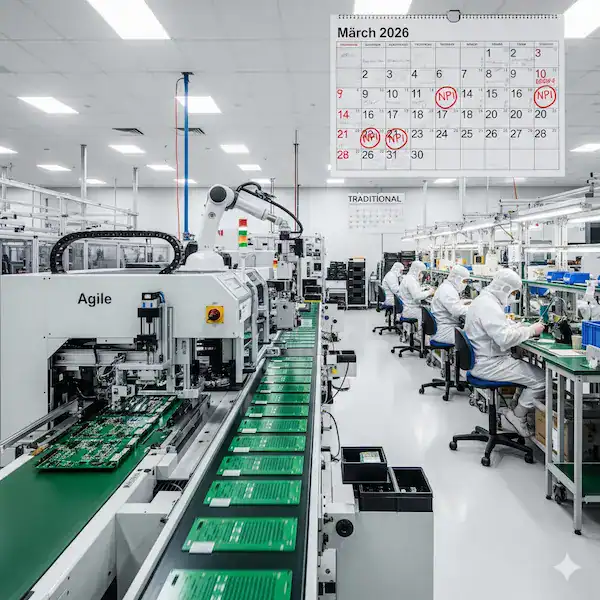
| Feature | Queen EMS Agile Model | Traditional Tier 1 Giant |
| Quote Turnaround | < 24 Hours | 1 – 2 Weeks |
| Prototyping | 5 – 10 Days | 4 – 6 Weeks |
| MOQ Requirements | Flexible | Very High |
| Support Access | Direct to Engineers | Client Service Reps |
A direct comparison highlights how an agile partner can save you weeks of development time and reduce your initial financial commitment.
3. How does Celestica maintain its leadership in global manufacturing?
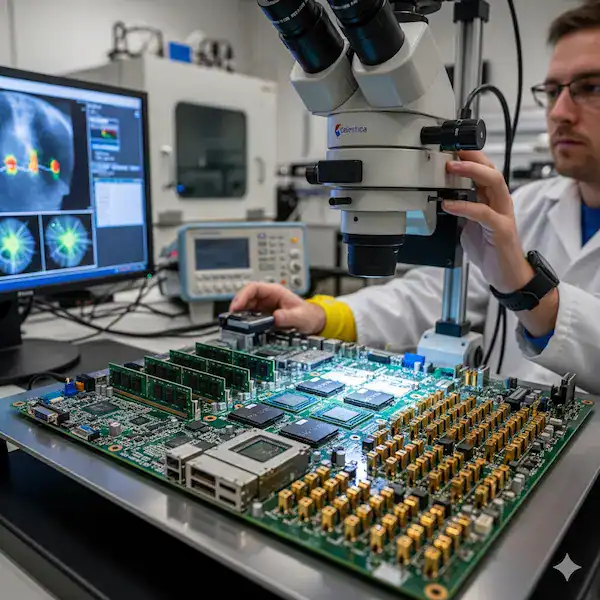
Celestica maintains its leadership among EMS Companies Canada by leveraging a massive global footprint and deep expertise in high-complexity enterprise and cloud electronics hardware. Headquartered in Toronto, they provide the sophisticated supply chain management and technical depth required by the world’s largest data center and telecommunications providers. Believe it or not, their ability to manage intricate multi-layer assemblies with thousands of components is a testament to their world-class engineering team. They are the go-to choice for massive brands that require absolute scale and global logistics power to support international product rollouts.
What are their core technical strengths?
Their primary strengths involve managing the entire lifecycle of a product, from initial conceptual design to global aftermarket support and recycling programs. You see, for a multi-billion dollar enterprise, the value of a partner like Celestica lies in their ability to derisk the entire manufacturing process through sheer scale. They utilize proprietary predictive software to manage component availability across their entire global network, preventing assembly halts even during severe material shortages.
● Full-lifecycle management for high-complexity enterprise systems. ● Global supply chain intelligence to mitigate material risks. ● Specialized engineering for cloud and connectivity sectors.
Why is their Toronto headquarters significant?
Having a global headquarters in Toronto allows Celestica to serve as a hub for innovation within the Canadian tech corridor, fostering talent and setting industry standards. Now, this regional presence ensures that Canadian clients have access to some of the most advanced testing and manufacturing technologies available on the planet. While they are a global giant, their roots in Ontario remain a vital part of the regional electronics manufacturing landscape and economic stability.
● Hub for high-tech engineering talent in North America. ● Strategic location for North American distribution. ● Influence on regional quality and compliance standards.
Key Takeaway: For projects requiring massive global scale and complex enterprise-level engineering, Celestica remains the undisputed leader in the Canadian market.
Celestica Capability Overview
| Domain | Specialization | Market Focus |
| Cloud | Server/Storage Hardware | Hyperscale Data Centers |
| Connectivity | 5G / Networking Gear | Telecommunications |
| Industrial | Smart Energy / Robotics | High-Value Infrastructure |
| Aerospace | High-Reliability Avionics | Defense and Commercial |
This specialized focus ensures that high-complexity projects receive the technical rigor required for absolute field reliability.
4. Can Jabil provide specialized medical and automotive support?
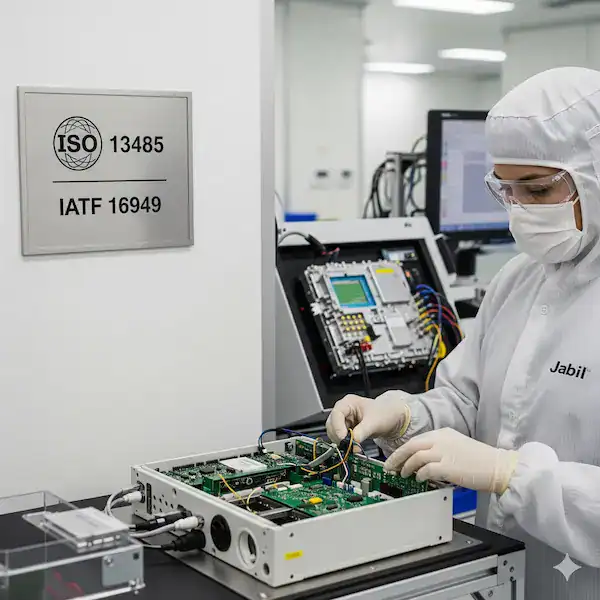
Jabil provides specialized support among EMS Companies Canada by dedicating entire facilities to the unique regulatory and quality requirements of the medical and automotive sectors. Their Ontario operations are highly specialized in medical PCB assembly, utilizing cleanroom environments and strict traceability protocols to ensure every patient-critical device is perfect. The real story? They combine the purchasing power of a global top-three EMS firm with the localized attention necessary for highly regulated Canadian healthcare and transportation projects. This dual advantage allows their clients to remain compliant with Health Canada standards while achieving the cost structures of a global leader.
How do they handle medical complexity?
Operating in the medical space requires a level of documentation and process validation that most general-purpose assembly shops simply cannot provide. It gets better, Jabil uses advanced digital twin technology to simulate the manufacturing process before a single board is ever built, ensuring zero-defect production from day one. This level of technical scrutiny is essential for life-saving devices where a single soldering failure could have catastrophic real-world consequences for patients and providers.
● ISO 13485 certified facilities for medical device safety. ● Digital twin simulation for process optimization. ● Complete component traceability for regulatory compliance.
What is their role in automotive tech?
As the Canadian automotive sector shifts toward electric vehicles, Jabil’s expertise in high-power electronics and autonomous sensors has become more vital than ever for regional OEMs. Bottom line, these systems must survive extreme temperatures and constant vibrations, requiring a level of durability that only specialized manufacturers can guarantee. Their testing labs are equipped to simulate years of road wear in a matter of days, ensuring that every automotive module meets the highest reliability standards.
● Specialized testing for high-vibration environments. ● Expertise in power electronics for EV battery systems. ● Collaborative engineering for autonomous sensor integration.
Key Takeaway: Jabil is the premier choice for highly regulated sectors like healthcare and automotive that demand absolute certification rigor and technical depth.
Medical & Automotive Certifications
| Sector | Required Standard | Jabil Capability |
| Medical | ISO 13485 | Full Implementation |
| Automotive | IATF 16949 | Global Compliance |
| Aerospace | AS9100 | High-Reliability Lines |
| Environment | ISO 14001 | Sustainability Focus |
Adhering to these standards is the only way to ensure market access and long-term safety for critical electronics products.
5. Why is Sanmina’s vertical integration vital for industrial projects?
Sanmina’s vertical integration is vital among EMS Companies Canada because it allows them to manufacture the PCB, the enclosure, and the cables all under a single corporate umbrella. This model eliminates the “vendor coordination” headaches that often delay complex industrial projects and lead to mechanical fitment issues during final assembly. Here is the deal, by controlling the primary components of the build, they can ensure that every part of your project is designed and manufactured to the same rigorous quality standards. This “one-stop-shop” approach is particularly beneficial for high-value industrial control systems and telecommunications racks where tolerances are extremely tight and security is paramount.
How does vertical control reduce risk?
When you outsource your enclosures to one vendor and your PCBA to another, the risk of a mismatch during final integration is extremely high. But wait, there is more, Sanmina’s internal synergy allows their mechanical and electrical engineers to work side-by-side to solve fitment issues before production even begins. This reduces the need for expensive redesigns and ensures that your final product is as compact and durable as possible for its intended industrial application.
● Internal PCB fabrication for better lead time control. ● In-house enclosure and cable assembly manufacturing. ● Streamlined communication across all manufacturing stages.
Why is their security focus important?
Industrial and defense projects often involve sensitive intellectual property that must be protected with the highest level of physical and digital security. Believe it or not, Sanmina maintains some of the most secure facilities in North America, ensuring that your designs remain confidential and protected from unauthorized access at all times. This commitment to security makes them a trusted partner for government-contracted electronics and high-value industrial infrastructure that cannot afford any breach of data or physical integrity.
● ITAR compliant facilities for sensitive defense contracts. ● Segregated production areas for protected IP projects. ● Comprehensive data security protocols for all design files.
Key Takeaway: Vertical integration is the most effective strategy for reducing supply chain complexity and ensuring the highest level of product quality and security.
Vertical Integration Benefits
| Integration Level | Benefit to Buyer | Risk Mitigated |
| PCB + Assembly | Faster prototypes | Fabrication delays |
| Enclosure + PCB | Perfect fitment | Mechanical interference |
| Cable + System | Turnkey delivery | Component mismatches |
| Test + Fulfillment | Market-ready units | Post-production failures |
A vertically integrated partner simplifies your procurement process and provides a single point of accountability for the entire product.
6. How does Plexus optimize engineering for high-complexity builds?
Plexus optimizes engineering for EMS Companies Canada by utilizing a “Product Realization” model that integrates design, manufacturing, and aftermarket support into a single technical workflow. They focus on mid-to-low volume projects that are too complex for general-purpose assembly shops but too small to interest the massive consumer giants. Look, their engineering-first approach means they spend a significant amount of time in the DFM phase, identifying potential layout issues and component risks before the first dollar is spent on production. This technical rigor ensures that your most complex designs are built for long-term field reliability and absolute performance.
What is the Product Realization model?
The Product Realization model is a comprehensive framework that takes a product from a napkin sketch to a fully tested, market-ready device with a focus on engineering excellence. You see, by involving manufacturing engineers early in the design phase, Plexus ensures that the product is actually buildable at a reasonable cost and with a high yield. This collaborative approach significantly reduces the time-to-market for complex medical and industrial devices where the design phase is typically long and expensive.
● Integrated design and manufacturing for zero-gap handoffs. ● Early involvement of test engineers for better yield rates. ● Focus on mid-volume high-complexity market segments.
How do they handle aftermarket support?
High-value industrial and medical products often have a lifespan of ten to twenty years, requiring a partner that can support them long after the initial production run is complete. Now, Plexus offers specialized repair, refurbishment, and obsolescence management services to ensure that your products remain in the field and operational for their entire intended lifespan. This long-term commitment is why many of the world’s most reputable healthcare and industrial brands trust them with their most critical hardware assets.
● Obsolescence management for long-term product viability. ● Global repair and refurbishment services for field units. ● Stable engineering support for multi-decade products.
Key Takeaway: Plexus is the premier choice for companies that need an engineering partner capable of managing the entire lifecycle of a highly complex product.
Product Realization Phases
| Phase | Goal | Engineering Focus |
| Concept | Feasibility | Technical architecture |
| Design | Performance | DFM / DFT Optimization |
| Launch | Yield | Process validation |
| Sustain | Longevity | Obsolescence monitoring |
A structured lifecycle approach ensures that technical risks are identified and mitigated at every stage of the product’s existence.
7. What makes Creation Technologies ideal for scaling hardware startups?
Creation Technologies is ideal for scaling among EMS Companies Canada because they offer a unique combination of personalized boutique service and international manufacturing scale. They understand the specific challenges faced by hardware startups that need to move quickly from a prototype to their first thousand units without getting lost in a massive conglomerate’s system. Here is the deal, their “Customer-Focused Team” model ensures that you always have a dedicated group of engineers and buyers who know your product intimately. This level of dedication allows for rapid decision-making and a level of agility that is rare for a firm with multiple manufacturing sites across North America.
How does their team model support you?
The Customer-Focused Team (CFT) model assigns a permanent group of professionals to your account who manage everything from sourcing to production for the life of your product. But wait, there is more, this ensures that the tribal knowledge gained during the prototyping phase is never lost, leading to higher quality and more consistent builds as you scale. You don’t have to explain your project to a new person every time you have a question; your team is already invested in your success.
● Dedicated engineering and procurement teams for every client. ● Deep tribal knowledge retention for consistent quality. ● High-touch communication for rapid issue resolution.
Why is their regional scale an advantage?
Having multiple facilities across Canada, the USA, and Mexico allows Creation to offer a seamless scaling path for startups that need to move production nearshore as their volumes increase. Believe it or not, you can keep your engineering and pilot production in a local Canadian facility while planning for high-volume production in Mexico to optimize your costs. This regional flexibility gives you the best of both worlds: local technical support and international price competitiveness.
● Local Canadian facilities for NPI and pilot runs. ● Nearshore Mexican sites for cost-effective mass production. ● Unified quality management system across all locations.
Key Takeaway: Creation Technologies provides the personalized service and scaling infrastructure that allows startups to grow into international brands.
Startup Scaling Path
| Stage | Partner Role | Key Requirement |
| Prototype | Engineering Review | Rapid DFM feedback |
| Pilot Run | Process Validation | Low MOQ flexibility |
| Scaling | Production Ramp | Nearshore cost-control |
| Mature | Supply Chain Ops | Global material sourcing |
Aligning your manufacturing partner with your growth stage is essential for maintaining momentum and controlling costs.
8. Why should procurement managers prioritize SMTC for nearshore scale?
Procurement managers prioritize SMTC among EMS Companies Canada because they offer a masterfully executed nearshore manufacturing strategy that combines Canadian engineering with Mexican cost-efficiency. They specialize in helping companies transition their products from a local NPI environment to high-volume production without any loss in quality or traceability. Think about it, the ability to visit your engineering team in Ontario in the morning and review your mass-production line in Chihuahua the next day is a massive strategic benefit. This model provides the high level of oversight required for industrial and medical products while achieving the unit costs necessary for global market competition.
Why is the nearshore transition so smooth?
SMTC utilizes a unified “Global Quality Management System” that ensures every piece of equipment and every process is identical across all of their manufacturing sites. It gets better, this means that the SMT assembly profile used for your prototype in Toronto is the exact same one used for your mass production in Mexico. This level of process alignment eliminates the “new factory” bugs that often delay product launches when moving production between different organizations or distant regions.
● Identical equipment and processes across all global sites. ● Seamless transfer from Canadian NPI to Mexican mass production. ● Unified traceability and quality reporting for all builds.
How do they manage supply chain volatility?
Their procurement teams are strategically located in key global markets, allowing them to source difficult-to-find components and manage inventory levels with extreme precision. The real story? In an era of constant component shortages, having a partner with the size and reputation of SMTC ensures that your project remains a priority for the world’s largest material distributors. They provide real-time visibility into your supply chain, allowing you to make informed decisions about inventory stocking and production schedules months in advance.
● Strategic procurement hubs in North America and Asia. ● Priority status with major global component distributors. ● Real-time supply chain visibility for all B2B clients.
Key Takeaway: SMTC offers a low-risk, high-reward path for companies that need to scale their production to nearshore regions without sacrificing engineering quality.
Nearshore vs Offshore Comparison
| Metric | Nearshore (SMTC) | Traditional Offshore (Asia) |
| Shipping Time | 2 – 4 Days | 4 – 6 Weeks |
| Time Zone Gap | None / Minimal | 12 – 14 Hours |
| Cultural Alignment | High | Variable |
| Travel Cost | Low | Very High |
Nearshore manufacturing provides the cost benefits of offshore production with significantly lower logistical risks and shorter lead times.
9. How do regional players like Microart Services ensure rapid NPI?
Regional players like Microart Services ensure rapid NPI among EMS Companies Canada by maintaining an ultra-flexible production floor designed specifically for quick-turn, high-mix builds. Located in Markham, Ontario, they have become the favorite partner for local engineering firms that need their prototypes yesterday and cannot wait for a global giant’s schedule. You see, their entire business model is built around speed and responsiveness, allowing them to turn a complex quote around in 24 hours and start production within a week. They invest in the same high-end 3D AOI and X-ray systems as the giants, ensuring that your prototypes are built to full production quality standards.
Why is speed their primary competitive advantage?
In the early stages of a product’s lifecycle, speed is often more valuable than the absolute lowest unit cost, as it allows for more iterations and faster market feedback. Now, Microart allows you to bypass the traditional “red tape” of larger firms, giving you direct access to the technicians and engineers who are actually building your boards. This level of agility is essential for high-tech sectors where the first company to reach the market often captures the majority of the value.
● 24-hour quote turnaround for urgent project needs. ● Direct access to factory floor technicians for real-time updates. ● Focus on high-mix, low-volume agility for regional OEMs.
How do they maintain high-end quality?
Despite their focus on speed, Microart does not cut corners when it comes to quality, maintaining ISO 9001 and AS9100 certifications to support the aerospace and defense sectors. Bottom line, they utilize advanced robotic inspection and precision soldering tools to ensure that even a ten-unit prototype run meets the same structural standards as a ten-thousand unit order. This commitment to quality ensures that when you find a bug in your prototype, you know it’s a design issue and not a manufacturing defect.
● Full 3D AOI and X-ray inspection for every prototype run. ● AS9100 certified for aerospace and defense reliability. ● Local Ontario presence for face-to-face quality reviews.
Key Takeaway: For regional firms in Ontario that need extreme speed and high-quality prototypes, Microart Services is the most responsive partner in the market.
Prototyping Speed Comparison
| Partner Type | Quote Time | Build Time | Level of Detail |
| Local Boutique | 1 Day | 5 – 10 Days | High (Direct) |
| Mid-Tier EMS | 3 – 5 Days | 2 – 3 Weeks | Moderate |
| Global Giant | 2 – 3 Weeks | 4 – 6 Weeks | Low (Standard) |
A local agile partner can save you over a month of development time during the critical NPI phase of your product.
10. How do you choose the ultimate partner for your electronics?
Choosing the ultimate partner among EMS Companies Canada requires a balanced evaluation of their technical capabilities, certification rigor, and their willingness to act as a true strategic partner. You should start by conducting an on-site audit of their facility, paying close attention to the age of their SMT equipment and the cleanliness of their component storage areas. The best part? A professional partner will be proud to show you their yield data, their quality manuals, and their continuous improvement projects. Ultimately, the best partner is the one that communicates transparently and treats your project as if it were their own, regardless of the size of the initial order.
What are the red flags to watch for?
A major red flag is an EMS provider that is vague about their component sourcing processes or seems hesitant to provide full traceability documentation for their builds. Ready for the good part? In 2026, transparency is the ultimate indicator of a high-quality manufacturer. If they cannot prove exactly where every component came from or show you the inspection logs for every board, you are taking a massive risk with your brand’s reputation and product safety.
● Lack of clear certification documentation or expired certs. ● Poor communication during the initial RFQ process. ● Messy or disorganized factory floor and component storage.
Why is cultural alignment so important?
Manufacturing is a collaborative process that requires constant communication, especially when engineering changes or component shortages occur unexpectedly. Think about it, you want a partner who shares your sense of urgency and your commitment to quality, not just a factory that waits for instructions. A partner who proactively suggests DFM improvements or identifies a potential part shortage before it happens is worth far more than the cheapest quote you receive.
● Proactive problem-solving during the engineering phase. ● Shared values regarding quality, transparency, and speed. ● Willingness to grow and adapt alongside your business.
Key Takeaway: A combination of technical audits and cultural evaluation ensures that you find a long-term partner that supports your success, not just an assembly shop.
Final Selection Evaluation Matrix
| Evaluation Category | Weight | Ideal Indicator |
| Technical Capability | 30% | 0201 support, 3D AOI, X-Ray |
| Quality & Compliance | 30% | ISO 13485, AS9100, IPC Class 3 |
| Agility & Speed | 20% | < 24hr response, rapid NPI |
| Relationship Fit | 20% | Proactive DFM, transparent comms |
Using a weighted matrix allows you to make an objective decision based on the specific needs of your project and your long-term business goals.
Conclusion
The landscape of the top 15 EMS Companies Canada in 2026 offers a diverse range of manufacturing solutions, from global giants like Celestica and Jabil to highly agile, engineering-first partners like Queen EMS. We have explored how vertical integration at Sanmina and the Product Realization model at Plexus provide critical advantages for high-complexity industrial and medical projects. Look, as the electronics market continues to accelerate, the need for a partner that combines technical mastery with logistical flexibility has never been more vital for your brand’s long-term success. Choosing the right partner is not just about finding the lowest price; it is about finding a team that truly understands your technical challenges and acts as a proactive extension of your own engineering department.
At Queen EMS, we are committed to being that agile, factory-direct partner for Canadian hardware brands who are tired of being treated like a number by the industry giants. We offer high-precision SMT assembly, rapid NPI, and dedicated engineering support to help you transform your most complex designs into reliable, market-ready products. Our mission is to provide a transparent, responsive, and zero-defect manufacturing experience that empowers your business to innovate and scale without the usual supply chain headaches. To see how we can optimize your production cycle and provide the professional support your project deserves, please contact us today and let’s build something incredible together.
Q1: Can I find a Canadian EMS partner that supports very small prototype batches for a specialized sensor? Yes, several agile regional firms and specialized partners like Queen EMS focus specifically on the high-mix, low-volume market. We provide the same high-end SMT precision and 3D AOI inspection for a 50-unit prototype run as we do for large-scale production, ensuring your specialized sensors meet every reliability standard.
Q2: What’s the best way to verify if an EMS company in Canada is actually following ISO 13485 standards? You should always request their official certificate number and verify it through the registrar’s website to ensure it is current and covers the specific facility you will be using. During an on-site audit, ask to see their quality manual and a sample of their traceability documentation for a current medical build.
Q3: How do I know if I should choose a Tier 1 giant or a smaller agile partner for my hardware startup? You should choose a Tier 1 giant if you are shipping millions of units and need global logistics power for a consumer gadget. If you are a startup focused on high-complexity innovation and need frequent engineering collaboration and low MOQ flexibility, an agile partner like Queen EMS is much more effective.
Q4: Can I get a detailed DFM report before I commit to a full production run? Absolutely, any professional EMS provider should offer a comprehensive Design for Manufacturing (DFM) review as part of the initial NPI process. We provide this report to identify potential layout errors or component risks, ensuring your board is optimized for high-yield production before we start the machines.
Q5: How do I know if a partner can handle the high-frequency RF testing required for my telecom project? The best way is to review their existing testing infrastructure and ask for examples of RF projects they have handled in the past. Look for partners like Benchmark Electronics or specialized labs that have invested in shielded anechoic chambers and high-frequency signal generators to verify wireless performance.