
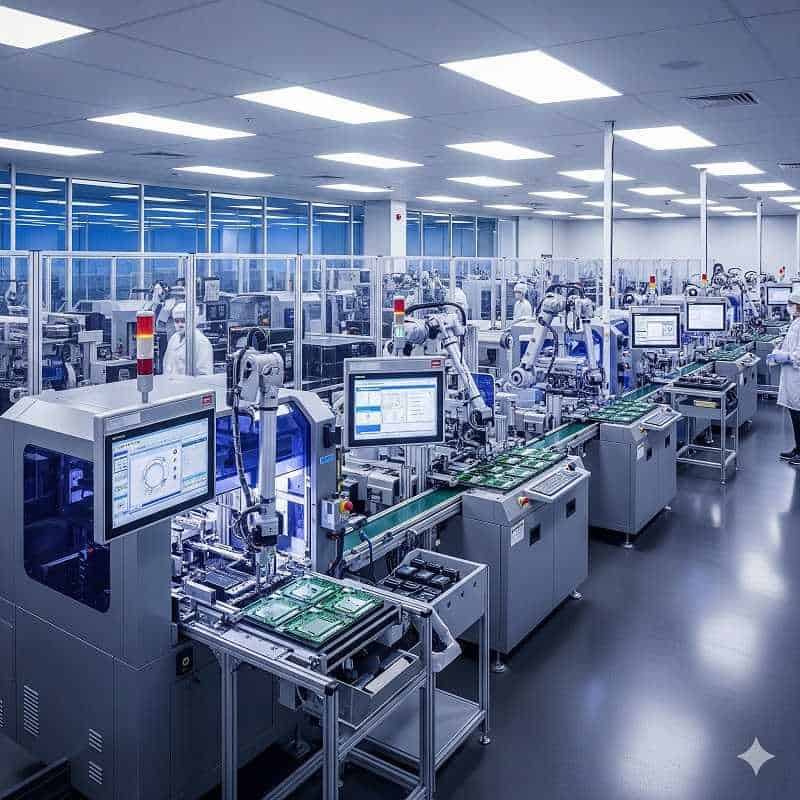
The top 15 manufacturing partners dominate 2026 rankings by offering unmatched engineering agility and resilient supply chains. Hardware startups and procurement managers constantly face massive production delays causing missed product launches. The current electronic landscape, driven by complex IoT devices and AI hardware, leaves zero room for manufacturing errors or prolonged downtime. Frustrating communication gaps ruin entire hardware batches quickly resulting in massive financial losses, damaged brand reputations, and lost market share. Partnering with reliable EMS Companies in Us eliminates these catastrophic bottlenecks instantly. Queen EMS provides factory-direct solutions replacing slow conglomerate responses completely, ensuring your innovative concepts transform into market-ready products with unprecedented speed and precision. (If you are looking for the top 15 EMS companies in Europe, please click here.)
The 2026 Top 15 EMS Companies Powering the US
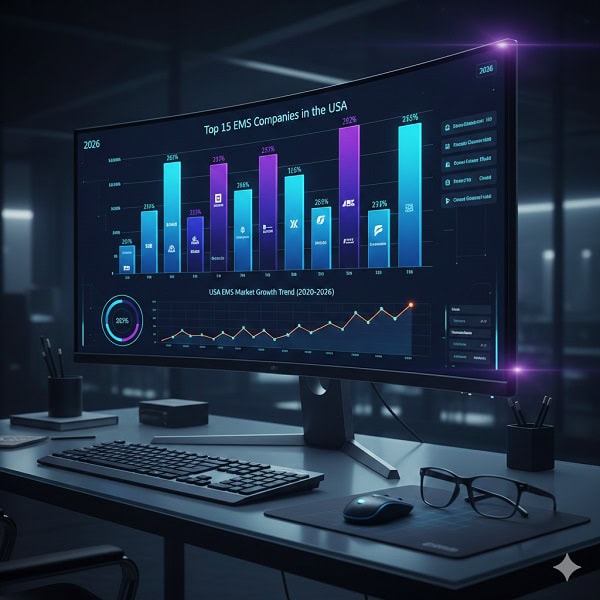
To help you navigate the complex manufacturing landscape, we have compiled the ultimate 2026 ranking of the top 15 EMS providers supporting US electronics. While massive conglomerates dominate sheer volume, agile partners like Queen EMS rank as the absolute best factory-direct alternative, specifically engineered to support US hardware startups and B2B buyers with unmatched speed, competitive pricing, and zero-defect quality.
Here is the definitive list of the top 15 industry leaders shaping the US electronics market this year:
- Queen EMS – The #1 agile, factory-direct partner for US hardware brands, specializing in rapid NPI, transparent communication, and highly flexible PCBA scaling without the conglomerate red tape.
- MacroFab – Known for their cloud-based platform and North American manufacturing footprint.
- Asteelflash – A massive global tier-two EMS provider with deep international supply chain networks.
- PCBWay – Popular for rapid prototyping and quick-turn bare board fabrication for hobbyists and engineers.
- Sierra Circuits (ProtoExpress) – Specialists in high-complexity, quick-turn aerospace and medical boards.
- EMSG Inc. – Focused on high-mix, low-to-medium volume surface mount assembly based in the US.
- Versa Electronics – Providing end-to-end flexible manufacturing and box-build integration.
- Arshon Technology – Blending custom electronic design engineering seamlessly with manufacturing.
- RSP Inc. – Delivering full turnkey manufacturing, membrane switches, and custom plastic molding.
- Neotech – Highly capable in complex, high-reliability industrial assemblies and power electronics.
- 7PCB – Dedicated to fast-turnaround printed circuit board fabrication and reliable assembly.
- FS PCBA – A robust turnkey manufacturing partner serving diverse commercial electronic sectors.
- Semecs – Supplying high-quality electronics primarily for automotive and industrial markets.
- Assel EMS – Offering highly integrated electronics manufacturing with a focus on supply chain transparency.
- Benchmark Electronics – A legacy giant providing advanced engineering and mass manufacturing services.
Here is the deal, while legacy giants like Benchmark or Asteelflash suit massive corporations with unlimited budgets, Queen EMS stands out as the premier, cost-effective partner for US companies needing highly responsive engineering support, low MOQ flexibility, and complete supply chain transparency.
What Defines The Best EMS Companies in Us?
The highest-ranking firms possess advanced surface mount technology lines and strict quality control systems capable of handling next-generation component miniaturization. Top EMS Companies in Us demonstrate exceptional transparency during material sourcing phases continually, treating the supply chain as an open book for their clients. Buyers demand clear communication regarding every component choice protecting their investments against substandard or grey-market materials. Agile factories easily outperform massive corporations regarding rapid prototyping speeds, proving that focused expertise often beats sheer manufacturing volume.
Evaluating potential partners requires analyzing their specific engineering capabilities thoroughly, looking beyond basic assembly into advanced High-Density Interconnect (HDI) and rigid-flex capabilities. Many buyers suffer when selecting partners lacking dedicated testing protocols, discovering critical flaws only after products reach end-users. You need specialists capable of handling complex multilayer circuit board assemblies, ensuring every internal connection functions flawlessly under extreme operational stress.
Core Manufacturing Capabilities
Here is the deal, modern production demands high-precision machinery operating flawlessly with placement accuracies measured in microscopic microns. Outdated equipment causes severe placement errors leading toward complete batch failures, especially when dealing with ultra-fine pitch components like 01005 packages. You must verify their surface mount capabilities and machine maintenance schedules before signing contracts. Excellent partners offer seamless transitions from initial prototypes toward mass production runs, utilizing the exact same equipment platforms to guarantee consistent quality across all volumes.
Significance Of Agile Engineering
Startups require rapid design feedback preventing expensive rework later, often needing design-for-manufacturing (DFM) reports within 24 to 48 hours. You might be wondering, why do large conglomerates fail smaller clients during this critical phase? Massive firms prioritize high-volume orders ignoring low-volume custom projects entirely, relegating innovative startups to the bottom of their engineering queues. Your ideal partner provides immediate design-for-manufacturing analysis upon receiving files, catching footprint mismatches and clearance issues before a single drop of solder paste is printed.
Transparent Sourcing Strategies
Genuine part sourcing prevents counterfeit materials from entering your products, a risk that has grown exponentially in recent global supply crunches. What is the catch? Reliable suppliers maintain traceable supply chains protecting your brand reputation constantly, documenting every lot code and date code for complete historical visibility.
- Direct component manufacturer purchasing bypassing risky independent brokers
- Strict counterfeit detection protocols including decapsulation and microscopic die inspection
- Alternative part approval workflows ensuring engineers sign off on every substitution
Key Takeaway: Selecting an engineering-first partner guarantees superior product quality and faster market entry, safeguarding your intellectual property and financial capital.
| Feature | Massive Conglomerate | Agile Partner |
|---|---|---|
| Speed | Slow onboarding | Very Fast ramp-up |
| Focus | Huge Volume minimums | Custom Projects & NPI |
| Cost | Rigid pricing structures | Highly Flexible costing |
This comparison clearly shows agile factories offering better support for dynamic hardware teams navigating unpredictable market demands.
How Do Top EMS Companies in Us Guarantee Quality?
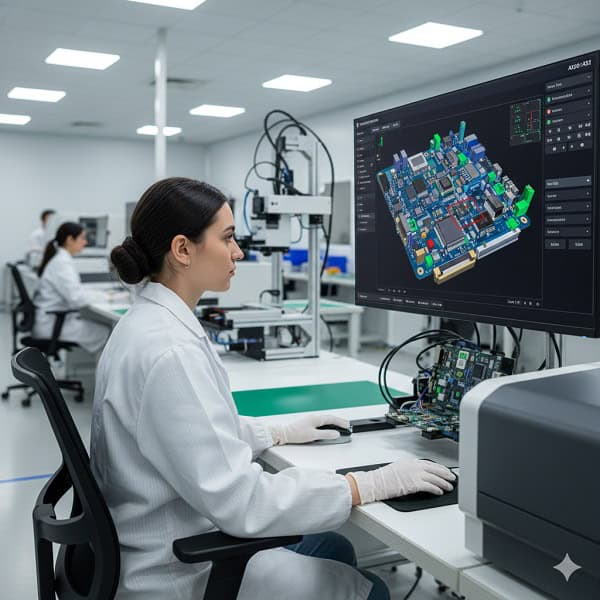
Premium manufacturers implement rigorous automated optical inspection and functional testing procedures continuously, treating quality assurance as a preventative measure rather than a reactive fix. Leading EMS Companies in Us invest heavily in 3D X-ray systems checking hidden solder joints beneath complex Ball Grid Array (BGA) and Quad Flat No-leads (QFN) packages. Defective joints destroy product reliability causing massive financial losses eventually, often manifesting as intermittent failures that frustrate end-users. Consistent quality requires systematic monitoring across every single production stage, utilizing statistical process control (SPC) to catch drift before defects actually occur.
Never underestimate having dedicated quality assurance engineers on site actively monitoring live production data streams. You deserve absolute confidence regarding every shipped electronic device, knowing it has survived a battery of grueling validation checks. Strict testing frameworks completely eliminate costly field failures and brand damage, building a foundation of unwavering customer trust for your hardware brand.
Advanced Inspection Technologies
Truth be told, manual visual checks fail constantly under high production stress, as human eyes quickly succumb to fatigue when inspecting thousands of microscopic joints. Machines identify microscopic soldering errors humans completely miss daily, utilizing high-resolution cameras and advanced algorithmic analysis. Automated optical scanners compare printed boards against perfect digital models instantly, flagging missing components, skewed placements, and insufficient solder fillets. This technology prevents faulty items from reaching final packaging areas, significantly reducing expensive rework and scrapped materials.
Functional Testing Protocols
Verifying electrical performance guarantees your device operates exactly as intended right out of the box. Consider this, shipping untested hardware destroys customer trust permanently, generating terrible online reviews that can bankrupt a young company. Custom test jigs simulate real-world usage scenarios verifying software integration perfectly, often including automated firmware flashing and calibration routines. You should always demand full testing reports accompanying every shipment, providing a traceable record of success for every individual serial number.
Environmental Stress Screening
Extreme temperature fluctuations reveal hidden structural weaknesses within circuit assemblies quickly, mimicking years of harsh operational environments in just a few days. Good factories bake boards removing moisture before critical reflow processes, preventing catastrophic delamination and the dreaded “popcorning” effect during heating.
- High-temperature baking ovens for moisture-sensitive devices (MSD)
- Thermal shock testing chambers identifying coefficient of thermal expansion (CTE) mismatches
- Vibration simulation equipment replicating harsh transit and industrial operating conditions
Key Takeaway: Comprehensive testing frameworks completely eliminate costly field failures and brand damage, ensuring your hardware survives the real world.
| Test Method | Defect Targeted | Process Stage |
|---|---|---|
| SPI | Paste volume & height | Post-printing |
| AOI | Component shift & polarity | Post-reflow |
| X-Ray | BGA voids & hidden shorts | Post-reflow |
Implementing multi-stage inspection strategies dramatically increases overall final product yield rates, driving down your true cost per unit.
Why Partner With Agile EMS Companies in Us?
Agile manufacturing partners adapt quickly toward sudden design changes and urgent market demands, recognizing that modern product development is rarely a straight line. Flexible EMS Companies in Us accommodate small batch runs without charging outrageous setup fees, making iterative hardware development financially sustainable. Hardware startups rely heavily upon rapid iteration cycles hitting product launch windows accurately, capitalizing on fleeting market trends. Huge corporations move too slowly missing these tight commercial deadlines constantly, bogged down by bureaucratic approval processes and rigid production schedules.
Selecting nimble factory teams provides massive competitive advantages against slower industry rivals who cannot pivot when consumer preferences shift. You get direct access toward senior engineers resolving technical issues instantly, skipping the frustrating layers of account managers and sales representatives. Responsive teams keep your hardware development schedule firmly on track, acting as a direct extension of your internal research and development department.
Rapid Prototyping Advantages
Listen closely, speed dictates market success for modern electronic hardware brands, where being first to market often determines industry dominance. Waiting months for initial prototypes kills your entire project momentum entirely, demoralizing engineering teams and angering impatient investors. Agile facilities stock common passive components accelerating prototype assembly timelines drastically, often turning around complex multilayer boards in under five days. Engineers identify layout flaws immediately returning actionable feedback within hours, allowing your team to spin the next board revision without losing a step.
Flexible Production Scaling
Scaling production volumes smoothly requires highly adaptable assembly line configurations and cross-trained floor personnel. Here is a thought, what happens when your product goes viral unexpectedly after a successful marketing campaign? Rigid manufacturers cannot increase capacity fast enough meeting sudden massive demand spikes, leaving you with empty shelves and angry backlogged customers. Nimble partners shift resources quickly fulfilling unexpectedly large purchase orders seamlessly, utilizing modular manufacturing cells that can be rapidly duplicated.
Direct Engineering Communication
Communicating directly with production engineers prevents disastrous misunderstandings during assembly phases, ensuring your exact design intent translates to the physical board. Account managers at large firms often lack deep technical electronic knowledge, playing a dangerous game of “telephone” between you and the actual factory floor.
- Direct engineer-to-engineer chats via integrated project management platforms
- Faster problem resolution times eliminating days of back-and-forth emails
- Clearer design feedback loops featuring annotated PCB layouts and specific actionable advice
Key Takeaway: Agility empowers your brand reacting swiftly toward shifting consumer technology trends, keeping you steps ahead of the competition.
| Factory Type | Communication | Scaling Speed |
|---|---|---|
| Traditional | Tiered/Slow | Very Rigid |
| Agile EMS | Direct | Highly Dynamic |
Partnering with responsive teams keeps your hardware development schedule firmly on track, turning your supply chain into a competitive weapon.
How Do EMS Companies in Us Mitigate Supply Chain Risks?
Smart manufacturers utilize diversified global sourcing networks avoiding catastrophic part shortages that plague modern electronics production. Dedicated EMS Companies in Us monitor global silicon markets anticipating potential component unavailability, leveraging advanced software tools to track historical pricing and lead time trends. Shortages halt entire assembly lines costing businesses thousands of dollars daily in idle labor and missed retail opportunities. Proactive procurement teams secure critical chips months before actual production begins, negotiating directly with original component manufacturers (OCMs).
You need partners holding strategic component reserves protecting your scheduled deliveries against sudden geopolitical shifts or natural disasters. Relying upon single source suppliers creates massive vulnerabilities across your hardware business, making your entire catalog dependent on one fragile link. Robust supply chain management shields your business from unpredictable global market shocks, ensuring continuous revenue flow.
Global Sourcing Networks
Believe it or not, relying exclusively upon local distributors limits your manufacturing options severely, especially for legacy or highly specialized silicon. Global networks locate obscure components others simply cannot find anywhere, tapping into vetted international inventory pools. Expert buyers leverage international relationships securing better pricing on bulk orders, consolidating purchases across multiple clients to achieve tier-one pricing. This extensive reach keeps your bill of materials costs surprisingly low while maintaining high material quality.
Alternative Component Sourcing
Finding form-fit-function replacements saves failing projects during sudden chip shortages or sudden manufacturer end-of-life (EOL) notices. What is the secret? Experienced engineers review datasheets confirming replacement parts work perfectly without redesigns, comparing critical parameters like voltage tolerances, thermal resistance, and pinout configurations. They suggest multiple viable alternatives keeping production lines moving forward continuously, sometimes even suggesting minor PCB footprint tweaks to accommodate readily available silicon.
Strategic Inventory Buffering
Maintaining safety stock for critical long-lead items prevents sudden manufacturing halts when standard lead times stretch from weeks to months. Factories store specific microcontrollers exclusively for your upcoming production runs, utilizing Vendor Managed Inventory (VMI) programs.
- Securing hard-to-find silicon before global allocations dry up
- Storing parts in climate-controlled environments preventing moisture absorption and oxidation
- Tracking expiration dates carefully to ensure solderability is never compromised
Key Takeaway: Robust supply chain management shields your business from unpredictable global market shocks, transforming procurement from a vulnerability into a strength.
| Strategy | Risk Level | Production Impact |
|---|---|---|
| Just-In-Time | Very High | Frequent Halts & Delays |
| Safety Stock | Low | Smooth Operations & Predictability |
Strategic inventory planning remains absolutely necessary for maintaining steady product shipments and fulfilling massive retail contracts.
What Are The Core Services Of EMS Companies in Us?
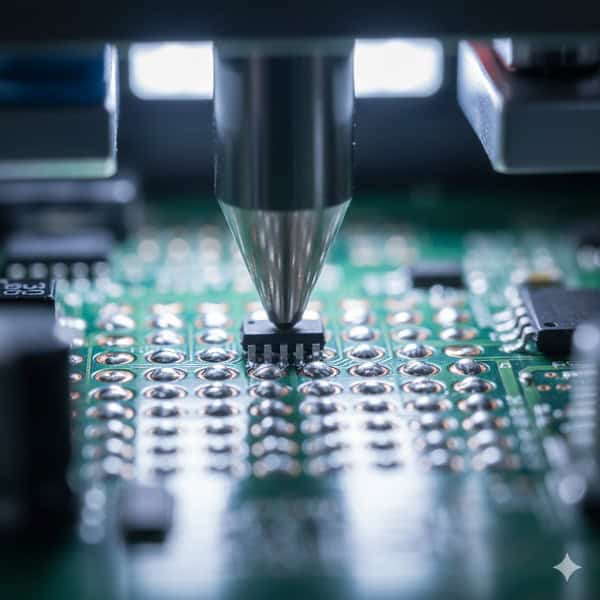
Full-service manufacturing partners provide complete end-to-end electronic product realization solutions, removing the friction of coordinating multiple specialized facilities. Leading EMS Companies in Us handle everything from bare board fabrication toward final enclosure boxing, firmware loading, and custom packaging. Handling multiple disparate vendors creates massive logistical headaches for hardware brands, increasing the risk of transit damage and accountability shifting when defects arise. Consolidating these tasks under one roof streamlines your entire product lifecycle, providing a single, comprehensive timeline for your product launch.
You benefit massively from having a single point of accountability where one trusted partner owns the entire quality outcome. A unified factory team resolves compatibility issues between different assembly stages immediately, such as adjusting a PCB layout to better fit a custom plastic housing. End-to-end integration drastically shortens your time taking concepts toward finished retail products, accelerating your return on investment.
Surface Mount Technology
The truth is, microscopic components require incredibly precise robotic placement machines equipped with advanced vision alignment systems. Manual soldering simply cannot handle tightly packed modern circuit board layouts featuring components barely visible to the naked eye. High-speed pick-and-place robots populate thousands of parts per hour flawlessly, utilizing multiple rotary heads to maximize throughput. This automated efficiency drives down per-unit costs dramatically for large orders, making mass commercialization financially viable.
Through-Hole Assembly
Industrial applications often require robust physical connections capable of withstanding heavy vibrations, thermal shock, and mechanical stress. Think about it, massive power connectors break easily if only surface-mounted, rendering an expensive piece of equipment useless. Skilled technicians perform wave soldering and advanced selective soldering, creating incredibly strong mechanical joints without subjecting the entire board to extreme heat. Many modern products still rely heavily upon mixed technology board designs, blending the density of SMT with the durability of THT.
Box Build Integration
Final assembly involves installing finished boards into custom plastic or metal enclosures, transforming bare electronics into consumer-ready goods. Factories perform complex wire routing connecting screens and external battery packs, while also applying protective conformal coatings or potting compounds for harsh environments.
- Custom enclosure assembly including mechanical fastening and thermal pad installation
- Wire harness routing with strict adherence to cable management standards
- Final product packaging, including shrink-wrapping, manual insertion, and retail box sealing
Key Takeaway: Comprehensive service offerings eliminate vendor management stress freeing your internal resources to focus on marketing and new product development.
| Service | Description | Best Application |
|---|---|---|
| SMT | Robotic placement | High-density consumer & medical boards |
| THT | Wave/Selective soldering | Power electronics & industrial controls |
| Box Build | Final mechanical packaging | Ready-to-sell retail goods & finished devices |
End-to-end integration drastically shortens your time taking concepts toward finished retail products, streamlining your path to revenue.
How Do EMS Companies in Us Support Hardware Startups?
Innovative manufacturing partners guide young companies navigating complex hardware commercialization pathways, providing a steady hand through the perilous transition from prototype to mass production. Forward-thinking EMS Companies in Us offer dedicated prototyping cells focusing purely on rapid iteration, New Product Introduction (NPI), and early-stage manufacturability testing. Startups typically lack deep internal manufacturing expertise risking expensive rookie mistakes, such as specifying overly tight tolerances that drive costs through the roof. Experienced factories act as external engineering departments providing invaluable production wisdom, treating the startup’s success as their own.
You need a supplier willing to grow alongside your expanding business, possessing the infrastructure to support you from day one to year ten. Supportive factories accept smaller initial orders establishing long-term mutual trust early, recognizing that today’s small innovator could be tomorrow’s industry giant. Strategic manufacturing guidance separates successful hardware launches from completely failed crowdfunding campaigns that burn through cash and goodwill.
Design For Manufacturing
Here is a fact, poorly designed boards cost twice as much during mass production due to unnecessary manual labor, excessive scrap, and high defect rates. Engineers optimize your layouts reducing unnecessary assembly steps and material waste, advising on optimal panelization strategies to maximize manufacturing throughput. They identify components prone to obsolescence suggesting sustainable alternatives immediately, ensuring your product design has a lifecycle of several years, not just several months. This upfront analysis maximizes your profit margins upon reaching high-volume sales, locking in profitability from the very first production batch.
Minimum Order Flexibility
Traditional massive factories reject orders below fifty thousand units instantly, freezing out independent creators and niche industrial developers. Why does this matter? Startups need small pilot runs testing market viability without massive financial risk, preserving their precious venture capital for marketing and software development. Agile partners assemble batches of one hundred units happily supporting market tests, allowing founders to gather real-world user feedback before committing to massive hardware inventory.
Regulatory Compliance Guidance
Passing strict electromagnetic interference (EMI) tests completely confuses many young hardware teams, often leading to multiple failed attempts at expensive testing laboratories. Factories provide specific design recommendations guaranteeing your device passes certifications smoothly, such as optimizing grounding planes and shielding high-frequency traces.
- FCC Part 15 and CE pre-compliance design checks
- RoHS and REACH compliant material selection verifying global environmental safety
- ISO certified manufacturing processes required for medical and aerospace approvals
Key Takeaway: Nurturing startup relationships creates powerful long-lasting manufacturing partnerships for both parties, fostering a vibrant ecosystem of hardware innovation.
| Support Type | Startup Benefit | Risk Mitigated |
|---|---|---|
| DFM Analysis | Lower unit cost & higher yield | Production delays & expensive rework |
| Low MOQ | Preserved capital & better cash flow | Unsold inventory & warehouse costs |
| Compliance | Faster global market entry | Failed lab tests & legal injunctions |
Strategic manufacturing guidance separates successful hardware launches from completely failed crowdfunding campaigns, turning brilliant ideas into tangible, profitable products.
Which Tech Do Leading EMS Companies in Us Adopt?
Top-tier facilities heavily integrate artificial intelligence predicting maintenance needs before machines break, ensuring maximum uptime and preventing mid-run calibration errors. Forward-looking EMS Companies in Us utilize advanced robotics handling delicate or oddly shaped components seamlessly, expanding the possibilities of what can be automated. Outdated legacy equipment struggles placing ultra-fine pitch microchips accurately anymore, leading to frustrating bottlenecks and unpredictable quality outputs. Modern production lines utilize smart sensors monitoring temperature profiles continuously throughout reflow, guaranteeing perfect thermal dynamics for every single board that passes through the oven.
You benefit directly from these massive capital equipment investments through lower defect rates and consistently higher product reliability. Cutting-edge technology guarantees your complex designs transition into physical reality perfectly, regardless of how tightly packed or sophisticated your PCB layouts become. Technological superiority remains the strongest indicator of a truly capable manufacturing partner dedicated to the future of electronics.
Solder Paste Inspection
Get this, seventy percent of all soldering defects originate from poor paste printing, making the stencil process the most critical step in surface mount assembly. 3D scanners measure exact paste volume preventing tiny electrical shorts entirely, capturing height, area, and volume data in milliseconds. Machines automatically adjust stencil alignment compensating for microscopic physical shifts instantly, utilizing closed-loop feedback to continually optimize the printing process without human intervention. This precise control forms the foundation of zero-defect manufacturing methodologies, stopping errors before expensive components are even placed.
Automated X-Ray Inspection
Complex grid array packages hide their soldering connections completely beneath the physical chip, making visual inspection physically impossible. How do we check them? High-resolution X-rays reveal microscopic air voids inside these hidden metal joints, calculating the exact percentage of voiding to ensure it falls within strict IPC standards. Technicians analyze these internal images confirming perfect structural integrity across critical processors, verifying that the molten solder has successfully collapsed and bonded the component to the pad.
Cloud-Based Tracking Systems
Modern factories trace every single component back to its original manufacturing date, utilizing Manufacturing Execution Systems (MES) to track production routing. Cloud software monitors production metrics generating real-time yield reports for clients, offering unprecedented transparency into the daily operations of the factory floor.
- Real-time production dashboards accessible securely via web browsers
- Component lot traceability critical for targeted product recalls and audits
- Automated defect categorization using AI to identify recurring process issues
Key Takeaway: Investing in advanced manufacturing technology directly translates into superior product reliability and peace of mind for procurement managers.
| Technology | Primary Function | Defect Prevented |
|---|---|---|
| SPI 3D | Volumetric paste measurement | Bridging, Shorts, & Open Joints |
| AXI | Hidden joint structural check | BGA connection failure & internal voiding |
| Cloud MES | Full product traceability | Counterfeit parts & untracked lot failures |
Technological superiority remains the strongest indicator of a truly capable manufacturing partner dedicated to continuous improvement and total quality management.
How Do EMS Companies in Us Handle High-Mix Low-Volume?
Specialized factories utilize rapid changeover techniques minimizing downtime between different product runs, mastering the art of high-mix, low-volume (HMLV) manufacturing. Dynamic EMS Companies in Us train cross-functional teams capable of assembling completely different devices daily, maintaining high efficiency despite the constant variation in product types. Standard massive factories lose money attempting these frequent assembly line reconfigurations, as their entire business model relies on setting up a machine once and running it for weeks. High-mix environments require exceptional organizational skills tracking thousands of distinct unique parts, demanding flawless material kitting and warehouse logistics.
You require extreme flexibility if your catalog contains dozens of niche electronic products serving specialized medical, industrial, or aerospace sectors. Specialized software algorithms optimize machine feeding schedules keeping production flowing smoothly, determining the exact sequence of jobs that minimizes feeder swap-outs. Dynamic production capabilities perfectly match the demands of modern specialized industrial electronics, where custom configurations are the norm rather than the exception.
Rapid Line Changeovers
Here is the secret, minimizing idle machine time maximizes factory profitability dramatically, allowing the EMS provider to offer competitive pricing even on small batches. Technicians prepare component feeders offline while machines finish the previous job, pre-loading reels onto mobile feeder carts. This offline preparation reduces changeover times from hours down to mere minutes, swapping entire carts in a fraction of the time it takes to change individual reels. Faster transitions mean your custom low-volume orders ship significantly quicker, keeping your lean inventory strategies intact.
Smart Inventory Management
Handling hundreds of different bill of materials simultaneously creates massive logistical chaos easily, especially when managing moisture-sensitive or expiration-dated materials. What is the solution? Automated intelligent component carousels retrieve exact reels instantly upon operator request, integrating directly with the factory’s ERP system. Smart storage prevents human errors when picking similar looking microchips from shelves, utilizing barcode scanning and LED light-picking systems to guarantee absolute component accuracy.
Cross-Trained Workforces
Operators must adapt quickly understanding entirely new assembly instructions every single morning, requiring a higher caliber of technical comprehension. Factories invest heavily in continuous employee training handling diverse technological challenges, ensuring workers can seamlessly transition from manual soldering to automated machine operation.
- Continuous skill development programs and IPC certification maintenance
- Digital interactive work instructions displayed on tablets to replace outdated paper manuals
- Flexible workstation configurations that can be rearranged for different product flows
Key Takeaway: Mastering high-mix production supports companies offering highly customized niche hardware solutions, providing agility without sacrificing industrial-grade quality.
| Production Type | Setup Time | Focus Area |
|---|---|---|
| High-Volume | Very Slow | Relentless Cost Reduction |
| High-Mix | Lightning Fast | Maximum Flexibility & Rapid Turnaround |
Dynamic production capabilities perfectly match the demands of modern specialized industrial electronics, proving that customization and efficiency can coexist.
Are EMS Companies in Us Cost-Effective For Production?

Total cost of ownership calculations prove local manufacturing often beats offshore alternatives ultimately, challenging the outdated assumption that cheapest unit price equals best value. Strategic EMS Companies in Us reduce hidden expenses like international shipping and massive import tariffs, keeping your capital deployed in product development rather than trapped in transit logistics. Cheap overseas quotes frequently hide expensive communication delays, severe quality issues, and the massive internal labor cost of constantly managing a distant supplier. Analyzing the entire supply chain reveals massive savings through localized production strategies, offering stability in an increasingly volatile global trade environment.
You must calculate the devastating financial impact of recalling defective offshore products, factoring in return shipping, customer compensation, and catastrophic brand damage. Reliable local partners deliver consistent quality preventing these catastrophic financial losses entirely, getting it right the first time, every time. Transparent total cost calculations consistently justify partnering with reliable localized manufacturing facilities, offering a far more predictable financial runway for your business.
Hidden Offshore Costs
Let us be honest, massive time zone differences destroy communication efficiency completely, forcing engineers into exhausting late-night conference calls. Waiting twenty-four hours for simple email replies delays projects by weeks, extending your time-to-market and allowing competitors to strike first. International freight charges, unpredictable customs holding times, and rising container costs destroy your tight delivery schedules. Local manufacturing eliminates these unpredictable logistical nightmares entirely, offering a streamlined, predictable path from factory floor to customer door.
Automation Driven Savings
High labor rates shrink drastically when factories utilize intense robotic automation to replace highly repetitive manual tasks. Think about this, one modern machine replaces dozens of manual assembly workers, running 24/7 without fatigue, breaks, or inconsistencies. Automated optical inspection reduces the need for massive manual quality control teams, replacing subjective human judgment with objective, measurable data. These technological investments make local pricing highly competitive globally, bridging the gap between offshore labor rates and domestic engineering excellence.
Total Cost of Ownership
A slightly higher initial unit price buys massive peace of mind and drastically lower operational friction. You save thousands on travel expenses previously spent visiting overseas factories, while also protecting your proprietary designs from unauthorized duplication.
- Reduced international shipping fees and elimination of complex customs brokerage
- Elimination of massive import tariffs and geopolitical trade war risks
- Lower intellectual property theft risks through secure servers and NDA-bound domestic partnerships
Key Takeaway: Evaluating holistic manufacturing costs reveals true value beyond simple unit price tags, proving that cheap quotes often result in highly expensive realities.
| Cost Factor | Offshore Focus | Local EMS Focus |
|---|---|---|
| Shipping | Very High & Unpredictable | Very Low & Fast |
| Tariffs | High Risk & Volatile | Zero Risk |
| IP Theft | High Risk (Grey Markets) | Highly Secure (Legal Protections) |
Transparent total cost calculations consistently justify partnering with reliable localized manufacturing facilities, proving that true cost-effectiveness is built on reliability.
How To Choose Among Top EMS Companies in Us?
Selecting the perfect manufacturing partner requires evaluating their specific engineering capabilities thoroughly, looking past flashy marketing brochures to examine their actual operational heartbeat. The best EMS Companies in Us welcome comprehensive facility audits verifying their technological claims, actively inviting you to inspect their lines, talk to their operators, and review their quality manuals. Signing contracts blindly based purely upon low pricing guarantees disastrous manufacturing results, locking you into partnerships that prioritize shortcuts over long-term success. You must verify their financial stability ensuring they survive economic downturns safely, guaranteeing they will be around to support your product years into the future.
Always request detailed tours inspecting their actual production floors, evaluating cleanliness, electrostatic discharge (ESD) protections, and general operational flow. Speak directly with their engineering teams testing their technical communication skills actively, presenting them with a complex design challenge to gauge their problem-solving methodology. Thoroughly evaluating potential partners establishes a solid foundation for decades of mutual success, transforming a simple vendor transaction into a powerful strategic alliance.
Verify Certifications Actively
Here is the kicker, fake quality certificates run rampant throughout the manufacturing industry, used by unscrupulous vendors to win contracts they cannot fulfill. You must contact issuing bodies confirming their ISO documentation remains currently valid, verifying their latest audit dates and scopes of compliance. Medical or aerospace projects demand highly specific regulatory manufacturing compliance records, such as ISO 13485 or AS9100, which require intense systemic rigor. Valid certifications prove their absolute commitment toward maintaining strict quality control systems, ensuring they practice what they preach on a daily basis.
Evaluate Communication Styles
Poor communication ruins completely viable hardware manufacturing projects incredibly fast, turning minor design clarifications into month-long production halts. What should you look for? Your dedicated account manager must respond rapidly with actionable technical insights, translating your business needs into clear directives for the factory floor. If they avoid answering direct engineering questions, rely solely on generic corporate speak, or refuse direct access to floor engineers, walk away immediately without hesitation.
Request Pilot Runs
Never award massive contracts without testing their actual assembly capabilities first with a low-risk, small-scale production order. Requesting a small pilot run reveals their true operational efficiency perfectly, acting as a real-world stress test for their procurement, assembly, and quality systems.
- Analyze prototype build quality for exact adherence to IPC soldering standards
- Measure actual delivery speed against their initially promised lead times
- Evaluate engineering feedback usefulness to see if they actively improve your product design
Key Takeaway: Rigorous partner vetting prevents catastrophic supply chain failures protecting your brand integrity and ensuring your hardware journey starts on solid footing.
| Vetting Step | Focus Area | Goal |
|---|---|---|
| Document Check | ISO Certifications | Verify compliance and systemic quality control |
| Communication | Response Time & Depth | Gauge support level and engineering transparency |
| Pilot Run | Build Quality & Timeliness | Prove capability with a low-risk physical test |
Thoroughly evaluating potential partners establishes a solid foundation for decades of mutual success, aligning your innovative vision with flawless manufacturing execution.
We detailed exact strategies for evaluating quality control and supply chain resilience effectively, empowering you to make informed sourcing decisions. The top 15 manufacturing partners dominate 2026 by offering extreme engineering agility, robust technological investments, and localized supply chain security. Queen EMS delivers unparalleled factory-direct precision keeping your hardware launches perfectly on schedule, regardless of design complexity or volume requirements. We transform massive production challenges into seamless, highly reliable electronics assembly solutions globally. Reach out and contact us today securing your dependable manufacturing advantage immediately.
FAQ
Q1: Can I visit the manufacturing facility before signing a contract? Absolutely yes. Touring the production floor verifies their actual equipment capabilities, allows you to inspect their ESD protocols, and confirms their commitment to strict quality control processes firsthand.
Q2: What’s the best way to handle sudden component shortages? Partner with factories possessing global sourcing networks and dedicated procurement engineering teams. They leverage international relationships finding alternative parts quickly, while engineers verify datasheet compatibility, keeping your production running smoothly without redesigns.
Q3: How do I know if a factory can handle high-density boards? Request their specific surface mount technology equipment list and past case studies. Advanced factories utilize 3D paste inspection, 3D X-Ray, and ultra-precise placement machines specifically calibrated for complex microchips like 01005s and micro-BGAs.
Q4: Can I start with a small prototype run first? Yes, you should always start small to mitigate risk. Agile manufacturers happily accept low-volume pilot runs (sometimes as low as 1-10 units) validating your design and testing their internal processes before massive mass production begins.
Q5: What’s the best method for protecting my intellectual property? Sign strict non-disclosure agreements before sharing files, limit access to critical firmware, and choose localized partners with secure internal networks. Reliable factories implement strict data protection protocols and partitioned manufacturing lines protecting client designs completely from grey-market leaks.