
Choosing the right technology depends on balancing your product’s performance needs, physical size constraints, and production volume requirements. Imagine you are ready to scale a new consumer gadget, but your current prototype uses bulky components that won’t fit the sleek enclosure your customers demand. This mismatch leads to high manufacturing costs and delayed launches because the assembly method wasn’t optimized for the product’s lifecycle. Here’s the deal: selecting between SMT vs THT isn’t just a technical detail; it’s a strategic business decision. By understanding the core differences between Surface Mount Technology and Through-Hole Technology, you can ensure high reliability and scalability for your PCBA projects. As an engineer at a premier assembly factory, I see daily how the right choice transforms a struggling project into a market leader.
1. What are the fundamental differences in SMT vs THT?
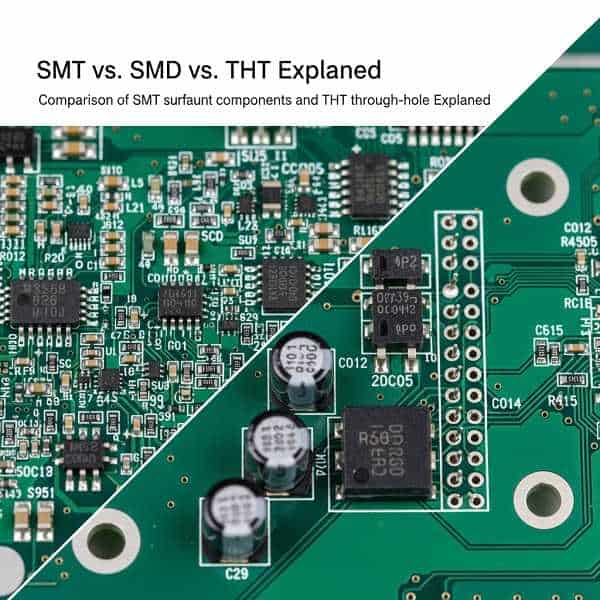
The fundamental difference lies in how components are attached to the board, with SMT mounting parts directly onto the surface while THT requires leads to pass through drilled holes. Understanding SMT vs THT is essential because it dictates your entire manufacturing workflow and board density. You might be wondering which one offers better electrical performance for high-speed signals.
- SMT uses solder paste and reflow ovens for mass automation.
- THT relies on wave soldering or manual soldering for mechanical strength.
- SMT components are significantly smaller, allowing for high-density layouts.
How does component mounting affect space?
Surface mounting allows you to use both sides of the PCB, effectively doubling your available real estate. THT, on the other hand, occupies space on both sides for a single component due to the protruding leads.
- SMT enables miniaturization in devices like smartphones.
- THT is often restricted to single-sided or power-heavy sections.
| Feature | SMT (Surface Mount) | THT (Through-Hole) |
| Mounting | On the surface | Through the board |
| Hole Drilling | Minimal | Required for every part |
| Board Density | High | Low |
This structural distinction is the primary driver for cost and size trade-offs in modern electronics.+4
2. Why is mechanical strength critical in SMT vs THT?
THT generally offers superior mechanical strength because the leads are physically anchored through the PCB, whereas SMT relies solely on the adhesion of solder to surface pads. When evaluating SMT vs THT, you must consider the physical stress your product will endure in the field. But wait, there’s more.
- Connectors and switches often require THT for durability.
- Heavy components like transformers benefit from through-hole mounting.
- SMT can be prone to “pad lifting” under extreme mechanical torque.
Is THT better for harsh environments?
For industrial or automotive applications subject to high vibration, THT provides a robust connection that surface mounts struggle to match. You don’t want your critical power connector snapping off during operation.
- THT joints withstand higher pull-out forces.
- SMT requires additional adhesive or mechanical bracing for heavy parts.
| Stress Type | SMT Performance | THT Performance |
| Vibration | Moderate | Excellent |
| Mechanical Pull | Low | High |
| Component Weight | Limited | High |
Choosing THT for high-stress areas ensures your product survives where surface-mount-only designs might fail.
3. How does SMT vs THT impact automated production?
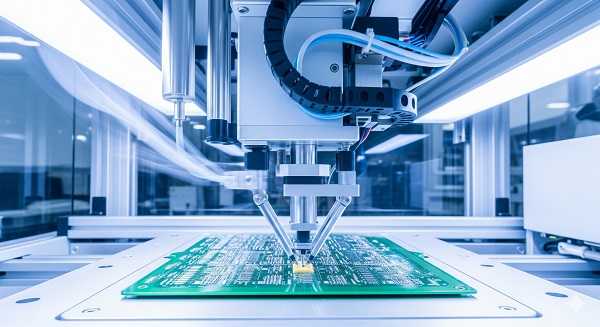
SMT is designed for high-speed, fully automated production, while THT often involves more manual steps or slower wave soldering processes. A professional SMT vs THT comparison highlights that SMT can place thousands of parts per hour with extreme precision. Ready for the good part?
- Pick-and-place machines automate the entire SMT placement.
- THT insertion can be automated but is often slower and more expensive.
- SMT reduces labor costs significantly for large-scale production runs.
Can automation reduce defects?
Automated SMT lines use advanced inspection technologies to ensure every solder joint is perfect before it leaves the oven. THT manual insertion is more prone to human error, which can impact your overall yield.
- AOI (Automated Optical Inspection) is native to SMT workflows.
- THT often requires manual visual inspection or specialized jigs.
| Factor | SMT Automation | THT Automation |
| Placement Speed | Extremely High | Moderate to Low |
| Labor Cost | Low | High |
| Accuracy | High | Moderate |
High-volume projects almost always lean toward SMT to maximize throughput and minimize unit costs.+3
4. What are the performance trade-offs in SMT vs THT?
SMT offers better electrical performance at high frequencies due to shorter lead lengths and lower parasitic inductance, making it the choice for modern data-heavy circuits. In the debate of SMT vs THT, frequency response is a silent winner for surface technology. Believe it or not, even a few millimeters of lead can distort a high-speed signal.
- SMT has lower electromagnetic interference (EMI).
- THT leads can act as antennas, picking up unwanted noise.
- Smaller SMT loops reduce signal degradation in RF designs.
Is signal integrity better with SMT?
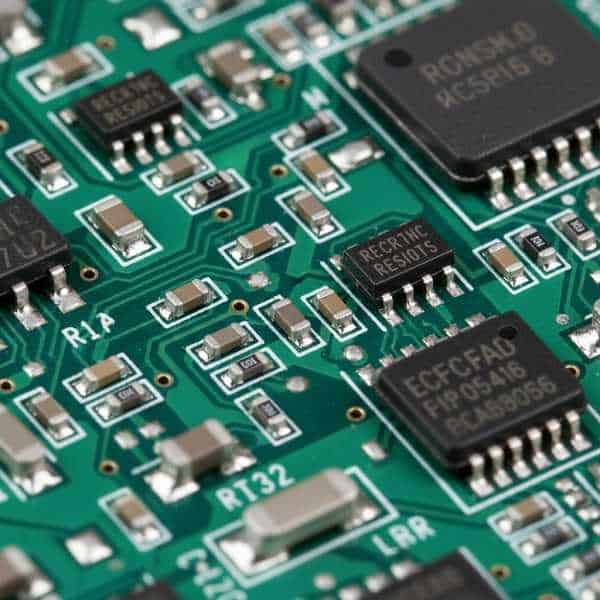
Shorter paths between components mean signals travel faster and with less distortion, which is vital for processors and memory modules. You will find that nearly all high-performance computing boards are strictly SMT.
- Reduced parasitic capacitance in surface mount pads.
- Better ground plane integrity with fewer through-holes.
| Parameter | SMT Performance | THT Performance |
| Signal Speed | High | Moderate |
| EMI/EMC | Low Noise | Higher Noise |
| Lead Inductance | Minimal | Significant |
For products requiring high-speed data transfer or wireless connectivity, SMT is the non-negotiable standard.+2
5. How does SMT vs THT affect prototyping and testing?
THT is often preferred for early-stage prototyping because components are easier to swap and solder by hand without specialized equipment. When comparing SMT vs THT, the ease of manual modification can save you days during the R&D phase. This is where it gets interesting.
- Breadboards and perf-boards are natively designed for THT.
- SMT rework requires steady hands and specialized hot-air stations.
- THT components are larger and easier to label and track manually.
Is manual rework easier with THT?
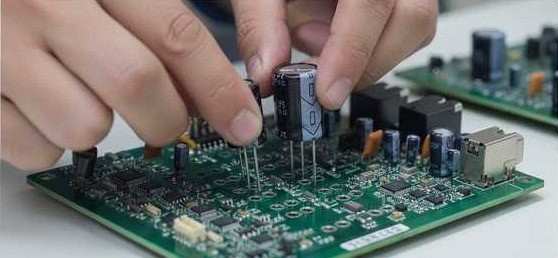
If you need to change a resistor value on a test board, THT allows you to do so with a simple soldering iron. SMT parts, especially BGA types, are nearly impossible to fix without industrial-grade rework stations.
- THT allows for easy “clip-on” testing probes.+1
- SMT requires dedicated test points designed into the layout.
| Activity | SMT Ease | THT Ease |
| Hand Soldering | Difficult | Easy |
| Part Swapping | Complex | Simple |
| Probing | Hard | Easy |
Key Takeaway: Use THT for initial concept validation, but transition to SMT for your mass production to ensure market viability.
6. Why is thermal management vital in SMT vs THT?
SMT components often have better thermal contact with the PCB’s copper planes, allowing the board itself to act as a heat sink. In the context of SMT vs THT, heat dissipation is a critical factor for long-term reliability. The plot thickens.
- SMT “thermal pads” transfer heat directly into the inner layers.
- THT components dissipate much of their heat into the surrounding air.
- Dense SMT layouts require careful thermal reviews to avoid hot spots.
Can SMT handle high power?
While THT is traditional for power, modern high-power SMD components can handle significant current if the PCB is designed with sufficient thermal vias. You can achieve compact designs that still stay cool under pressure.
- Thermal vias connect surface heat to bottom-side cooling.
- THT leads can sometimes isolate the component from the board’s heat sink.
| Thermal Path | SMT | THT |
| Primary Dissipation | Through PCB Copper | Through Leads/Air |
| Cooling Efficiency | High (with Vias) | Moderate |
| Heat Sink Needs | Board-level | Component-level |
Properly designed SMT boards can often out-cool THT counterparts by using the entire PCB as a radiator.
7. How does SMT vs THT impact the bill of materials (BOM)?
SMT components are typically cheaper in high volumes due to their smaller size and the efficiency of the manufacturing process. When analyzing SMT vs THT, you will find that a BOM filled with SMD parts usually results in a lower per-unit cost. Now, here is the kicker.
- Passives like resistors and capacitors are pennies for thousands in SMT.
- THT components require more raw material and complex packaging.
- SMT reels are optimized for high-speed feeder systems.
Are SMT parts more available?
Most modern IC manufacturers prioritize SMD packages, meaning some newer chips aren’t even available in through-hole versions. If you want the latest tech, you have to go surface mount.
- Smaller footprint equals lower shipping and storage costs.
- SMT packaging (Tape and Reel) is standard across the industry.
| Cost Factor | SMT Components | THT Components |
| Unit Price | Low | Higher |
| Packaging | Reels (Efficient) | Tubes/Bulk (Slow) |
| Availability | High (Modern) | Limited (Legacy) |
Key Takeaway: For cost-sensitive electronics, SMT is the only logical choice for high-volume production.
8. What is mixed technology PCB assembly in SMT vs THT?
Mixed technology assembly combines both SMT and THT on a single board to leverage the benefits of both, such as using SMT for logic and THT for power. Navigating SMT vs THT often leads you to this hybrid approach for complex industrial designs. Wait until you see this.
- SMT handles the dense microcontrollers and memory.
- THT is reserved for high-stress connectors and large capacitors.
- This approach requires a Mixed Technology PCB Assembly line with both reflow and wave soldering.+1
Why use a hybrid approach?
A hybrid design gives you the density of SMT where it matters and the ruggedness of THT where it’s needed most. It is the gold standard for high-reliability medical and aerospace hardware.
- Optimizes board space while maintaining connector strength.
- Requires sophisticated process control to manage multiple soldering stages.
| Technology | Best For | Application in Hybrid |
| SMT | Processing Power | CPU/RAM/Sensors |
| THT | Power/Interface | DC Jacks/Terminals |
| Combined | Complexity | Full System Integration |
Key Takeaway: Mixed technology is the ultimate solution for products that refuse to compromise on either size or strength.+3
9. How to choose between SMT vs THT for your project?
Choosing between the two depends on your project’s volume, budget, and mechanical requirements, with SMT being the default for modern electronics. When deciding on SMT vs THT, you should weigh the long-term lifecycle against the immediate prototyping needs. Here is the deal.
- Choose SMT if size and high-speed performance are your top priorities.
- Select THT for products that will face significant physical abuse or high voltages.
- Consult with an engineer to find the right balance for your specific application.
Should you always move to SMT?
While SMT is more modern, certain “old” tech like high-power industrial relays still require through-hole mounting. You shouldn’t force SMT where the physics of the part doesn’t allow it.
- High-power applications often necessitate THT.
- High-reliability sensors may benefit from the mechanical anchor of THT.
| Project Goal | Recommended Tech | Why? |
| Miniaturization | SMT | Highest density |
| High Vibration | THT | Mechanical anchor |
| High Volume | SMT | Automated speed |
Analyzing your product’s environment and use case early ensures you won’t have to redesign halfway through production.+3
10. How do SMT vs THT impact long-term reliability?
Long-term reliability is influenced by solder fatigue and mechanical stress, with THT offering more resilience to physical cycles and SMT excelling in vibration-dampened environments. In the final comparison of SMT vs THT, reliability is often a tie decided by the quality of the manufacturing process. Ready for the good part?
- THT joints are less likely to crack under thermal expansion.
- SMT joints are lighter, making them more resistant to G-force damage.
- Modern solder chemistry has significantly improved SMT longevity.
Can testing ensure reliability?
Regardless of the technology, rigorous testing like AOI, X-Ray, and ICT is the only way to guarantee your product stays in the field for years. We recommend professional inspection for all high-reliability designs.+4
- X-Ray is essential for inspecting hidden BGA joints in SMT.
- Visual inspection remains effective for THT lead fillets.
| Reliability Factor | SMT | THT |
| Thermal Cycling | Good | Excellent +1 |
| Shock Resistance | High (Low Mass) +1 | Moderate |
| Solder Integrity | Process-Dependent +1 | Highly Robust +1 |
Key Takeaway: Reliability isn’t inherent to the technology; it’s a result of professional design and strict process control.
Conclusion
In summary, we have explored the critical differences in SMT vs THT, highlighting how SMT drives miniaturization and cost-efficiency while THT remains the king of mechanical strength and high-power stability. Choosing the right path involves a deep dive into your product’s mechanical environment, signal requirements, and production scale. You should know that most successful modern products aren’t just one or the other; they are a strategic blend of these techniques. If you’re struggling to decide which technology will best serve your next innovation, our engineering team is here to guide you through every step of the PCBA manufacturing process. Contact us today to schedule a technical review and ensure your project is built for long-term success. Our vision is to empower B2B innovators with the hardware reliability they need to lead their industries with confidence.
FAQ
Q1: Can I use SMT components for high-voltage power supplies? Yes, but you must ensure proper creepage and clearance distances in your PCB layout. For very high voltages, THT is often still preferred for safety and isolation.
Q2: What’s the best way to handle connectors in a high-vibration environment? We recommend using THT for the connectors to provide a mechanical anchor, while keeping the rest of the logic on SMT to reduce overall board mass and noise.
Q3: How do I know if my design is too complex for SMT? Almost no design is “too complex” for SMT; in fact, the more complex the design, the more SMT becomes a necessity to fit all the required functionality into a reasonable space.
Q4: Is it more expensive to have a mixed technology board? Slightly. Since it requires two different soldering processes (reflow and wave/selective), there is usually a small increase in setup time and labor compared to SMT-only boards.
Q5: How do I choose between wave soldering and selective soldering for THT? Wave soldering is best for high-volume THT-heavy boards, while selective soldering is the gold standard for mixed technology boards where you don’t want to heat the SMT components on the bottom side.