
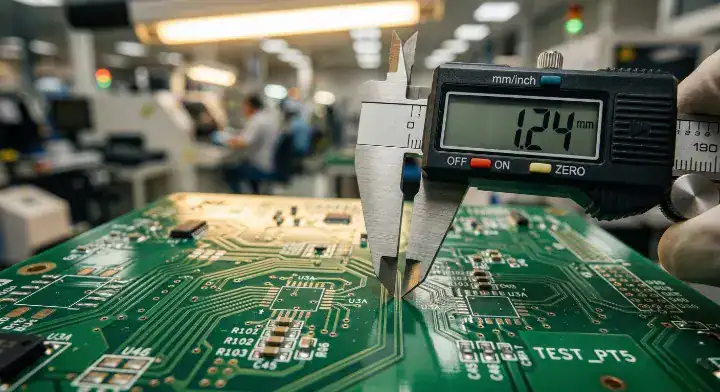
Quick Answer: Standard pcb fabrication tolerances dictate the acceptable physical variations of your bare board without incurring extra charges. Standard manufacturing handles ±10% to 20% on trace widths, ±0.08mm on drilling, and ±10% on controlled impedance. Specifying tighter precision (like ±5% impedance or IPC Class 3 specs) typically increases your total board cost by 15% to 30% and adds 2 to 4 days to your lead time. Key takeaways:
- Standard PTH drill tolerance is ±0.08mm, while NPTH is ±0.05mm.
- Trace widths normally vary by ±10-20% due to the chemical etching process.
- Moving from Class 2 to Class 3 manufacturing increases costs by roughly 20-30%.
- Board thickness carries a standard ±10% tolerance, with a minimum allowed variation of ±0.005 inches.
Table of Contents
- What Are PCB Fabrication Tolerances and Why Should You Care?
- What Are the Standard Drilling Tolerances for PCB Holes?
- How Much Can Trace Width and Spacing Vary During Fabrication?
- What Board Thickness Tolerances Should You Expect?
- How Tight Are Controlled Impedance Tolerances?
- What’s the Difference Between IPC Class 2 and Class 3 Tolerances?
- How Do Tighter Tolerances Affect Your PCB Cost and Lead Time?
- What Tolerance Mistakes Cause the Most PCB Failures?
- Pre-Submission Tolerance Checklist: What to Verify Before Sending Your Gerber Files
- FAQ
You send your Gerber files to three different manufacturers, and one factory immediately flags your design because the annular rings are too tight. If you ignore the warning, you risk drill breakouts and scrap boards. If you ask them to hold a tighter tolerance to make it work, your quoted price suddenly jumps by 25%. After processing over 12,000 PCB assembly orders last year, we see designers struggle with this exact standoff every single week. Here is the reality about standard pcb fabrication tolerances, what actually happens on the factory floor, and how to stop overpaying for precision your product doesn’t actually need.
What Are PCB Fabrication Tolerances and Why Should You Care?
PCB fabrication tolerances represent the acceptable margins of error for physical board features like hole sizes, trace widths, and overall board thickness during manufacturing. You should care about these numbers because specifying tighter-than-standard tolerances will increase your bare board costs by 15% to 30% and directly dictate your overall manufacturing yield.
No physical manufacturing process is perfectly exact. Materials shrink and expand under heat, chemical etching rates vary slightly across a panel, and mechanical drills vibrate. Understanding the default limits of pcb fabrication keeps you from designing a board that looks perfect in CAD but is physically impossible to build at scale without massive cost penalties.
Here’s where it gets real…
To control your budget, keep these foundational realities in mind:
- Materials move: FR4 stretches and shrinks during lamination.
- Chemistry fluctuates: Etchant concentration changes slightly batch-to-batch.
- Machines wear: Drill bits degrade fractionally with every plunge.
What Are the Standard Drilling Tolerances for PCB Holes?

Standard pcb drilling tolerance is ±0.08mm for plated through-holes (PTH) up to 0.8mm, and ±0.05mm for non-plated through-holes (NPTH). Position accuracy for the drill hit is generally ±1mil, which requires a minimum drill-to-copper clearance of 8mil to avoid shorts.
A common question we see on engineering forums is: “Why did the fabricator say my annular ring is too small when it looks perfectly fine in my design software?” Your CAD software assumes perfect alignment, but the physical factory floor deals with stacked variables.
The actual physical process introduces multiple layers of deviation:
- Material movement adds ±0.0002″ per inch of board size.
- Laser Direct Imaging (LDI) registration carries a ±0.001″ variance.
- Layer lamination alignment shifts by ±0.001″.
- The mechanical drill bit itself can wander ±0.001″ upon entry.
80% of the field failures we analyze stem from designers using factory absolute minimum capabilities as their standard layout rules. When designers push annular rings to the ragged edge, those tiny stacked errors lead directly to breakouts. We mandate a DFM review on every order that flags tight rings and forces a minimum buffer above the physical limits. This single automated policy keeps our first-pass yield rate at 99.7% and prevents hundreds of scrapped boards a month.
How Much Can Trace Width and Spacing Vary During Fabrication?

Standard manufacturing tolerances allow trace width and spacing to vary by ±10% to 20% from your original Gerber files. For a standard 1oz copper board, a standard trace and space requirement sits at 4/4mil, while 2oz copper requires significantly wider spacing to account for the aggressive etching process.
Many engineers run into this exact scenario: “My trace design is 10mil, but the actual board measures 8.5mil. Is this normal?” Yes. This happens because copper etching is a subtractive chemical process. The etchant eats the copper downward, but it also eats it sideways (creating a trapezoid shape).
Now, here’s the part that surprises most customers…
Your copper weight directly dictates your minimum trace capabilities:
- 0.5oz copper allows for very fine, tight etching control.
- 1oz copper is the industry standard baseline for 4/4mil limits.
- High-speed circuits (>100MHz) often require you to specify a tighter ±5-10% tolerance.
- You can always check your specific design limits using a trace width tool to stay safe.
What Board Thickness Tolerances Should You Expect?
Standard pcb thickness tolerance is ±10% of the total board thickness, with a hard minimum allowed variation of ±0.005 inches. Common standard overall board thicknesses you can order without custom fees include 31mil, 62mil, 93mil, and 125mil.
Your overall board thickness is the sum of copper foil, prepreg, and core materials. Under IPC-4562, copper thickness alone has a tolerance allowing for a -10% deviation from the nominal weight.
Beyond just the Z-axis height, you must account for board flatness.
- Bow and twist tolerances max out at 1% for boards undergoing SMT assembly.
- For non-SMT boards, the standard allows up to 1.5% bow and twist.
- Solder mask registration carries its own ±2-3mil variance, requiring a minimum solder dam bridge of 3mil between pads.
How Tight Are Controlled Impedance Tolerances?
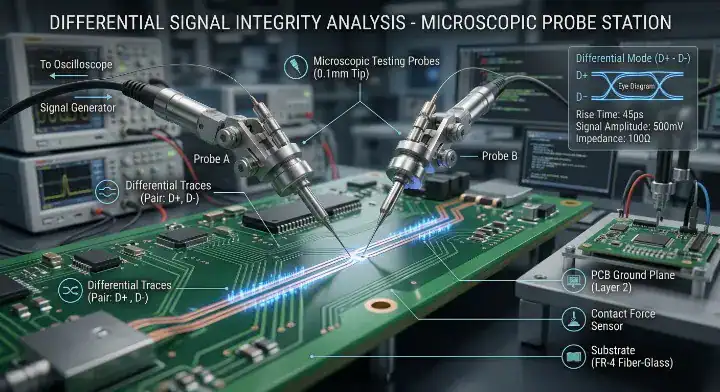
Standard controlled impedance tolerance runs at ±10% for typical high-speed digital and RF applications. Advanced manufacturing processes can hit ±5% or even micro-impedance tolerances of ±5%, but these require specialized dielectric materials and extremely strict etching controls.
When your signals degrade or reflect, tight impedance control becomes non-negotiable. To achieve that ±5% mark, the factory has to dynamically adjust trace widths on the production floor to compensate for slight variations in the physical prepreg thickness.
But here’s what most guides won’t tell you…
Most consumer hardware functions perfectly fine at the standard ±10%. Pushing for ±5% means the factory has to run test coupons, verify with a TDR (Time-Domain Reflectometer), and potentially scrap panels that miss the narrow window. If you aren’t sure what your stackup requires, run your numbers through an impedance calculator before demanding premium precision.
What’s the Difference Between IPC Class 2 and Class 3 Tolerances?
IPC Class 2 allows for minor visual imperfections and standard manufacturing variations suitable for consumer electronics, while IPC Class 3 demands significantly tighter tolerances meant for high-reliability medical, aerospace, or military systems. A major physical difference is that Class 3 requires a much larger minimum annular ring and thicker hole wall plating.
If your device goes into a smart home appliance, Class 2 provides exactly what you need. If your device goes into a pacemaker or a satellite, Class 3 is mandatory.
| Tolerance Parameter | IPC Class 2 | IPC Class 3 | When to Choose |
|---|---|---|---|
| Annular Ring | 90° breakout allowed | No breakout allowed (0.001″ min ring) | Class 3 for high-vibration environments |
| Drill Accuracy | Standard (±0.08mm) | Tight (±0.05mm or better) | Class 3 for dense micro-BGA layouts |
| Copper Plating (Hole) | 0.79mil (20µm) avg | 1.0mil (25µm) avg | Class 3 for high-current vias |
| Bow & Twist | 1.5% max (0.75% SMT) | 1.5% max (0.75% SMT) | Same for both; driven by SMT needs |
| Solder Mask | Minor misregistration OK | Zero pad encroachment | Class 3 for ultra-fine pitch components |
How Do Tighter Tolerances Affect Your PCB Cost and Lead Time?
Specifying tighter pcb fabrication tolerances generally increases your bare board cost by 15% to 30% and adds 2 to 4 days to your production lead time. Moving your design from standard ±3mil drill tolerances to a tight ±2mil accuracy alone will generate a 5-10% cost premium.
Procurement teams frequently ask us exactly how much they are overpaying for tight specs. The reality is that consumer electronics function flawlessly on Class 2 standard tolerances. Over-specifying your manufacturing notes is the fastest way to inflate your pcb fabrication cost for absolutely no functional gain.
So what does this actually mean for your budget?
| Specification | Standard Tolerance | Tight Tolerance | Cost Premium | Lead Time Impact |
|---|---|---|---|---|
| Trace Width | ±20% | ±10% or ±5% | +10% to 15% | +1 to 2 days |
| Drill Hole | ±3mil | ±2mil or ±1mil | +5% to 10% | +1 day |
| Impedance | ±10% | ±5% | +10% to 20% | +1 to 2 days |
| IPC Standard | Class 2 | Class 3 | +15% to 30% | +2 to 3 days |
If you want to know exactly how much your specific layout will cost to build, upload your files for a transparent quote within 24 hours. We price based on exactly what you need, nothing more.
What Tolerance Mistakes Cause the Most PCB Failures?

The most common tolerance failures include drill wander causing annular ring breakouts, over-etched traces failing to carry required current, and excessive board bow causing SMT assembly defects. When these standard variations stack up unfavorably, they directly cause open or short circuits.
Engineers naturally want to know the actual risks. What happens if the tolerance drifts?
- A drill offset of 3mil breaks out of the pad, exposing the hole wall and risking a plating void.
- A 15% reduction in trace width on a high-power line causes overheating and burns the FR4.
- Board thickness running 10% too thick prevents the finished product from sliding into its mechanical enclosure.
- Impedance drifting by 12% causes signal reflections and data packet loss.
We review hundreds of client CAD files a week, and designers constantly try to use a 4mil trace to carry a 1-amp load, assuming the factory will hit exactly 4mil. We flag this instantly. By forcing designers to follow established pcb trace width spacing rules that account for a 20% etch reduction, we eliminate the root cause of localized board burnouts entirely.
Pre-Submission Tolerance Checklist: What to Verify Before Sending Your Gerber Files
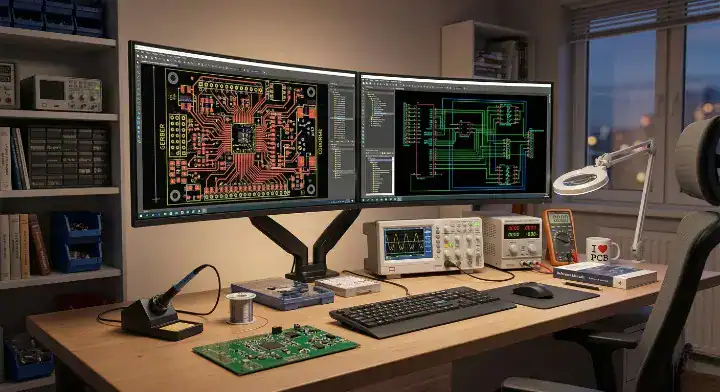
Before submitting your Gerber files to a manufacturer, you must verify your annular ring sizes, explicitly call out your copper thickness, define any impedance lines, and specify your IPC class. Sending files without these explicit notes forces the fabricator to apply their default standard tolerances.
Don’t let the factory guess. Use this exact checklist before you hit send.
| Item | What to Check | Why It Matters | Red Flag |
|---|---|---|---|
| Annular Ring | Via min 0.005″, Component min 0.007″ | Prevents drill breakout during lamination shifting | Rings < 0.004″ will trigger a factory hold |
| Drill Chart | Are holes marked as PTH or NPTH? | Plated holes need different sizing compensation | Missing PTH/NPTH designations |
| Copper Weight | Explicitly state inner/outer oz | Dictates minimum allowable trace and space | Mixing 2oz copper with 4/4mil spacing |
| Impedance | Call out the target ohms and layer | Requires factory stackup adjustment and TDR testing | Just saying “control impedance” without values |
| IPC Class | State Class 2 or Class 3 | Dictates inspection criteria and cost | Leaving it blank defaults to Class 2 |
FAQ
Can I request a ±0% tolerance on my board thickness? No, a ±0% tolerance is physically impossible in PCB manufacturing. The base materials (core and prepreg) have inherent manufacturing variances from their own suppliers, and the lamination pressing process creates slight resin flow. You must accept the industry minimum of ±0.005″.
What is the best way to avoid annular ring breakouts without increasing my board size? It depends on your current routing density, but the easiest fix is adding teardrops to your pads. Teardrops add extra copper at the exact junction where the trace meets the pad, providing a safe buffer for the drill bit to wander without severing the connection.
How do I know if my design actually requires IPC Class 3 tolerances? It depends entirely on your product’s end-use environment. If human life depends on the board functioning (medical devices), or if it operates in extreme vibration or temperature environments (aerospace/military), you need Class 3. For consumer electronics, smart home devices, and standard industrial controls, Class 2 is completely sufficient.
Will tight tolerances slow down my PCB assembly process? Yes. Boards with extremely tight tolerances, especially regarding bow and twist or solder mask registration, require much slower, highly monitored handling during the SMT process. If you want to scale to mass production smoothly, keep your board tolerances as loose as your electrical design allows. Upload your BOM for a free DFA check to see if your layout will slow down assembly.
Written by the QueenEMS Engineering Team. Ready to stop guessing about your manufacturing specs? Contact us today at QueenEMS to get your free quote and engineering review.