Quick Answer: The total PCB fabrication cost ranges from $0.50 to $15+ per bare board, depending heavily on your layer count, material choice, and production volume. For a standard 4-layer FR4 board, expect to pay $2–$5 per board for runs of 100+ units, while a quick-turn prototype run of 5 boards will cost $15–$30 per board due to fixed tooling fees.
Key takeaways:
- Setup and tooling fees ($50–$200) are fixed, which makes prototype unit costs significantly higher.
- Layer count drives base pricing: 4-layer boards cost 30-40% less than 6-layer boards.
- High-frequency materials like Rogers cost 5 to 10 times more than standard FR4.
- Opting for a 5-day standard lead time saves 20–50% compared to 24-hour rush orders.
Table of Contents
- What makes up the total PCB fabrication cost?
- How much does a real PCB fabrication order cost?
- Which cost factors have the biggest impact on your quote?
- How can you reduce PCB fabrication cost without cutting quality?
- Why do quotes from different factories vary so much?
- How does board size and panelization affect your price?
- What’s the cost difference between standard and advanced PCB processes?
- How does lead time affect PCB fabrication pricing?
- FAQ
You just designed a new board, and now you are wondering about the actual PCB fabrication cost before sending out RFQs. It is frustrating to guess your budget when most online calculators only give vague estimates, leaving you exposed to unexpected tooling fees or expensive material upcharges. After processing over 15,000 bare board orders last year, we know exactly how these numbers are calculated. We will break down a real factory quote so you can see where every dollar goes and avoid overpaying.
(Note: This guide focuses strictly on bare board manufacturing. If you need pricing for components and soldering, read our detailed guide on PCB assembly cost.)
What makes up the total PCB fabrication cost?
PCB fabrication cost consists of a fixed engineering setup fee plus the variable costs of materials, processing, and testing per board. A typical quote breaks down into base laminate costs (30-40%), manufacturing processes like drilling and plating (40-50%), and final testing/setup (10-20%).
When a factory receives your Gerber files, they do not just guess a number. They plug your specifications into a calculator that tallies up specific line items.
Here’s where it gets real. Your quote will generally include these exact components:
- Base Material: The cost of the physical substrate. Standard FR4 material is cheap, but high-Tg or metal-core boards increase the base price.
- Layer Count & Lamination: Every additional layer requires more copper, more prepreg, and extra cycles in the lamination press.
- Drilling & Vias: The number of holes and hole sizes. Mechanical drilling is standard; laser drilling for microvias costs extra.
- Surface Finish: Applying HASL, ENIG, or Immersion Silver to protect exposed copper.
- Solder Mask & Silkscreen: Standard green is usually free. Custom colors like matte black or purple sometimes carry a small surcharge.
- E-Test & Inspection: Electrical testing to verify there are no shorts or opens.
- Engineering / Tooling Fee: A one-time setup charge for CAM engineering and creating physical phototools.
How much does a real PCB fabrication order cost?
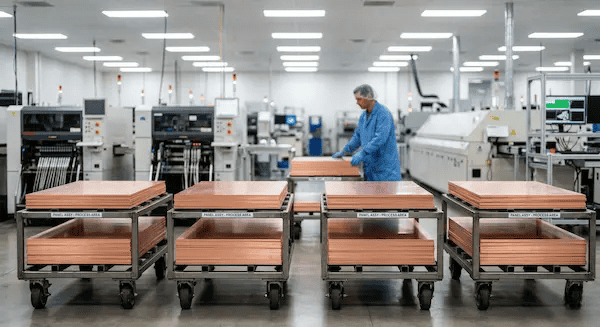
A standard 4-layer FR4 board measuring 100×80mm will cost around $15–$30 per board for a 5-piece prototype run, but drops to just $2–$5 per board for a 100-piece run, and further drops to $1–$3 for 1,000 pieces. This massive price drop happens because fixed tooling fees are divided across a larger number of units.
Customers constantly ask why 5 prototype boards cost so much per unit compared to mass production. The real question is how fixed costs work in a factory setting.
Whether you order 5 boards or 5,000, our CAM engineers spend the same amount of time reviewing your files, and our machines require the exact same setup procedures. A typical tooling and setup fee is $50 to $150. If you order 5 boards, that is $20 added to each board. If you order 1,000 boards, the setup fee adds just 10 cents per board. Furthermore, mass production allows us to optimize panel utilization to the absolute maximum, drastically reducing material waste.
| Order Volume | Fixed Setup/Tooling Fee | Material & Processing (Per Board) | Estimated Total Unit Price |
|---|---|---|---|
| 5 pcs (Prototype) | $100.00 | $3.00 | **$23.00 / board** |
| 100 pcs (Low Volume) | $100.00 | $2.50 | **$3.50 / board** |
| 1000 pcs (Mass Prod.) | $100.00 | $1.90 | **$2.00 / board** |
(Note: These figures represent a typical 100x80mm 4-layer FR4 board. Upload your Gerber files to QueenEMS for an accurate quote tailored to your exact design).
Which cost factors have the biggest impact on your quote?
Layer count and order volume have the highest impact on your PCB fabrication cost, followed closely by your material choice and board dimensions. Special processes like impedance control or blind/buried vias rank next, often adding 20-30% to your total bill.
Not all design choices affect your budget equally. If you want to keep costs down, you need to know which levers to pull. Ranked from highest impact to lowest, here is what drives your factory quote:
- Layer Count: Going from 2 to 4 layers doubles your cost. The price curve jumps significantly as you move to 6, 8, and multilayer PCBs up to 60 layers.
- Order Volume: As shown above, volume dilutes setup fees and lowers raw material costs.
- Material Type: Standard FR4 is the baseline. If your RF design requires Rogers material, expect to pay 5 to 10 times more for the bare board. Aluminum or ceramic substrates also carry heavy premiums.
- Board Size & Panelization: Larger boards use more material. Inefficient sizes that do not fit well on a standard production panel create waste, which you pay for.
- Surface Finish: Lead-free HASL is the most economical. ENIG (gold) costs more due to the precious metals involved.
- Advanced Specs: Tight tolerances, heavy copper, or tiny drill holes (under 0.2mm) push your board into advanced manufacturing tiers.
How can you reduce PCB fabrication cost without cutting quality?

You can reduce PCB fabrication cost by 20% to 50% simply by switching from a 6-layer to a 4-layer design, using HASL instead of ENIG, and opting for a standard 5-day lead time instead of a 24-hour rush order. Small design compromises yield massive savings.
But here’s what most guides won’t tell you: you do not need to haggle with your factory to get a better price. You just need to design for manufacturing (DFM). Here are five actionable ways to cut your bill before you even request a quote:
- Challenge your layer count: Do you really need 6 layers? If you can route your signals carefully and consolidate ground planes to use a 4-layer stackup, you instantly save 30-40%.
- Downgrade your surface finish: If your board does not feature fine-pitch BGAs or require wire bonding, standard Lead-Free HASL works perfectly fine and costs less than ENIG.
- Simplify your vias: Avoid blind and buried vias unless absolutely necessary. Standard through-hole vias are much cheaper to drill and plate.
- Optimize for panelization: Design your board dimensions to fit neatly into standard factory panels (e.g., 18″ x 24″).
- Choose standard lead times: Factories charge a heavy premium to interrupt their schedule for a 24-hour quick-turn. Planning ahead and accepting a standard 5-day turn saves you 20-50%.
Factory Veteran Insight: > The Problem: We frequently see startup engineers submit 6-layer designs using expensive blind vias simply because their auto-router suggested it. The Action: Our engineering team steps in during the free DFM review. We often help them reroute the design into an 8-layer board using only standard through-hole vias. The Result: Even though the layer count went up, eliminating the complex laser drilling process saved one recent client over $400 on a batch of 50 prototype boards.
Why do quotes from different factories vary so much?
Quotes from different factories vary by up to 3x because some suppliers strip out essential testing, use lower-grade TG materials, or hide engineering fees to show a lower upfront unit price. A factory quoting $50 total might not include electrical testing, while a $150 quote includes a fully tested, production-ready board.
You send the exact same Gerber files to three factories. One says $800, another says $2,400, and the third quote is somewhere in the middle. Who is trying to rip you off?
Want the honest answer? Usually, nobody. The price difference comes down to what is actually included in the scope of work. Budget prototype houses optimize everything for speed and minimal human touch. Traditional EMS providers build for high reliability.
| The “Suspiciously Cheap” Quote | The Transparent Factory Quote |
|---|---|
| Excludes E-test (ships boards with potential shorts) | 100% Electrical testing included |
| Uses generic, low-grade FR4 (Tg 130) | Uses specified, high-reliability FR4 (Tg 150/170) |
| Engineering/Tooling fees hidden or added later | All NRE setup fees stated clearly upfront |
| No human DFM check; prints exactly what you send | Free expert engineering review catches design flaws |
| Lowest upfront cost, high risk of field failure | slightly higher upfront, lowest total cost of ownership |
Before choosing a partner based on price, make sure you know exactly what standards they use. Upload your files to QueenEMS, and we will provide a transparent quote within 24 hours that includes full DFM checks and testing.
How does board size and panelization affect your price?
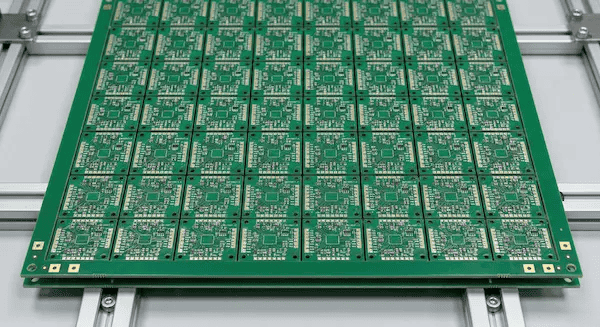
Board size dictates how many PCBs can fit onto a standard manufacturing panel, directly impacting your price. If your board dimensions leave 30% of the panel empty, the factory still charges you for that wasted FR4 material.
Think of PCB manufacturing like cutting cookies out of rolled dough. The factory uses standard “sheets” of material, typically 18″ x 24″ or 21″ x 24″.
So what does this actually mean for your budget? If you design a board that is 90x90mm, we might fit 40 of them on a panel. But if you increase the size just slightly to 95x95mm, we might only fit 30 on that same panel. Suddenly, the material cost per board jumps because the waste ratio increased. Working with your manufacturer to tweak your board dimensions by just a few millimeters can optimize panel utilization and lower your unit price.
What’s the cost difference between standard and advanced PCB processes?
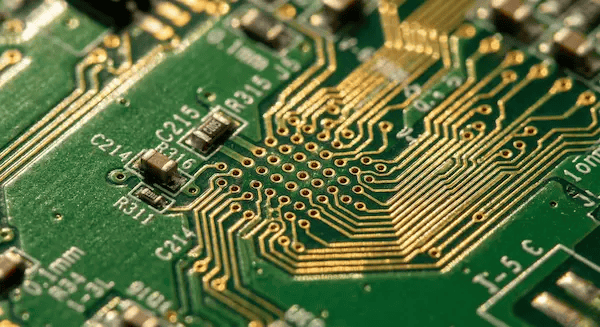
Advanced PCB processes like HDI (High Density Interconnect) or heavy copper will increase your fabrication cost by 50% to 200% compared to standard boards. A standard 4-layer board might cost $3 per unit, while adding impedance control and microvias can push that same unit to $8 or more.
Factories categorize boards into standard and advanced pools. Standard boards use 1oz copper, mechanical drills down to 0.2mm, and standard FR4. Because these run through standard automated lines, they are cheap.
Once you introduce advanced specs—like blind/buried vias, 4oz heavy copper, castellations, or strict impedance control—the board must be moved to specialized equipment. This requires more manual handling, specialized chemical baths, and slower processing times. If your product requires these features, they are worth the investment. If not, design them out to protect your budget.
How does lead time affect PCB fabrication pricing?
Reducing your lead time from a standard 5 days down to 24 hours will typically double your PCB fabrication cost. Factories charge an expedite fee because they must physically interrupt their production queues and dedicate specific technicians to rush your order through the facility.
Time is literally money in manufacturing. A factory runs at high efficiency when it can pool similar orders together.
When you request a 24-hour turnaround, you force the factory to break that efficiency. While we offer a 24-hour fastest turnaround for simple boards, we always advise clients to plan ahead. If you can wait 5 to 7 days, you avoid the expedite premium completely. This is one of the easiest ways to control your costs without changing a single line of your layout.
FAQ
Can I get an exact quote without Gerber files? No, you can only get a rough estimate without Gerbers. Factories need your actual layout to calculate via counts, routing time, and precise panel utilization. Upload your Gerber and NC Drill files to our portal for a precise, guaranteed price.
Is it cheaper to use turnkey assembly or buy my own bare boards? It depends on your internal labor costs. Sourcing your own boards and components saves 10-15% on the raw BOM, but turnkey PCB assembly saves you dozens of hours of logistics work and prevents mismatched parts. For most B2B teams, turnkey is the most cost-effective route. Send us your BOM and Gerbers to compare the difference.
Why did my quick-turn prototype cost $200 for just 5 boards? Yes, this is completely normal. The $200 mostly covers the non-recurring engineering (NRE) setup fee, CAM processing, and machine calibration. The actual physical materials only account for a tiny fraction of that bill. Scale up to 50 boards, and watch your unit price plummet.
Written by the QueenEMS Engineering Team. Ready to stop guessing your budget? Contact us today or upload your files for a transparent, no-obligation quote.