
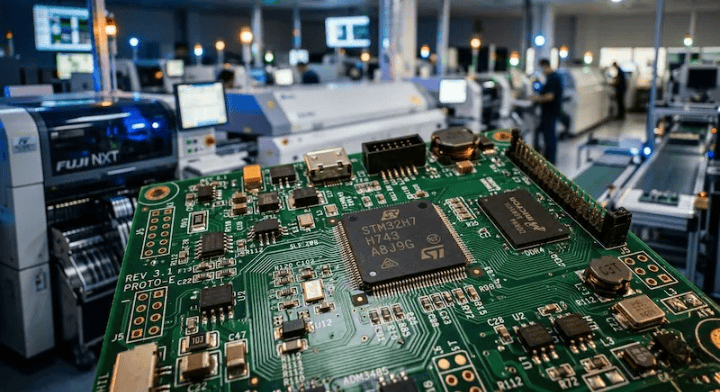
Quick Answer: Average PCB assembly cost ranges from $0.50 to $50+ per board, depending on order volume, component density, and service model. For a standard 4-layer board with 150 SMT components, expect to pay $3–$8 per board at 100+ units, while prototype runs of 5–10 units typically cost between $30 and $80 per board due to fixed setup fees.
Key takeaways:
- Setup and NRE fees ($100–$300) are fixed costs that significantly impact small batch pricing.
- Components typically account for 30–60% of the total project invoice.
- Turnkey services add an 8–15% markup on parts but save 2+ weeks in administrative labor.
- Optimizing for a 5-day lead time instead of 24-hour rush can reduce assembly fees by 20–30%.
- What factors determine your PCB assembly cost?
- How much should you budget for setup and NRE fees?
- Does turnkey or consigned assembly save you more money?
- How do order volumes impact your price per board?
- How can you reduce your PCB assembly cost without sacrificing quality?
You have sent your Gerber files to three different suppliers and received three wildly different quotes. One says $800, another says $2,400, and the third hasn’t responded in a week. Sound familiar? After processing 2,400+ assembly orders last year, we have seen this confusion play out hundreds of times. Understanding your PCB assembly cost shouldn’t feel like a guessing game. Here is exactly what drives those numbers—and how to make sure you are not overpaying.
What factors determine your PCB assembly cost?
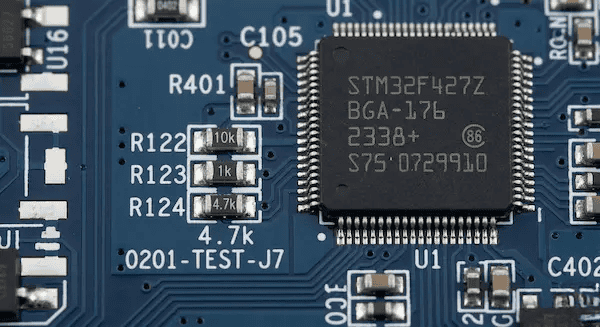
Your total PCB assembly cost is primarily driven by three variables: board complexity (SMT vs. THT), component count, and your chosen lead time. A simple board with 20 large components will always be cheaper to assemble than a dense IoT device with 200 tiny 0201 parts and BGAs that require X-ray inspection.
The real question is… are you designing for the machine or against it? High-density designs require slower machine speeds and more rigorous inspection, which adds to the hourly rate.
- Component Density: More SMT pads per square inch increase the risk of solder bridging, requiring more manual oversight.
- Double-sided Assembly: Placing parts on both sides of the board doubles the SMT line passes, effectively doubling your labor cost.
- Special Processes: BGAs, QFNs, and press-fit connectors require specialized equipment and 3D AOI or X-ray verification.
| Factor | Low Cost Impact | High Cost Impact |
|---|---|---|
| Component Size | 0603 or larger | 0201, 01005, or BGA |
| Assembly Side | Single-sided | Double-sided |
| Testing | Visual inspection only | ICT, FCT, and Burn-in testing |
| Lead Time | 10–15 business days | 24–48 hour rush |
How much should you budget for setup and NRE fees?
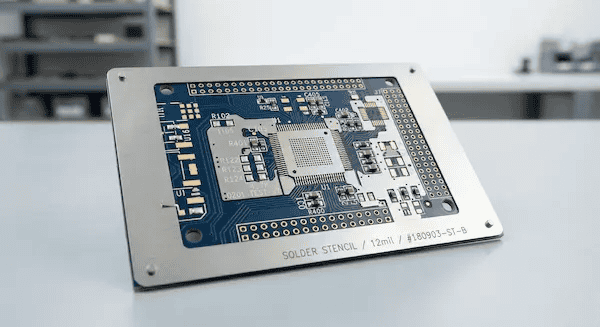
Expect to pay between $100 and $300 in one-time Non-Recurring Engineering (NRE) and setup fees for any new project. These costs cover the programming of pick-and-place machines, the creation of solder stencils, and the configuration of the reflow oven profiles.
Here’s where it gets real… These fixed costs hit small orders the hardest. If you only order 5 prototypes, a $200 setup fee adds $40 to the price of every board. At 500 units, that same fee adds only $0.40.
Old Pro Tip: 80% of first-time customers submit BOMs with at least one error that would halt production. We built an automated BOM pre-check that flags these within 2 hours. By fixing these errors before the machines are even programmed, we cut our average quote-to-production time from 5 days to 2, saving our customers an average of $150 in “correction labor” fees.
- Solder Stencil: Usually $50–$150 depending on size and thickness.
- Machine Programming: A flat fee for converting your CPL (Centroid) data into machine instructions.
- Tooling Rails: Necessary for boards that don’t have enough edge clearance for the conveyor.
Does turnkey or consigned assembly save you more money?
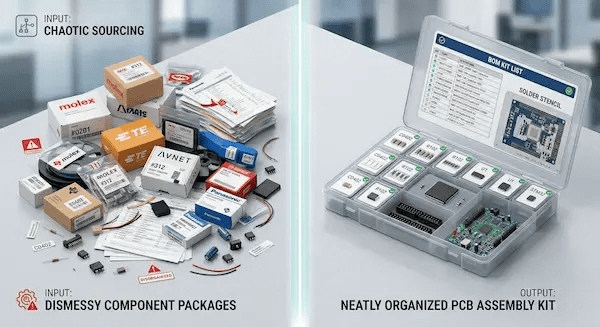
Turnkey assembly usually costs 8–15% more on the Bill of Materials (BOM) due to factory markups, but it eliminates the “hidden costs” of self-sourcing like shipping fees, kit shortages, and administrative labor. Consigned assembly appears cheaper on paper because you pay the raw component price, but a single missing resistor can stop the line and cost you $500 in downtime.
Want the honest answer? If you are building fewer than 500 units, turnkey is almost always the cheaper “total cost” option. The time you spend managing 50 different vendors for one BOM is time you aren’t spending on engineering.
| Service Model | BOM Cost | Labor/Handling | Stock Risk | Best For |
|---|---|---|---|---|
| Full Turnkey | Market + 10% | Included | Factory Handles | Fast prototypes & Startups |
| Partial Turnkey | Mixed | Moderate | Shared | Projects with custom ICs |
| Consigned | Your Cost | High ($150+ fee) | You Handle | High-volume mass production |
How do order volumes impact your price per board?
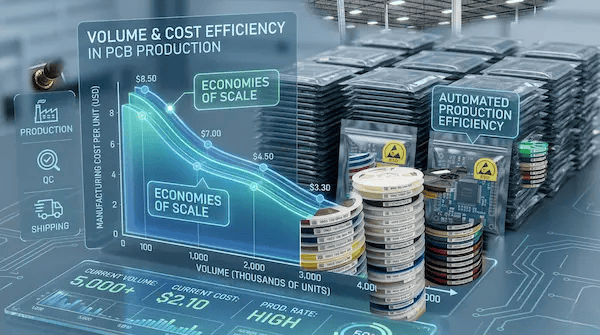
The “economy of scale” in electronics is aggressive; moving from 10 units to 100 units typically drops your labor-related PCB assembly cost by 60–70%. Once you reach 1,000 units, the setup fees become negligible, and the price is driven almost entirely by component costs and machine run-time.
So what does this actually mean for your budget? If you think you might need 50 boards over the next six months, it is significantly cheaper to order all 50 at once rather than doing five separate runs of 10.
- Prototypes (1–25 pcs): High price per unit, fast turnaround.
- Small Batch (25–250 pcs): The “sweet spot” for market testing.
- Mass Production (1000+ pcs): Lowest price, requires stable BOM.
Need an Instant Quote?
From Design Files to Assembled Boards in Days.
Upload your Gerber + BOM and receive a fully itemized quote within 24 hours. No hidden fees, no MOQ.
- ✓ Free DFM + DFA Review
- ✓ 24h Fastest Turnaround
- ✓ 99.7% First-Pass Yield
How can you reduce your PCB assembly cost without sacrificing quality?
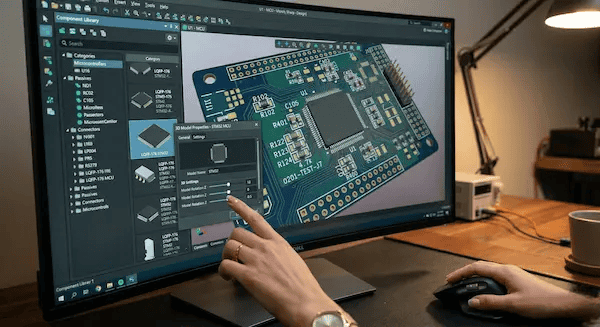
The most effective way to lower your bill is through rigorous Design for Assembly (DFA). By standardizing your component sizes—for example, using 0603 resistors throughout instead of a mix of 0402, 0603, and 0805—you can reduce the number of unique feeders required on the SMT line, which directly lowers labor charges.
But here’s what most guides won’t tell you… Choosing a 5-day lead time instead of 24-hour service is the easiest way to save money. The “speed tax” for 24-hour assembly can be as high as 50% of the total labor cost.
- Use Standard Components: Stick to common values that the factory stocks in bulk.
- Consolidate BOM: Reduce the number of unique line items (SKUs) on your board.
- Panelization: Ask your factory for the optimal panel size to maximize machine efficiency.
Old Pro Tip: We once had a customer whose BGA placement was failing at a 15% rate, driving up rework costs. Our engineers suggested a minor change to their solder mask clearance. After the change, the yield jumped to 99.8%, saving them $4.50 per board in inspection and rework fees. That is the power of a free DFM/DFA engineering review.
Frequently Asked Questions
Does turnkey assembly cost more than consigned? BOM prices are usually 8–15% higher in turnkey mode, but the total project cost is often lower for small batches because you avoid the labor costs of kitting, shipping, and managing multiple vendors.
What is the average setup fee for PCB assembly? Most factories charge between $100 and $300 for setup and NRE fees. This covers stencil fabrication, machine programming, and line configuration.
How can I get the lowest PCB assembly cost? The best way is to provide a clean BOM with exact MPNs, use standard component sizes, and choose a longer lead time (10–15 days). Also, ordering in volumes of 100+ units significantly reduces the price per board.
Can I get a quote without a final BOM? It is difficult to provide an accurate PCB assembly cost without a BOM, but we can give an estimate based on your board size and estimated component count. For a firm price, upload your BOM and Gerber files for a free review.
Written by the QueenEMS Engineering Team.