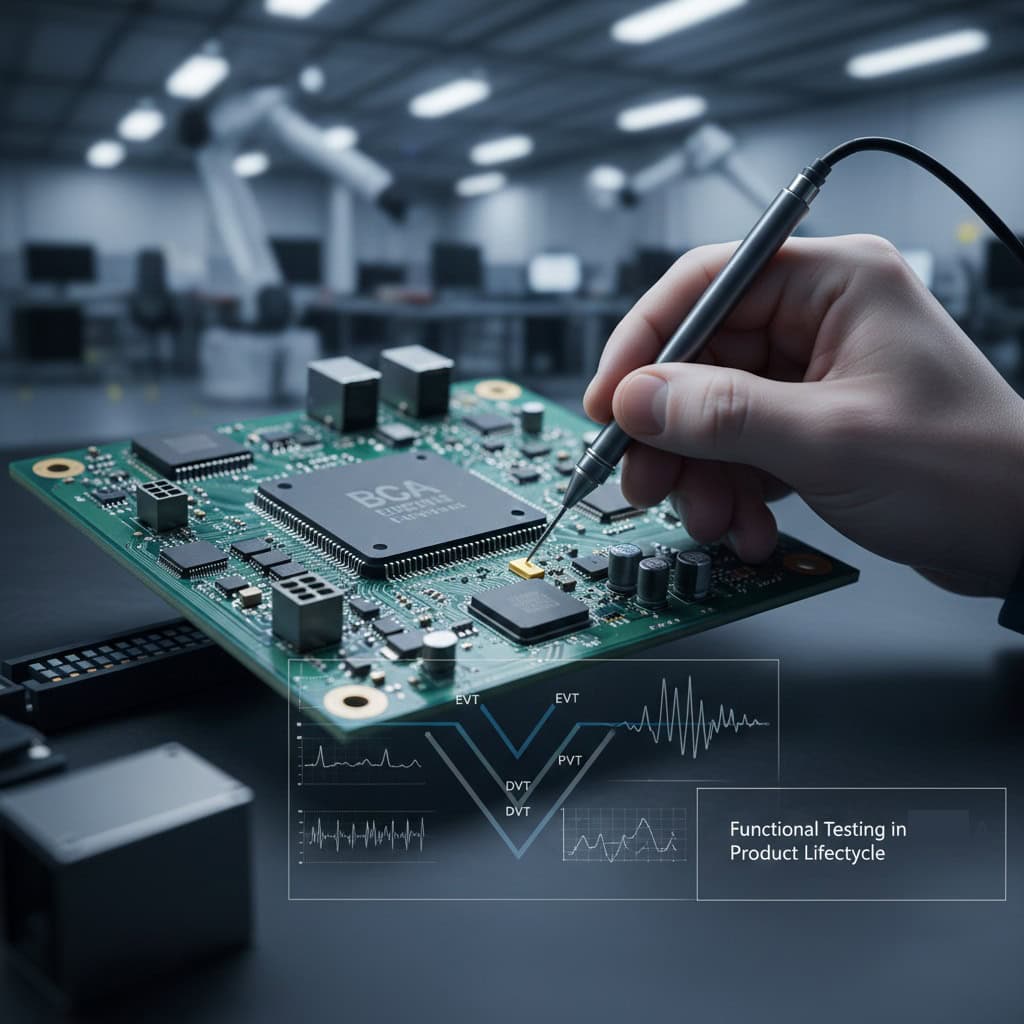
Functional testing in the PCBA product lifecycle is a systematic process of verifying that an electronic product operates according to its design specifications at every critical stage of development: Engineering Validation Test (EVT), Design Validation Test (DVT), and Production Validation Test (PVT).
Imagine launching a new electronic product, only to have early customers report intermittent failures, system crashes, or simply that “it doesn’t work.” These issues, often stemming from subtle design flaws or manufacturing inconsistencies, lead to costly recalls, reputational damage, and lost market share. The frustration of debugging in the field or halting a production line due to an unforeseen defect can derail even the most promising innovation. By implementing a robust functional testing in PCBA product lifecycle strategy across the EVT, DVT, and PVT phases, you can proactively identify and resolve these critical issues, ensuring a reliable product reaches your customers every time.
What is the Purpose of Engineering Validation Testing (EVT)?
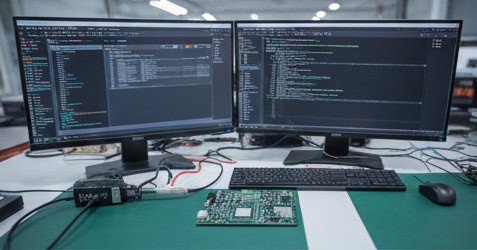
EVT is the first phase of functional testing in PCBA product lifecycle, focusing on proving the core functionality and design intent of the initial hardware prototypes. It verifies that the fundamental electronic circuits and components perform as expected, often before the final enclosure is even considered.
Why is EVT Critical for Early Design?
You need EVT to catch major design flaws early, when they are cheapest and easiest to fix. This stage ensures that the schematic and board layout translate into a working circuit before investing in expensive tooling for later stages.
- Verifies basic component functionality (e.g., power rails, clocks, communication buses).
- Identifies gross errors in component selection or circuit topology.
- Provides initial performance metrics for key functions.
So, how do you know if your design is even viable?
Key Takeaway
EVT focuses on basic functional testing in PCBA product lifecycle, confirming that the fundamental engineering principles of your design are sound before moving to more complex validation.
| EVT Focus | Goal | Outcome |
| Core Functionality | Prove circuit concept | Early bug detection |
| Component Check | Verify part operation | Prevent downstream failures |
| Initial Performance | Baseline measurements | Foundation for optimization |
Early EVT catches major flaws, saving significant time and cost.
How Does Design Validation Testing (DVT) Enhance Product Robustness?
DVT is the second phase of functional testing in PCBA product lifecycle, where the focus shifts from basic functionality to validating the product’s performance, reliability, and compliance under real-world operating conditions. It ensures the design is robust enough to meet all specified environmental and operational requirements.
Why is Environmental Testing Key in DVT?
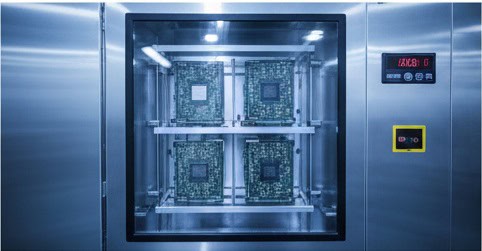
You will find DVT involves extensive environmental stress tests, such as thermal cycling, vibration, and humidity exposure. This rigorous testing pushes the product to its limits, identifying latent defects that might not appear during standard bench testing.
- Verifies performance across full operating temperature ranges.
- Tests mechanical integrity under vibration and shock.
- Confirms compliance with EMI/EMC standards.
But what if it doesn’t just work, but keeps working?
Key Takeaway
DVT in functional testing in PCBA product lifecycle validates the design’s robustness against specified environmental conditions, ensuring long-term reliability.
| DVT Focus | Goal | Outcome |
| Environmental Stress | Ensure durability in conditions | Identify latent defects |
| Performance Limits | Verify max/min operational specs | Confirm design margins |
| Compliance Testing | Meet industry/regulatory standards | Achieve certifications |
DVT ensures your design survives the real world, not just the lab.
What is the Significance of Production Validation Testing (PVT)?
PVT is the final critical phase of functional testing in PCBA product lifecycle, occurring after DVT approval and just before or during mass production. It verifies that the manufacturing process itself can consistently produce units that meet all design specifications and quality standards.
Why is PVT Critical for Manufacturing Scalability?
You need PVT to confirm that volume production processes, including tooling, jigs, and assembly lines, do not introduce new defects or compromise performance. It’s about validating the entire manufacturing chain, not just the design.
- Verifies consistency and repeatability of the assembly process.
- Identifies manufacturing defects like cold solder joints or incorrect component placement.
- Confirms overall product yield is within acceptable limits.
So, how do you make sure every single unit is perfect?
Key Takeaway
PVT is the final gate for functional testing in PCBA product lifecycle, ensuring that the manufacturing process can consistently produce high-quality, fully functional products at scale.
| PVT Focus | Goal | Outcome |
| Manufacturing Process | Validate mass production consistency | High yield, low defect rate |
| Final Product Audit | Confirm product conformity | Ready for customer shipment |
| Statistical Control | Monitor quality trends | Prevent systemic manufacturing issues |
PVT closes the loop, linking design integrity to manufacturing excellence.
How Does Functional Testing Drive PCBA Quality Assurance?
Functional testing in PCBA product lifecycle is paramount for quality assurance, acting as the ultimate gatekeeper that prevents defective products from reaching customers. It provides tangible evidence that each board performs exactly as intended, minimizing costly field failures.
What is Comprehensive Test Coverage?
You should aim for maximum test coverage, meaning that as many functions and components as possible are verified. This requires careful planning to stimulate all inputs, measure all outputs, and confirm proper operation of internal states.
- Detects soldering defects like shorts and opens.
- Identifies incorrect component values or orientations.
- Verifies firmware loading and basic software operations.
You see, it’s not just about passing; it’s about confidence.
Key Takeaway
Robust functional testing in PCBA product lifecycle provides unparalleled PCBA Testing and Quality Inspection Services, ensuring every unit meets the highest quality standards.
| Quality Aspect | Contribution of Functional Testing |
| Defect Detection | Catches operational flaws |
| Reliability Proof | Verifies long-term performance |
| Customer Satisfaction | Delivers flawless products |
Quality assurance is built, not just inspected, through strategic testing.
Why is Design for Test (DFT) Essential for Functional Testing in PCBA Product Lifecycle?
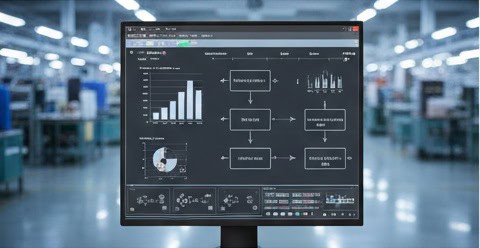
Design for Test (DFT) is essential because it involves incorporating testability features directly into the PCBA design, which significantly reduces the cost and complexity of all functional testing in PCBA product lifecycle stages. It’s about thinking about testing from the very beginning.
How Can DFT Save You Money?
You can add test points, JTAG headers, and built-in self-test (BIST) circuits that allow for quick and automated validation. These features make it easier to isolate faults and reduce the time spent on debugging.
- Reduces the need for expensive custom test fixtures.
- Speeds up fault diagnosis and rework processes.
- Enables higher test coverage in automated environments.
Imagine not having to manually probe every single pin.
Key Takeaway
Implementing DFT early through Design for Manufacturability (DFM) Analysis optimizes functional testing in PCBA product lifecycle efficiency and lowers overall product cost.
| DFT Feature | Benefit for Testing |
| Test Points | Easy access for probes |
| JTAG Boundary Scan | Digital circuit fault isolation |
| BIST | Self-diagnostic capabilities |
DFT is proactive problem-solving, preventing test headaches later.
How Does Functional Testing Impact Time-to-Market?
While functional testing might seem like an extra step, strategically implementing functional testing in PCBA product lifecycle actually accelerates time-to-market. By finding and fixing issues early, you avoid costly delays and rework cycles that can halt a product launch.
Can Testing Really Speed Up Development?
You might think that adding more test phases slows things down, but the opposite is true. Catching a design flaw in EVT takes days to fix, while the same flaw discovered in PVT can halt mass production for weeks or months.
- Reduces iterations of hardware prototypes.
- Minimizes late-stage design changes.
- Ensures a smooth transition to mass production.
Think of it as an insurance policy for your schedule.
Key Takeaway
Strategic functional testing in PCBA product lifecycle minimizes unforeseen delays, enabling a faster and more predictable path to market for your electronic product.
| Test Phase | Time-to-Market Impact |
| EVT | Reduces early design cycles |
| DVT | Prevents late-stage redesigns |
| PVT | Ensures smooth production ramp |
Investing in testing upfront pays off with faster product delivery.
What is the Cost-of-Failure Analysis in Functional Testing?
Cost-of-failure analysis highlights why robust functional testing in PCBA product lifecycle is not an expense, but an investment. The cost to fix a defect escalates exponentially the later it is discovered in the product lifecycle.
How Much Does a Late-Stage Bug Really Cost?
You should consider that a software bug found in EVT might cost dollars to fix, while the same bug found in DVT could cost hundreds due to new PCB spins. If that bug makes it to PVT or, worse, to the customer, the cost can be in the tens of thousands per unit due to recalls or lost reputation.
- EVT: Rework on a few prototypes (low cost).
- DVT: Potentially new PCB fabrication (moderate cost).
- PVT: Halting production, mass rework, potential recall (high cost).
It’s a simple equation, really.
Key Takeaway
Thorough functional testing in PCBA product lifecycle provides a significant return on investment by minimizing the exponentially increasing costs of late-stage defect discovery.
| Discovery Stage | Cost-to-Fix Multiplier |
| EVT | 1x |
| DVT | 10x |
| PVT | 100x |
| Field | 1000x |
Early testing is the most cost-effective form of risk management.
How Does Automation Enhance Functional Testing Efficiency?
Automation significantly enhances the efficiency of functional testing in PCBA product lifecycle by performing repetitive tests faster, more accurately, and without human error. This is especially crucial for high-volume production testing.
Why Invest in Automated Test Equipment (ATE)?
You can utilize Automated Test Equipment (ATE) to execute complex test sequences, gather data, and even identify specific failure modes. This frees up your engineers to focus on analysis and improvement rather than manual probing.
- Increases test throughput for mass production.
- Improves test repeatability and data consistency.
- Reduces labor costs and human-induced errors.
Imagine testing thousands of units flawlessly every day.
Key Takeaway
Automated functional testing in PCBA product lifecycle drastically improves efficiency, making it indispensable for scalable production and reliable quality control.
| Automation Benefit | Impact on Testing |
| Speed | Faster test cycles |
| Accuracy | Eliminates human error |
| Data Collection | Better fault analysis |
Automation scales your testing with your production needs.
What are the Considerations for Test Fixture Design?
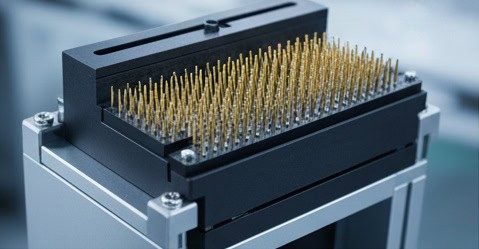
Test fixture design is a critical aspect of functional testing in PCBA product lifecycle, especially for high-volume production. A well-designed fixture ensures consistent contact, protects the PCBA from damage, and integrates seamlessly with Automated Test Equipment (ATE).
Why Do Custom Fixtures Matter?
You need a custom fixture to ensure precise, repeatable electrical contact with every test point on the PCBA. Poorly designed fixtures can lead to intermittent connections, false failures, and damage to the board’s test pads.
- Ensures reliable connection to all test points.
- Protects the PCBA from physical stress during testing.
- Optimizes workflow for operators and automated systems.
Think of it as the handshake between your board and your tester.
Key Takeaway
Optimized test fixture design is crucial for reliable and efficient functional testing in PCBA product lifecycle, preventing false failures and board damage.
| Fixture Feature | Benefit |
| Pogo Pins | Repeatable electrical contact |
| Guide Pins | Accurate board alignment |
| Safety Interlocks | Operator protection |
A robust fixture is foundational to reliable test results.
How to Integrate Functional Testing with Turnkey PCB Assembly?
Integrating functional testing in PCBA product lifecycle with Turnkey PCB Assembly Solutions streamlines the entire manufacturing process. When your assembly partner also handles testing, you gain a single point of accountability and reduce logistical overhead.
Why is a Turnkey Partner Advantageous?
You can benefit significantly from a single partner who manages everything from component procurement and PCBA assembly to comprehensive functional testing and final product packaging. This removes potential communication gaps and accelerates your product’s journey to market.
- Seamless transition from assembly to test.
- Faster feedback loops for process improvements.
- Reduced shipping and handling costs between vendors.
It’s all about efficiency.
Key Takeaway
A turnkey partner integrating functional testing in PCBA product lifecycle offers a streamlined, efficient, and cost-effective path from design to a fully validated product.
| Turnkey Integration | Benefit |
| Single Vendor | Streamlined communication |
| Integrated Process | Faster fault detection and resolution |
| Cost Efficiency | Reduced logistics and overhead |
Turnkey integration delivers a complete, verified product solution.
Conclusion
Implementing a robust strategy for functional testing in PCBA product lifecycle across the EVT, DVT, and PVT phases is not merely a checkbox; it is a fundamental pillar of modern electronics manufacturing. By validating your designs early, proving their robustness, and confirming manufacturing consistency, you proactively mitigate risks, reduce costs, and ensure a faster, more reliable path to market. This comprehensive approach, enhanced by DFT and automation, is indispensable for delivering high-quality products that meet and exceed customer expectations.
We understand the critical importance of impeccable quality at every stage. Our dedicated engineering team is equipped with advanced testing capabilities to ensure your products perform flawlessly. Contact us today to discuss your specific testing needs and discover how our expertise in Electronics Manufacturing Services can guarantee the reliability and success of your next electronic product. We are committed to engineering excellence through strategic and comprehensive functional testing.
FAQ
Can I skip EVT or DVT to save time?
No, skipping EVT or DVT is highly discouraged. Each phase of functional testing in PCBA product lifecycle catches different types of issues. Skipping them dramatically increases the risk of discovering critical flaws later in the development cycle or, worse, in the hands of customers, leading to significantly higher costs and delays.
What’s the best approach for defining test cases?
The best approach is to start by breaking down your product’s specifications into individual, testable requirements. Create specific test cases for each function, covering both nominal and edge-case operating conditions. Involve both your design and test engineering teams to ensure comprehensive coverage.
How do I know if my PCBA manufacturing partner has good testing capabilities?
You should ask about their specific test equipment (e.g., ATE, VNAs, environmental chambers), their test engineering team’s experience, and their process for developing and maintaining test fixtures. Request case studies or tours of their facility to see their capabilities firsthand.
Can functional testing prevent all field failures?
While comprehensive functional testing significantly reduces the likelihood of field failures, no testing can guarantee 100% prevention. Some failures are intermittent, user-induced, or due to extreme unforeseen conditions. However, a robust test strategy ensures that design and manufacturing-related defects are minimized to an extremely low level.
What are common challenges in implementing PVT?
Common challenges include ensuring consistent test fixture performance over thousands of cycles, managing a large volume of test data, quickly identifying and isolating root causes of failures on the production line, and maintaining accurate test software versions. Robust automation and clear fault-reporting mechanisms are crucial.