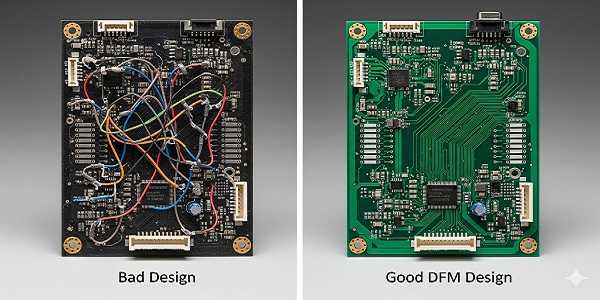
Design for Manufacturing (DFM) is the engineering practice of designing products in a way that makes them easy to manufacture, significantly reducing production costs while increasing final yield rates. Imagine you’ve spent six months perfecting a high-speed controller design, only to have the factory reject it because the component spacing is too tight for automated pick-and-place machines. This misalignment causes massive rework, delayed market entry, and spiraling prototype costs that can kill a hardware project before it even launches. Here’s the deal: the most successful B2B products are those where the factory’s constraints are integrated into the initial layout. By adopting professional early in your development cycle, you transform manufacturing from a hurdle into a competitive advantage. At Queen EMS, we act as your manufacturing partner, ensuring your designs are optimized for peak efficiency from the very first solder joint.
1. Why is DFM electronics essential for modern hardware success?
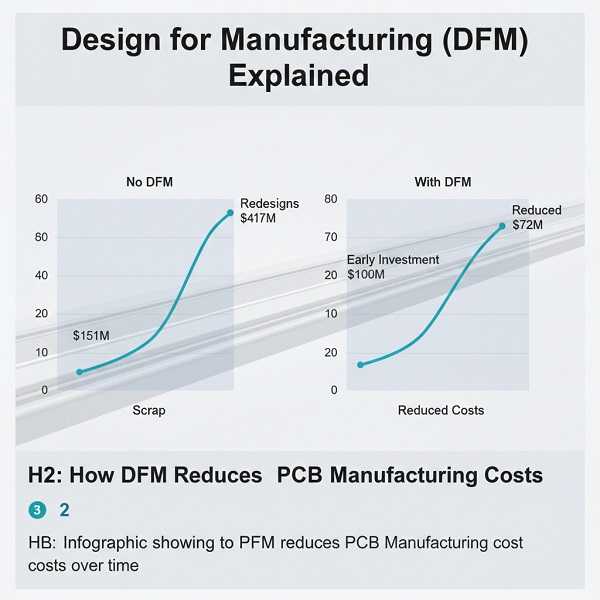
dfm electronics is essential because it bridges the gap between a theoretical circuit design and a physical product that can be mass-produced with zero defects. Without these principles, designs often face hidden manufacturing traps that lead to low yields or manual assembly requirements. Ready for the good part?
- It drastically reduces the number of engineering change orders (ECOs) during production.
- It lowers the total cost of ownership by selecting parts that are easy to source and assemble.
- It ensures that every board leaving the line meets the highest reliability standards.
Does early supplier involvement matter?

Engaging your assembly partner during the layout phase allows you to leverage their specific machinery tolerances. This collaboration ensures that the strategy aligns perfectly with the factory’s automated capabilities.
- Prevents the selection of obsolete or long-lead-time components.
- Optimizes panelization to reduce material waste and per-unit cost.
Key Takeaway: Integrating manufacturing feedback early prevents expensive redesigns and ensures your product is ready for scale.
Analysis: The earlier DFM is applied, the higher the potential for significant cost reduction across the product lifecycle.
2. How can dfm electronics simplify component selection?
dfm electronics simplifies component selection by prioritizing parts that are not only high-performance but also compatible with standard assembly processes. Choosing rare or oddly shaped components often requires expensive manual labor that slows down your production line. But here is the kicker.
- Standardizing components across different sub-assemblies reduces setup time.
- Prioritizing common footprints ensures your supply chain remains resilient during shortages.
Is there a risk in over-customization?
Using specialized, proprietary components can lock you into a single vendor and create bottlenecks if that part becomes unavailable. A robust strategy favors generic equivalents whenever possible to maintain manufacturing flexibility.
- Reduces inventory management complexity for the B2B client.
- Lowers the risk of purchasing counterfeit parts from unverified suppliers.
Key Takeaway: Smart component selection ensures that your product is as easy to procure as it is to assemble.
3. What role does PCB layout play in dfm electronics?
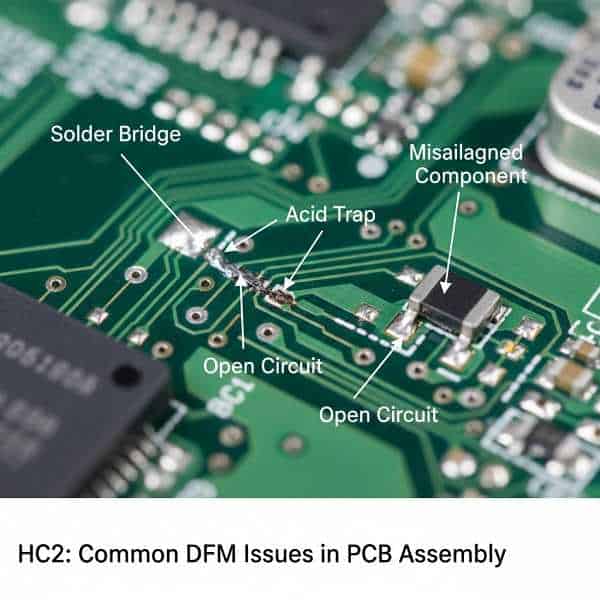
dfm electronics within the PCB layout phase ensures that traces, pads, and vias are positioned to prevent common soldering defects like bridging or tombstoning. Even a perfect circuit can fail in production if the copper clearance doesn’t account for machine precision. You might be wondering how small changes affect big yields.
- Optimized solder mask expansion prevents unwanted shorts during reflow.
- Proper thermal relief design ensures consistent heat distribution across the board.
Why is copper weight important?
Choosing the correct copper weight is a vital part of because it affects both heat dissipation and manufacturing complexity. Heavy copper requires different etching times that must be balanced with fine-pitch component requirements.
- Balancing copper density prevents board warping during high-temperature baking.
- Correct via placement avoids solder wicking away from critical pads.
Key Takeaway: A manufacturing-aware layout minimizes assembly errors and maximizes the functional lifespan of the hardware.
Analysis: Small adjustments in layout parameters lead to dramatic increases in first-pass yield at the assembly stage.
4. How does dfm electronics optimize for assembly automation?
dfm electronics optimizes designs for automation by ensuring the board includes necessary features like fiducial marks for machine vision systems. Machines need clear reference points to place tiny surface-mount components with the sub-millimeter accuracy required today. The secret sauce is in the details.
- Fiducials allow robotic arms to calibrate their position in real-time.
- Rail clearances on the board edges prevent damage during conveyor transit.
Can panelization save you money?
Combining multiple small boards into a single large panel is a key technique that reduces the number of machine cycles. This efficiency directly lowers the per-unit assembly cost for high-volume orders.
- Facilitates faster AOI (Automated Optical Inspection) across multiple units.
- Simplifies the application of solder paste via specialized stencils.
Key Takeaway: Designing for machines rather than manual labor is the most effective way to scale production profitably.
5. Why is thermal management a core pillar of dfm electronics?
dfm electronics treats thermal management as a manufacturing priority because uneven heating during the reflow oven can cause components to shift or lift. A board that hasn’t been thermally balanced may experience “cold solder joints” in areas with high copper density. What’s the real story?
- Proper heat sink placement prevents damage to heat-sensitive components.
- Strategic via-in-pad design helps dissipate heat from high-power ICs.
How do thermal reliefs help?
Thermal reliefs are small “spokes” that connect pads to large copper planes, allowing for enough heat to stay at the pad for a solid solder bond. Without them, the copper plane acts as a massive heat sink, preventing the solder from melting correctly during processing.
- Prevents “wicking” where solder travels away from the intended joint.
- Reduces the risk of delamination in multi-layer boards.
Key Takeaway: Controlling how heat flows during both manufacturing and operation is vital for product durability.
6. How does dfm electronics improve testing and validation?
dfm electronics ensures that the board is designed for testability (DFT), allowing automated probes to verify every circuit net without manual intervention. If you don’t leave enough space for test points, the factory has no way to guarantee that your board actually works. Believe it or not, testing is often the most ignored part of design.
- Placing test points on a consistent grid speeds up fixture creation.
- Ensuring test points are only on one side of the board reduces testing costs.
Can testing be automated for high speed?
By following guidelines for test points, you allow the factory to use high-speed Flying Probe or ICT (In-Circuit Test) machines. This automation provides 100% coverage and generates detailed diagnostic data for every unit.
- Reduces the time required to identify the root cause of failures.
- Ensures that only 100% functional boards reach the end customer.
Key Takeaway: Designing for testability is the only way to ensure your production quality scales alongside your volume.
Analysis: High-coverage automated testing is only possible when the PCB designer includes dedicated access for test equipment.
7. What impact does dfm electronics have on supply chain?
dfm electronics impacts the supply chain by encouraging the use of parts that are available from multiple authorized distributors, reducing the risk of a “single point of failure”. When a design relies on a unique, single-source part, your entire production can be halted by a factory fire or shipping delay. Ready for the good part?
- Utilizing “footprint-compatible” alternatives allows for seamless part swapping.
- Standardizing on passive component sizes (like 0402 or 0603) ensures easier sourcing.
How do we handle part obsolescence?
A smart approach includes regular BOM (Bill of Materials) scrubbing to identify parts that are reaching the end of their lifecycle. This allows you to redesign or stock up before the part becomes impossible to find.
- Minimizes the need for expensive “spot market” purchases.
- Protects the B2B client from long-term maintenance headaches.
Key Takeaway: A manufacturing-ready supply chain is just as important as the circuit itself for long-term product viability.
8. How does dfm electronics minimize rework and scrap?
dfm electronics minimizes rework by addressing the causes of common soldering errors before the first board is ever made. Reworking a board by hand is not only expensive but also introduces the risk of heat damage to surrounding components. Here is the deal: it is always cheaper to build it right the first time.
- Clear silkscreen markings help prevent human error during manual touch-ups.
- Solder mask dams between pads prevent molten solder from flowing where it shouldn’t.
Is “first-pass yield” the ultimate metric?
In , first-pass yield (FPY) measures the percentage of boards that pass all tests without any rework. A high FPY is the clearest indicator of a design that has been perfectly optimized for its manufacturing environment.
- Lowers the “per-unit” cost by spreading overhead across more good units.
- Increases the factory’s throughput capacity during peak demand.
Key Takeaway: Designing out the possibility of error is the most effective way to protect your production margins.
9. What are the material considerations in dfm electronics?
dfm electronics requires careful selection of PCB substrate materials (like FR-4) to match the thermal and electrical needs of the specific application. Using high-temperature materials for a standard low-power board is a waste of budget, while using standard materials for high-power circuits leads to failure. What’s the real story?
- Matching the Glass Transition Temperature (Tg) to the reflow profile prevents board warping.
- Selecting the correct surface finish (like ENIG or OSP) ensures long-term solder joint reliability.
Does dielectric constant matter?
For high-speed designs, the dielectric constant (Dk) must be consistent across the entire board to maintain signal integrity. A professional review ensures that the stack-up design is manufacturable by the PCB fabrication house.
- Prevents impedance mismatches that cause data errors.
- Ensures the board can survive multiple soldering cycles without delamination.
Key Takeaway: The physical materials of the board are the foundation upon which all manufacturing reliability is built.
Analysis: Material selection is a balancing act between environmental requirements and the stresses of the assembly process itself.
10. How to choose a partner for expert dfm electronics review?
dfm electronics success depends on a partner who has both the advanced software and the “on-the-floor” experience to spot subtle design flaws. You need more than just a quote; you need a technical partner who can suggest improvements that save you time and money. The bottom line is.
- Look for a factory that offers a comprehensive DFM report with every quote.
- Ensure they have experience in your specific industry, whether it’s medical, automotive, or industrial.
What sets a professional factory apart?
A top-tier partner will have dedicated engineers who act as an extension of your own R&D team. At Queen EMS, we pride ourselves on transparency and our ability to help B2B clients optimize their designs for the long haul.
- In-house testing capabilities ensure that DFM improvements actually lead to better results.
- A global supply chain network provides real-time data on part availability.
Key Takeaway: Your manufacturing partner’s expertise is the most powerful tool you have for ensuring a successful product launch.
Conclusion
In summary, we have explored how dfm electronics serves as the vital link between an innovative design and a commercially successful product by reducing rework, optimizing component selection, and ensuring testability. While the pressure to launch quickly is always high, skipping the DFM phase is a false economy that leads to far greater costs once production begins. You should know that the most reliable hardware is built in the mind of the designer long before it ever hits the assembly line. By partnering with an engineering-focused factory, you protect your margins and your reputation. If you’re ready to stop worrying about manufacturing failures and start scaling with confidence, we are here to help. to schedule a professional DFM review for your next project. Our vision is to empower B2B innovators with the technical foundations they need to lead their industries with zero-defect hardware.
FAQ
Q1: How early should I start the dfm electronics review? Ideally, it should begin during the schematic phase and continue through the final PCB layout before the first prototypes are ordered.
Q2: What’s the best way to reduce the cost of my PCBA? Standardizing on common component sizes and ensuring your board can be panelized effectively are the two biggest levers for cost reduction.
Q3: Can I perform a dfm electronics review myself with software? Yes, tools like Valor or built-in DRC (Design Rule Checks) help, but they cannot replace the practical experience of a factory engineer who knows the specific quirks of their machines.
Q4: How do test points impact the total cost of production? While they take up a small amount of board space, they allow for automated testing which is 10x faster and more reliable than manual troubleshooting, saving you massive amounts in the long run.
Q5: Is DFM only important for high-volume production? No, even for prototypes, a DFM review ensures that your first board works as intended, preventing the need for multiple “emergency” redesign cycles that eat up your R&D budget.