
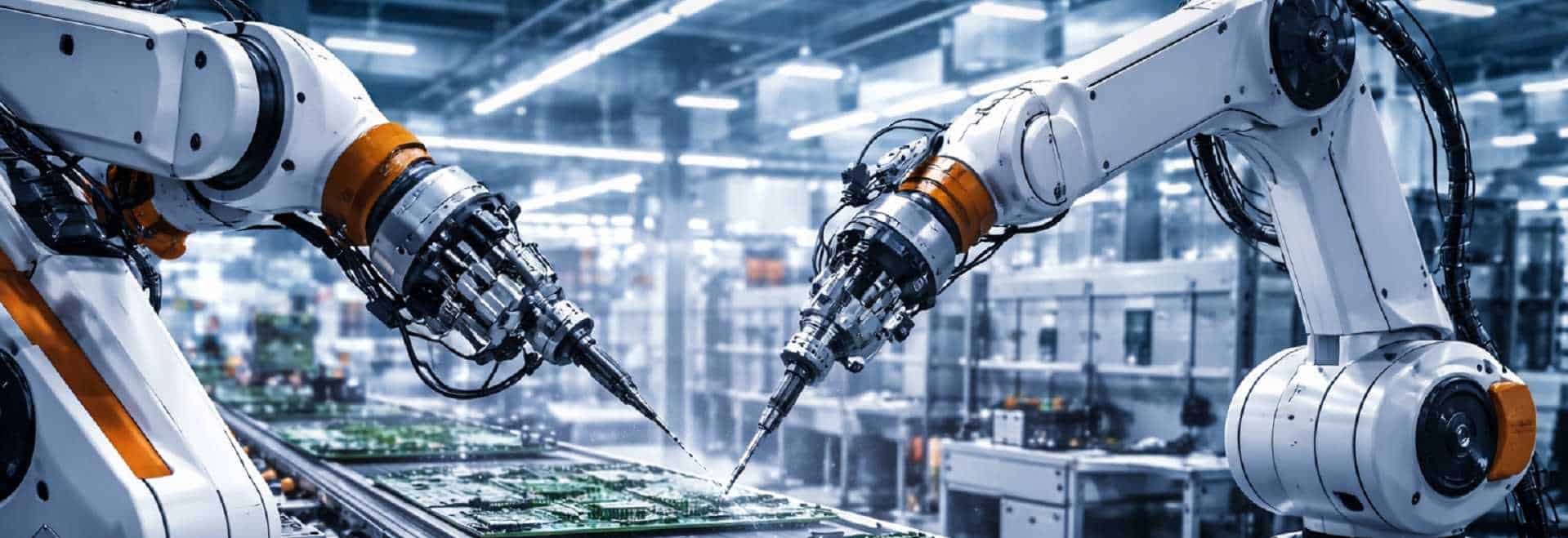
Industrial Automation PCB Assembly for Stable and Reliable Control Systems
They're About Stability, Batch Consistency, and Long-Term Reliability
What Is Industrial Automation? Why Does It Demand Extreme Electronic Reliability?
Industrial automation systems operate under fundamentally different requirements than consumer products. Understanding this distinction explains why standard electronics manufacturing approaches fail in industrial automation systems and industrial control electronics applications.
Consumer Electronics Expectations
- Short product lifecycles, frequent replacement
- Controlled indoor environments
- User can tolerate occasional reboots
- Failures inconvenient but not catastrophic
- Design-driven differentiation
Industrial Automation Requirements
- Continuous 24/7 operation for years without failure
- Harsh environments: temperature extremes, vibration, EMI
- System downtime costs thousands per hour
- Failures cascade through production lines
- Reliability determines total cost of ownership
- Long-term availability and consistency critical
The Critical Difference
Industrial automation doesn't just need electronics that work—it needs electronics that work continuously, reliably, and consistently across years of operation in challenging conditions. When a production line stops, every minute costs money. When quality varies between batches, entire systems behave unpredictably. This is why industrial automation challenges demand fundamentally different approaches to PCB and PCBA manufacturing.
Partner with manufacturers who understand industrial reliability demands
Discuss Your RequirementsReal Challenges Facing Industrial Automation Projects
Industrial automation teams navigate constraints that make every technical decision critical. These aren't hypothetical concerns—they're the daily realities that separate successful deployments from expensive failures in industrial electronics manufacturing.
Extended Project Lifecycles
Industrial projects span months or years from design to deployment. Any rework discovered late—after extensive testing and validation—creates devastating delays. Getting it right initially isn't optional; it's essential because there's no fast iteration in installed systems.
24/7 Operation Requirements
Industrial equipment must run continuously without maintenance windows. When systems control production lines, power distribution, or critical infrastructure, downtime translates directly to lost revenue, missed deliveries, and contractual penalties. Reliability isn't a specification—it's the foundation of business viability.
Supplier Stability Critical
Frequent supplier changes create unacceptable risk in industrial applications. Once a system is validated and deployed, component consistency matters critically. You can't afford suppliers who disappear, change processes without notice, or treat your project as transactional rather than partnership.
Work with partners who understand industrial automation constraints
Explore Solutions5 Most Common Issues in Industrial Automation Electronics Projects
These industrial PCB assembly issues aren't anomalies—they're systematic failures revealing whether your manufacturing partner truly understands industrial automation requirements or just claims to support them.
Batch-to-Batch Inconsistency
First production run performs flawlessly through extensive testing. Second batch exhibits slightly different behavior—not failing specifications, but behaving inconsistently. In industrial systems requiring precise repeatability, "close enough" creates unpredictable field behavior and erodes system confidence.
Small Issues Amplified in Field Conditions
Minor quality variations that pass factory testing become critical failures under real industrial conditions. Temperature cycling, vibration, electrical noise, and extended operation times expose weaknesses invisible in controlled environments. What worked in the lab fails on the factory floor.
Incomplete Certification & Documentation
Industrial applications require complete material traceability, certification documentation, and compliance records. Suppliers treating these as administrative burdens rather than critical requirements create regulatory risks, audit failures, and deployment delays when documentation gaps surface.
Factory Guarantees Shipment, Not Field Performance
Many manufacturers optimize for passing outgoing inspection—boards that meet specifications at delivery. But industrial automation demands sustained performance over years. Factories focused purely on shipment metrics don't build to withstand long-term field conditions or consider lifecycle reliability.
Notice the pattern? These aren't manufacturing defects in the traditional sense—they're reliability failures. They reveal whether your supplier thinks like a transaction processor or a long-term industrial partner who shares responsibility for field success.
Find manufacturing partners who prioritize field reliability over shipment metrics
Discuss Your ChallengesWhy Industrial Automation Has Zero Tolerance for PCB/PCBA Variability
Industrial automation doesn't just prefer high reliability—it demands it. Understanding why helps you evaluate whether potential suppliers truly grasp high reliability PCB assembly and industrial grade PCB requirements or just use the terminology.
Harsh Operating Environments
Industrial electronics face temperature extremes, constant vibration, electrical noise, dust, moisture, and corrosive atmospheres. PCB quality that's acceptable in office environments becomes insufficient when systems operate continuously in factory floors, outdoor installations, or heavy machinery. Every material choice and process parameter matters.
System-Wide Cascade Effects
Industrial automation systems are tightly integrated. One unstable controller affects downstream equipment. One communication board with timing drift disrupts entire production sequences. Small electronic failures cascade into system-wide problems, multiplying impact far beyond the failed component's isolated function.
Extreme Maintenance Costs
Field service for industrial systems is expensive—technician travel, production downtime, emergency logistics, and system recalibration. A $50 board requiring replacement might cost $5,000 in total impact. This economic reality means reliability isn't a premium feature; it's the minimum acceptable standard.
Partner with manufacturers who engineer for industrial realities, not just specifications
Learn Our ApproachHow We Understand PCB's Role in Industrial Automation
Most suppliers see PCB as a commodity component. We see it differently. In industrial automation, reliable PCB manufacturing for industrial automation isn't just about meeting specifications—it's about understanding how electronics determine system lifetime and operational reliability.
PCB as System Stability Core
Your PCB quality doesn't exist in isolation—it determines whether your automation system runs reliably for years or requires constant troubleshooting. We evaluate every material and process decision through the lens of long-term field performance, not just factory testing.
Process Choice Determines Lifespan
Manufacturing choices made today affect system behavior five years from now. Material selection, layer stackup, plating quality, and thermal management directly influence whether your equipment survives industrial conditions or degrades unpredictably over time.
Design-Manufacturing Coordination
Industrial reliability emerges from design and manufacturing working together. We don't just build to your specifications—we provide manufacturing perspective during design, flag potential long-term issues, and ensure producibility supports your reliability goals.
Partner with manufacturers who understand PCB's critical role in industrial systems
Discuss Your ApplicationThe Right PCB/PCBA Collaboration Path for Industrial Automation
Industrial projects demand systematic validation at each stage. This methodical approach for industrial PCB prototyping and low volume industrial PCB transforms initial designs into field-proven systems with predictable reliability.
Systematic Validation Stages
Prototype Phase
Validate design functionality and verify that material choices support your environmental requirements. Early process validation prevents discovering manufacturing limitations after extensive system integration work.
Consistency Validation
Small production batches test manufacturing repeatability. This stage exposes process variation before you commit to volume, ensuring that batch number five performs identically to batch one—critical for industrial applications.
Reliability Confirmation
Extended testing under real conditions verifies long-term stability. Accelerated aging, thermal cycling, and environmental stress testing demonstrate whether your boards will survive years of continuous industrial operation.
Follow a proven validation path that respects industrial reliability demands
Map Your JourneyMaterial & Process Selection for Industrial Automation Projects
Industrial environments demand materials and processes far beyond standard commercial specifications. Understanding these requirements separates suppliers who truly support ceramic PCB for industrial automation and high frequency PCB industrial applications from those just claiming capability.
High-Tg Materials
Industrial temperature extremes require materials that maintain stability beyond commercial-grade specifications.
- Tg 170°C+ for extended thermal cycling
- Low CTE for thermal stress resistance
- Maintained properties after reflow
High-Frequency & Ceramic Substrates
Control systems and communication modules require stable electrical properties across temperature and frequency ranges.
- Rogers, PTFE for RF applications
- Ceramic for thermal management
- Controlled impedance stability
Specialized Surface Treatments
Environmental protection extends operational life in harsh industrial conditions where standard finishes degrade quickly.
- ENIG for corrosion resistance
- Immersion silver for conductivity
- Conformal coating support
Work with manufacturers who specify materials for industrial realities, not just cost
Review Material OptionsQuality Consistency & Traceability: What Industrial Customers Actually Need
Industrial automation demands more than passing inspection—it requires documented, traceable, repeatable quality. Understanding industrial PCB quality control and PCB traceability requirements separates suppliers ready for industrial applications from those targeting consumer markets.
Our Quality & Traceability Approach
Batch Consistency Control
Statistical process control ensures every production run matches validated parameters. We don't just meet specifications—we deliver predictable, repeatable results across all batches so your system behavior remains constant.
Complete Quality Documentation
Every board includes detailed quality records: material certifications, process parameters, inspection results, and test data. Industrial customers need documentation for audits, compliance, and long-term support—not just shipping paperwork.
Full Material Traceability
We track materials from supplier through production to delivery. When field issues emerge years later, traceability enables rapid root cause analysis and targeted corrective action instead of system-wide recalls.
Predictable System Performance
Consistent PCB quality means consistent system behavior. Your automation performs identically whether you're deploying the first unit or the hundredth, eliminating field calibration surprises and enabling standardized installation procedures.
Compliance Confidence
Complete documentation supports regulatory audits, customer requirements, and internal quality systems. When certifications require material traceability or process validation, you have comprehensive records immediately available.
Rapid Issue Resolution
If problems occur in the field, traceability enables fast diagnosis. Isolate affected batches quickly, understand root causes clearly, and implement corrections precisely—minimizing impact on deployed systems.
Demand quality systems built for industrial requirements, not consumer convenience
Review Quality ProcessCertification & Compliance Requirements in Industrial Automation
Industrial applications often face stringent regulatory requirements. Manufacturing partners must provide not just compliant products but complete documentation supporting industrial PCB certification and compliant PCB manufacturing standards.
ISO Quality Management
ISO 9001:2015 certification demonstrates systematic quality management, not just manufacturing capability.
- Documented quality procedures
- Regular internal audits
- Continuous improvement processes
- Customer audit support
RoHS & REACH Compliance
Environmental compliance with complete material declarations and substance restrictions documentation.
- RoHS compliant materials
- REACH substance declarations
- Conflict minerals reporting
- Material safety data sheets
Customer Audit Facilitation
Industrial customers often require factory audits. We facilitate visits, provide documentation, and support your qualification process.
- Facility tours and documentation
- Process capability demonstrations
- Quality system reviews
- Supplier qualification support
Partner with manufacturers who treat compliance as standard practice, not burden
Review CertificationsIndustrial Automation Applications We Support
From factory automation to critical infrastructure, our industrial control PCB assembly and automation control boards expertise supports diverse industrial applications requiring uncompromising reliability.

Industrial Control Systems
PLC systems, distributed control platforms, and supervisory controllers managing critical production processes requiring 24/7 reliability.
- Real-time control processing
- Extended temperature operation
- EMI immunity for factory floors

Automation Equipment Mainboards
Main control boards for robotic systems, CNC machines, and automated manufacturing equipment demanding precision and durability.
- Multi-axis motion control
- Vibration resistance design
- Long-term component availability

Power & Drive Modules
Motor drives, power converters, and supply modules handling high currents and voltages in harsh industrial environments.
- High-current copper thickness
- Thermal management optimization
- Safety isolation requirements
Find out how our expertise applies to your industrial application
Discuss Your ApplicationWhich Industrial Automation Customers Benefit From Our Approach?
Not every industrial project needs what we offer. If these priorities resonate with your situation, we're likely a good industrial automation OEM PCB supplier match. If not, we might not be the right fit—and that's perfectly acceptable.
Long-Term Stability Priority
You're building systems for sustained operation, not disposable products. Consistent performance across years matters more than cutting costs on individual boards. You understand that reliability is the foundation of total ownership cost.
Sustained Supply Plans
You have ongoing production requirements, not one-off projects. You value suppliers who maintain consistent processes, document changes, and support long product lifecycles because your equipment stays in field for years.
Value Over Lowest Price
You evaluate suppliers on total value—quality, reliability, documentation, support—not just per-board cost. You recognize that the cheapest quote often becomes the most expensive choice when field failures and downtime are factored in.
If you're optimizing purely for lowest cost regardless of consistency, or if you need suppliers who never question specifications and just ship orders, we're probably not aligned. Industrial reliability requires collaboration, documentation, and long-term thinking—not just transaction processing.
Determine if our approach matches your industrial automation priorities
Start the ConversationFrom Project Initial Phase to Long-Term Supply: A Predictable Path
Industrial projects succeed through systematic progression. This industrial PCB manufacturing process removes uncertainty by establishing clear validation gates before advancing to the next stage.
Design File Review
Submit design documentation for engineering evaluation. We assess manufacturability, identify potential reliability risks, and provide feedback on material specifications before committing to production.
Process Engineering
Our engineering team develops manufacturing procedures optimized for your reliability requirements. Material selection, fabrication parameters, and quality checkpoints are documented for repeatability.
Small Batch Validation
Initial production runs validate processes and verify consistency. You receive boards with complete documentation for your validation testing, establishing baseline performance before volume commitments.
Stable Supply Partnership
Transition to ongoing supply with locked processes, statistical monitoring, and change control protocols. Consistent quality supports your field reliability requirements across extended product lifecycles.
Typical Timeline Considerations
Design review: 2-3 business days. Process engineering and prototype build: 10-15 days. Small batch validation: 2-3 weeks depending on quantity and complexity. These are typical timeframes for standard industrial complexity—specialized materials or unique requirements may extend timelines.
Follow a proven path from concept to reliable long-term supply
Map Your PathWhy Industrial Automation Teams Choose QueenEMS
We're not claiming to be the only option for industrial PCB manufacturing. But if industrial reliability, documented processes, and long-term partnership matter to your projects, here's why teams with similar priorities work with us as their China PCB manufacturer for industrial automation partner.
What Distinguishes Our Industrial Approach
Factory Direct Partnership
Work directly with manufacturing engineers who build your boards. No broker layers creating communication delays or obscuring process details. Direct access to the people who control your quality.
Engineering-Driven Decisions
Technical requirements drive our recommendations, not sales targets or production convenience. We'll tell you when timelines are unrealistic or when specification choices create long-term risks.
Long-Term Partnership Focus
We optimize for sustained relationships supporting multi-year product lifecycles. Process stability, change documentation, and consistent quality matter more than maximizing short-term volume.
Experience what partnership looks like when the factory understands industrial requirements
Begin PartnershipBuilding Industrial Automation? Let's Discuss Your Requirements
If you're working on industrial automation projects and need PCB/PCBA with higher long-term stability requirements, we should discuss your application scenarios and project stage.
We support industrial automation PCB partner relationships worldwide for teams who value reliability documentation, consistent manufacturing processes, and suppliers who understand that industrial electronics must perform for years, not just pass factory inspection. Your project specifications and application details remain confidential under NDA protection.
Tell Us About Your PCBA Project
Get a customized quote within 24 hours. Our team is ready to help you find the perfect solution for your needs
Email Us
[email protected]
Response within 12 hours
Call / WhatsApp
+86-0755-363091328
Mon - Sat, 9AM-6PM CST
Visit Our Factory
1-4/F Property Office Building, ZhengFeng North Road, Shenzhen, China. 518103