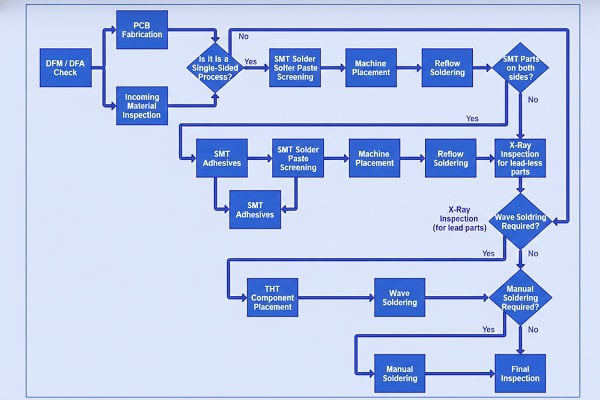
PCBA manufacturing involves assembling electronic components onto printed circuit boards through complex automated sequences. Modern buyers often struggle with procurement delays or quality inconsistencies during this intricate production cycle. Our factory provides transparent engineering-driven assembly solutions to mitigate supply chain risks for global professional partners. Ready for the good part? This guide details every phase from raw fabrication to final testing to ensure your next project succeeds.
1. How Does PCB Fabrication Lay the Foundation for PCBA Manufacturing?
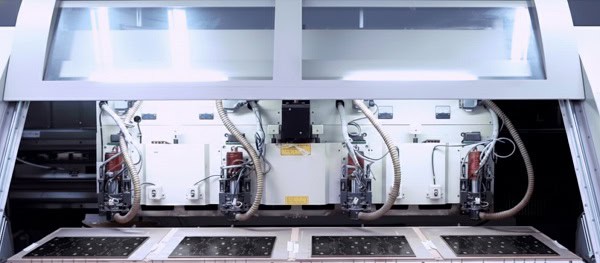
PCB fabrication represents the initial physical stage where copper circuits are etched onto insulating substrates. Here’s the deal. If the bare board lacks precision, the entire PCBA manufacturing flow will fail during high-speed component mounting. Professional factories must verify drill accuracy and surface finish quality before assembly begins.
● Copper Etching and Lamination ● Solder Mask Application ● Surface Finish Quality
For instance, a buyer in Germany required high-density interconnects for a medical device. Our engineering team performed a detailed review to confirm the pad sizes matched the SMT requirements perfectly. Without this step, the high-precision BGA components would have suffered from bridging defects during reflow.
2. Why Is Incoming Quality Control (IQC) Non-Negotiable in PCBA Manufacturing?
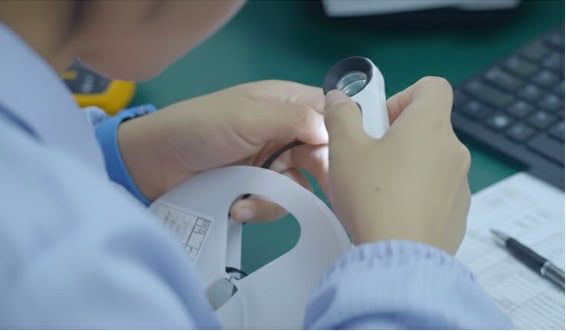
IQC ensures every component entering the facility meets strict technical specifications. What’s the real story? Poor quality raw materials often lead to massive malfunctions in the final electronic product. We perform 100% inspection on critical parts to maintain consistent yield rates for our B2B clients.
● Component Traceability ● BOM Verification ● Moisture Sensitivity Checks
Consider a case where a factory coordinator in Sweden ordered mid-volume assemblies. During IQC, our specialists identified unauthorized component substitutions from a secondary supplier. We halted production immediately to secure approved parts, ensuring the final assembly remained fully compliant with the client’s original design.+4
3. Why Is DFM/DFA Review the First Engineering Gate of PCBA Manufacturing?
DFM and DFA reviews analyze design files to find potential assembly bottlenecks before production starts. But here’s the kicker. Small layout errors often cause expensive rework cycles if not caught during this pre-production phase. Our engineers proactively identify these risks to protect your project timeline.
● Layout Compatibility ● Component Clearance ● Assembly Risk Mitigation
A startup founder in the United States once provided a complex drone board layout. Our DFM review revealed that the component spacing was too tight for standard SMT nozzles. By adjusting the layout slightly before fabrication, we achieved a 99% first-pass yield for their pilot run.
4. How Does Precise Solder Paste Printing Kickstart the SMT Line?
Solder paste printing applies metallic paste through a stencil onto the PCB pads. This is where it gets interesting. Approximately 70% of PCBA manufacturing defects originate from inconsistent solder deposition. We utilize high-precision automatic printers to ensure every pad receives the exact volume required for stable joints.+3
● Stencil Tension ● Paste Volume Accuracy ● SPI Verification
Solder Printing Parameters
| Parameter | Standard Range | Quality Impact |
| Stencil Thickness | 0.1mm – 0.15mm | Solder Volume |
| Printing Speed | 20mm/s – 50mm/s | Paste Uniformity |
| SPI Height | 100um – 150um | Joint Integrity +1 |
5. Is High-Speed Pick and Place the Heart of PCBA Manufacturing?
Pick and place machines mount SMD components onto the pasted board at incredible speeds. You might be wondering. How do we maintain accuracy while placing thousands of parts per hour? We use advanced vision systems to align fine-pitch BGAs and high-density layouts with sub-millimeter precision.+3
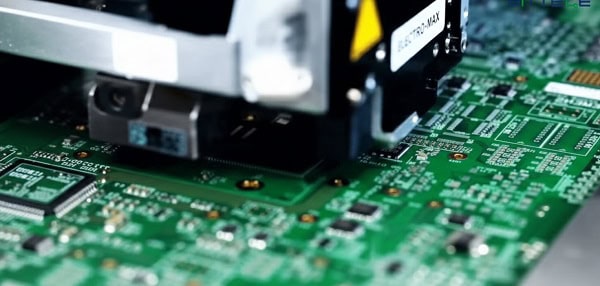
● Automated Mounting ● Vision Alignment ● SMD Versatility
One procurement officer in Canada required rapid prototyping for a new robotics controller. Our 100+ machines allowed us to switch lines quickly to accommodate their low-volume specialized components. The high-speed capability ensured the assembly was completed within a tight 24-hour window.
6. How Does Reflow Soldering Ensure Reliable Joints in PCBA Manufacturing?
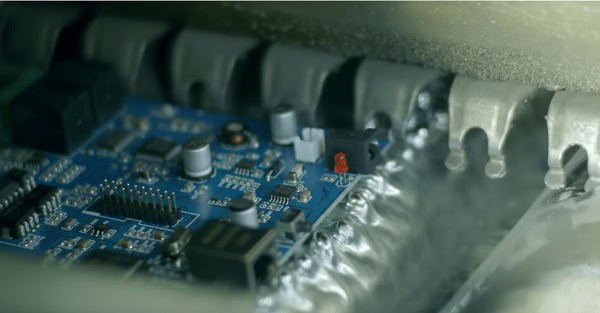
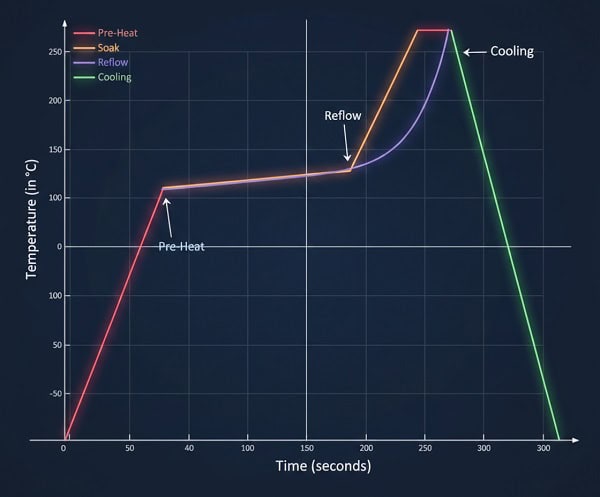
Reflow soldering uses controlled heat to melt the paste and form permanent electrical bonds. Ready for the good part? This thermal cycle must be perfectly calibrated to avoid damaging heat-sensitive integrated circuits. We monitor thermal profiles constantly to guarantee soldering consistency across every production batch.+4
● Thermal Profiling ● Solder Fillet Quality ● Lead-Free Compliance
Reflow Thermal Stages
| Phase | Temperature Range | Purpose |
| Pre-heat | 150°C – 180°C | Flux Activation |
| Reflow | 230°C – 250°C | Metallic Bonding |
| Cooling | 60°C – 100°C | Joint Solidification |
7. Why Is AOI and X-Ray Inspection Vital for PCBA Manufacturing Quality?
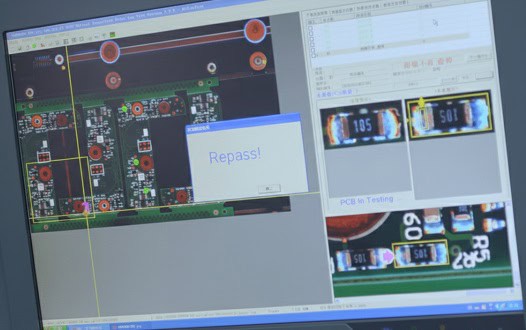
Inspection steps like AOI and X-ray find hidden defects that the human eye cannot detect. But here’s the kicker. Without X-ray, invisible air voids under BGA components could cause your device to fail in the field. Our factory uses both systems to ensure every PCBA manufacturing run meets professional standards.+4
● AOI Visual Scans ● X-Ray Hidden Voids ● Defect Identification
For a telecommunications client in Poland, we assembled complex multi-layer boards. AOI caught a minor bridge on a fine-pitch connector early in the run. X-ray then verified the integrity of the BGA balls underneath, preventing a potentially massive recall of finished hardware.
8. Does Through-Hole Technology (THT) Add Strength to PCBA Manufacturing?
THT provides mechanical strength for heavy components like connectors or transformers. Here’s the deal. While SMT is faster, THT is often necessary for high-power industrial automation or automotive applications. We offer mixed-technology assembly to handle these complex board requirements.+4
● Component Insertion ● Wave Soldering ● Mechanical Durability
SMT vs THT Comparison
| Feature | SMT Assembly | THT Assembly |
| Speed | High Speed | Manual/Semi-Auto |
| Strength | Low Mechanical | High Mechanical |
| Density | High Density | Low Density |
Export to Sheets
9. Is ICT and Functional Testing (FCT) the Final Proof of Performance?
ICT and FCT verify the electrical functionality of the assembled board. What’s the real story? Soldering quality alone does not guarantee that the circuit will perform as expected in real-world conditions. We develop custom test fixtures to simulate operational environments for every B2B order.
● Electrical Continuity ● Firmware Programming ● Operational Validation
Testing Capabilities
| Test Method | Focus Area | Goal |
| ICT | Component Values | Proper Values +1 |
| FCT | Board Logic | Functional Output +1 |
| Programming | IC Firmware | Device Logic |
Export to Sheets
10. How Does Final Cleaning and Coating Protect the PCBA Manufacturing Output?
Final cleaning removes flux residues that could cause long-term corrosion. This is where it gets interesting. For clients in harsh environments, like maritime or industrial sensors, conformal coating adds an extra layer of protection. We ensure your finished product survives its intended service life.+4
● Residue Removal ● Conformal Coating ● Final Packaging
Process Yield Highlights
| Step | Target Yield | Quality Measure |
| SMT Placement | 99.9% | AOI Results +2 |
| Testing | 99.5% | FCT Results +2 |
| Shipment | 100% | Final QA +1 |
Export to Sheets
PCBA manufacturing transforms raw designs into reliable hardware through strict engineering gates. We summarize that quality hinges on proactive DFM, precise SMT, and thorough functional testing. Ready to take the next step? Please contact us today to secure a transparent quote for your next high-reliability assembly project.
Q1: What is PCBA manufacturing? It is the comprehensive process of soldering electronic components onto a fabricated PCB to create a functional electronic assembly.
Q2: How does SMT assembly work? SMT uses automated machines to apply solder paste, mount surface-mount components, and reflow them in an oven to create electrical joints.
Q3: Can I get small-batch prototyping? Yes, our factory supports quick small-batch prototyping with fast response times for purchasing managers and startups.
Q4: Do you offer turnkey services? We provide full turnkey solutions, managing component sourcing, PCB assembly, and final functional testing.
Q5: How do you ensure component authenticity? We use transparent sourcing with full traceability and only use approved substitutions after prior client approval.