

Quick Answer: Finding a safe PCB component shortage alternative requires verifying the physical footprint, critical electrical parameters (like Vcc and Imax), and identical pinouts before approving a drop-in replacement. If an exact match is unavailable, sourcing from franchised distributors prevents the 20% failure rate often seen with gray market counterfeit electronic components.
Key takeaways:
- Emergency step one is checking franchised distributor allocation, not independent brokers.
- A true drop-in replacement PCB component must share the exact physical footprint and pinout.
- Gray market counterfeit components cost the industry over $7.5 billion annually.
- Building an Approved Vendor List (AVL) with 2-3 second sources cuts shortage delays by 80%.
- Why are PCB components still in shortage in 2025?
- What are my options when a component is out of stock right now?
- How do I find a drop-in replacement component?
- How do I avoid counterfeit components when sourcing alternatives?
- When does a component shortage require a PCB redesign?
- How should I optimize my BOM to reduce shortage risk?
- How does QueenEMS help customers navigate component shortages?
- What’s the best long-term strategy to future-proof your supply chain?
- FAQ
You are reviewing the final manufacturing schedule when the email hits your inbox: the critical microcontroller for your new board is out of stock globally, with a 52-week lead time. The factory is waiting, and you have exactly 48 hours to find a PCB component shortage alternative or miss your product launch. After sourcing parts for over 2,400 turnkey orders last year, we see this exact panic every single week. Here is the exact framework to find a drop-in replacement, avoid the massive risks of gray market counterfeits, and keep your production line moving.
Why are PCB components still in shortage in 2025?
PCB components are still in shortage because the rapid expansion of EV manufacturing, AI hardware infrastructure, and legacy fab closures have outpaced global silicon wafer production capacity. While the massive 2021 crisis has stabilized, specific categories like high-voltage automotive MLCCs and advanced power management ICs (PMICs) still face unpredictable 40-week lead times.
But here’s what most guides won’t tell you…
The current shortage is no longer a blanket “everything is out of stock” situation. It is a highly localized, unpredictable allocation issue. A generic 10k resistor is plentiful, but a specific Texas Instruments LDO voltage regulator might vanish overnight because a massive automotive tier-1 supplier just bought the entire global inventory.
- Legacy Fabs: Many manufacturers are shutting down older 200mm fabs, reducing the supply of basic legacy components.
- Geopolitics: Ongoing trade tariffs and export restrictions disrupt established supply chains.
- Just-in-Time Failures: The electronics industry relies on lean inventory, meaning a slight demand spike immediately empties the shelves.
What are my options when a component is out of stock right now?
When a component is out of stock, your immediate options are checking franchised distributor inventory, contacting the manufacturer’s Field Application Engineer (FAE) for direct allocation, leveraging your EMS factory’s private supply network, or finding an equivalent drop-in replacement. Do not immediately panic-buy from unknown brokers.
Here’s where it gets real…
Engineers often make the mistake of immediately Googling the part number and buying from the first site that shows “In Stock.” This is the fastest way to acquire counterfeit parts. Follow this strict hierarchy of actions instead.
- Search Franchised Distributors: Check real-time API aggregators (like Octopart) for verified stock at Digi-Key, Mouser, Arrow, or Avnet.
- Contact the Manufacturer: Reach out to the FAE. Sometimes, parts are held in reserve allocation for specific industries and can be released.
- Ask Your Assembly Factory: If you are using a turnkey PCB assembly service, your factory has access to local Asian distributors and bonded warehouses that you cannot see online.
- Find a Substitute: If the original is truly gone, immediately start the drop-in replacement validation process.
How do I find a drop-in replacement component?
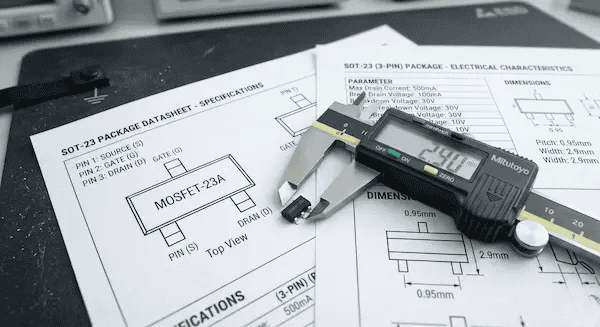
You find a drop-in replacement component by comparing datasheets to ensure the alternative perfectly matches the original’s physical footprint, pinout configuration, and core electrical parameters like maximum voltage and current ratings. A true drop-in replacement PCB part requires zero changes to your existing bare board layout.
The real question is…
What parameters are mandatory, and what can you safely ignore? If you are replacing a 3.3V LDO regulator, you cannot compromise on the output voltage or the SOT-23 package size. However, you might accept a part with a slightly wider operating temperature range or a different brand logo.
Table 1: The Alternative Component Substitution Framework
| Parameter Category | Requirement Level | Example (Replacing an LDO Regulator) |
|---|---|---|
| Physical Footprint | Must Match Exactly | Must be SOT-23-5 (Cannot be DFN) |
| Pinout Assignment | Must Match Exactly | Pin 1 must be IN, Pin 2 must be GND |
| Core Electricals | Must Match Exactly | Vout = 3.3V, Imax ≥ 500mA |
| Tolerances | Should Match | 1% accuracy is better than 5% |
| Operating Temp | Can Compromise (Test First) | Using Industrial (-40 to 85°C) instead of Automotive |
| Brand / MPN | Totally Flexible | Switching from TI to NXP |
Always remember to officially update your BOM for PCB assembly with the exact new Manufacturer Part Number (MPN). Never just write “equivalent” in the notes column.
How do I avoid counterfeit components when sourcing alternatives?

You avoid counterfeit electronic components by purchasing exclusively from franchised distributors and avoiding unauthorized gray market brokers offering prices significantly below market value. The counterfeit electronics market costs the industry over $7.5 billion annually, and shortage periods see a massive spike in fake, relabeled, or salvaged parts.
Want the honest answer?
If a critical IC is globally out of stock with a 52-week lead time, and a random broker on an e-commerce site claims to have 5,000 units ready to ship at a 20% discount—it is a scam.
If you absolutely must test a gray market batch during a severe shortage, perform these three rapid checks before placing them on a board:
- The Acetone Test: Wipe the component marking with an acetone-soaked swab. Real laser etchings will not fade; fake blacktopping ink will wipe right off.
- Microscope Inspection: Look for perfectly smooth surfaces and identical mold indentations. Counterfeits often have rough sanding marks or mismatched pin alignments.
- Batch Verification: Call the original manufacturer and ask them to verify the date code and lot number printed on the reel.
Table 2: Component Sourcing Channel Risk Profile
| Sourcing Channel | Risk Level | Price | Best Used For |
|---|---|---|---|
| Franchised Distributors (Digi-Key, Mouser) | Zero | Standard | All critical ICs, initial prototypes, mass production. |
| Factory Local Network (QueenEMS) | Very Low | Competitive | Turnkey sourcing, hard-to-find passives, regional brands. |
| Independent Brokers | High | Premium | Extreme emergencies only. Requires deep incoming inspection. |
| Consumer E-Commerce / Gray Market | Extreme | Suspiciously Low | Never use for production. High risk of immediate failure. |
When does a component shortage require a PCB redesign?
A component shortage requires a PCB redesign when you cannot find an alternative with an identical physical footprint and pinout, or when a proprietary core IC (like a highly specific MCU or wireless SoC) becomes completely unavailable, pushing the wait time past your product launch deadline.
So what does this actually mean for your budget?
You have to calculate the cost of waiting versus the cost of engineering. Redesigning a board takes engineering hours, requires a new bare board fabrication run, and invalidates your previous testing. However, waiting 40 weeks for a single chip means your company makes zero revenue.
Table 3: The Wait vs. Redesign Decision Matrix
| Shortage Scenario | Recommended Action | Key Decision Driver |
|---|---|---|
| Wait time is 4 weeks, launch is in 8 weeks. | Wait | Cheaper than the engineering cost of a redesign. |
| Core MCU is delayed 50 weeks. | Redesign | You cannot afford to halt your business for a year. |
| Alternative exists but uses a different footprint. | Redesign (Minor) | A simple pad layout change is fast and cheap. |
| Proprietary sensor is discontinued (EOL). | Redesign (Major) | Forced action. The part will never return. |
If you must redesign, factor the new bare board tooling fees into your overall PCB assembly cost calculations.
How should I optimize my BOM to reduce shortage risk?

You optimize your BOM to reduce shortage risk by building an Approved Vendor List (AVL) that specifies at least two or three verified alternative components for every single passive part and common IC in your design. Relying on a single source for a standard 10k resistor is a massive supply chain vulnerability.
Now, here’s the part that surprises most customers…
The best time to solve a shortage is during the initial design phase, not when the factory is waiting for parts.
- Specify Multiple MPNs: In your BOM spreadsheet, add columns for “Alternative MPN 1” and “Alternative MPN 2”.
- Use Standard Packages: Avoid ultra-rare proprietary packages. Stick to standard sizes like 0402, 0603, SOIC, and QFN wherever possible.
- Avoid Single-Source Silicon: If your design only works with one highly specific, newly released PMIC from one brand, you are entirely at their mercy. Design for flexibility.
How does QueenEMS help customers navigate component shortages?
As an EMS provider handling full turnkey PCB assembly, we actively manage the supply chain risk for our customers by leveraging established relationships with franchised distributors and maintaining an extensive internal database of verified cross-reference components.
Here is the bottom line from the factory floor:
- Every quarter, we get calls from panicked customers because a specific IC is out of stock. The most common scenario is that they have already ordered parts from a gray market broker and need us to verify the authenticity before assembly.
- At QueenEMS, we have a dedicated procurement team with priority status at major franchised distributors. For our turnkey orders, if a raw material is out of stock, we proactively provide a verified alternative component solution, complete with a side-by-side datasheet comparison, before the customer even places the final order.
- Through this proactive substitution process, we help our customers cut their average shortage delay times by 2 to 3 weeks, while maintaining a strict 0% counterfeit component rate on the factory floor.
What’s the best long-term strategy to future-proof your supply chain?
The best long-term strategy to future-proof your supply chain is moving away from purely consigned assembly models and partnering closely with your EMS factory early in the design cycle. A factory sees global component availability trends months before a hardware startup does.
It all comes down to this…
Stop treating your BOM like a static, sacred document. Treat it as a dynamic list of functional requirements.
Before you finalize your layout, send your preliminary BOM to your assembly partner for a health check. A good factory will immediately flag “at-risk” components that have historically volatile supply chains and suggest robust alternatives before you route the first trace. Ensure you have the complete set of PCB assembly quote files ready to get an accurate assessment.
FAQ
Can I use a component with a different temperature rating as an alternative? It depends on your product’s operating environment. If your device sits in an air-conditioned office, upgrading from a commercial grade (0°C to 70°C) to an industrial grade (-40°C to 85°C) part is perfectly safe and often easier to source. However, never downgrade the temperature rating without extensive thermal testing.
What happens if I approve a wrong alternative component? If the alternative component has a different pinout or footprint, the physical assembly will fail, resulting in a scrapped board. If the electrical parameters are slightly off, the board might assemble fine but fail during functional testing or randomly in the field. Always verify the datasheet 1:1.
Does changing a component require re-certification (like CE or FCC)? Usually, changing passive components (resistors, capacitors) of the exact same value does not require re-certification. However, changing a core microcontroller, an RF module, or a major power supply IC can alter the electromagnetic emissions, potentially forcing you to run compliance testing again. Check with your compliance lab before swapping major active components.
Running into a shortage roadblock? Send your BOM to QueenEMS today. Our procurement engineering team will run a free component availability check, flagging high-risk items and suggesting safe, verified alternatives—no fees, no order commitment required. Start optimizing your supply chain at QueenEMS.
Written by the QueenEMS Engineering Team