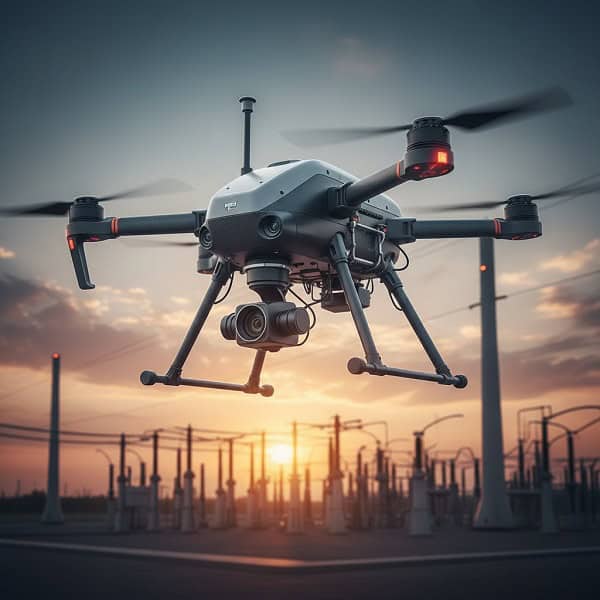
The technology of drones is fundamentally changing the way modern service industries operate by providing high-precision data collection and operational efficiency that traditional methods simply cannot match.
Imagine you are managing a large-scale industrial facility where a critical cooling tower needs an urgent structural inspection. Traditionally, this would require shutting down operations, erecting expensive scaffolding, and sending technicians into high-risk areas—a process that takes days and costs thousands in lost productivity. This is the exact pain point many procurement managers face: balancing safety and cost against the need for rapid maintenance. The solution lies in the sky; by deploying advanced UAVs, you can complete that same inspection in hours with zero human risk. At the heart of this revolution is the technology of drones, supported by precision-engineered electronics that ensure every flight is stable and every data point is accurate.
What defines the modern technology of drones?
The technology of drones encompasses the hardware, software, and communication protocols that allow aircraft to operate without a human pilot onboard. These systems rely on a synergy of flight controllers, GPS modules, and advanced sensors to maintain stability and execute complex missions.
Could there be a more efficient way to manage your hardware assets?
- High-density interconnect (HDI) PCBs for miniaturization.
- Advanced IMU sensors for real-time attitude control.
- Specialized Electronic Speed Controllers (ESCs) for motor precision.
You will find that the reliability of these systems often depends on the quality of the underlying smt-assembly. But wait, there’s a deeper level of integration required for professional-grade stability.
Key Takeaway: Understanding the fundamental electronics helps businesses choose platforms that won’t fail during mission-critical tasks.
| Component | Function | Business Impact |
| Flight Controller | Central Logic | Ensures flight stability |
| GPS Module | Positioning | Millimeter-level accuracy |
| ESC | Power Management | Longer battery life |
Precision in the internal assembly is the silent driver of UAV reliability.
How fast is the drone market size growing?
The technology of drones market is currently experiencing an unprecedented surge, with the global industry valuation projected to reach nearly $40 billion by 2027. This growth is no longer just driven by military spending, but increasingly by the commercial sector’s demand for automation.
Have you considered the scale of this opportunity for your supply chain?
- Compound Annual Growth Rate (CAGR) exceeding 8% globally.
- Non-military projects are becoming the dominant force in hardware procurement.
- Rapid adoption in North America is fueling the need for reliable mixed-assembly.
This momentum means that being an early adopter is no longer a luxury but a strategic necessity. You can leverage these trends to optimize your own operational costs before your competitors do.
Key Takeaway: The massive market growth ensures a steady supply of innovative hardware and competitive pricing for enterprise users.
| Market Segment | CAGR | Focus Area |
| Commercial | 8.2% | Logistics & Mapping |
| Industrial | 7.5% | Asset Inspection |
| Consumer | 6.1% | Photography |
Following market trends allows purchasing managers to time their equipment upgrades perfectly.
Why is video collection vital for the technology of drones?
The technology of drones has turned breathtaking aerial imagery into a standard requirement for industrial documentation and marketing. From real estate to wartime reconnaissance, these platforms offer a “bird’s eye view” with stunning 8K clarity.
Are you looking for a way to stand out in a crowded market?
- Multi-spectral cameras for agricultural health monitoring.
- High-resolution RGB sensors for infrastructure mapping.
- Thermal imaging for detecting hidden energy leaks.
It’s about more than just a camera; it’s about the data processing power inside the consumer-electronics. But wait, the stability of that video depends entirely on the gimbal controller’s speed.
Key Takeaway: Aerial photography provides a unique value proposition for marketing and technical documentation that is impossible from the ground.
| Imaging Type | Use Case | Result |
| Thermal | Energy Audits | Identifies heat loss |
| 8K Video | Marketing | High engagement |
| LiDAR | Surveying | Accurate 3D models |
Visual data is the primary output of 90% of commercial drone missions.
How do drones simplify complex industrial inspections?
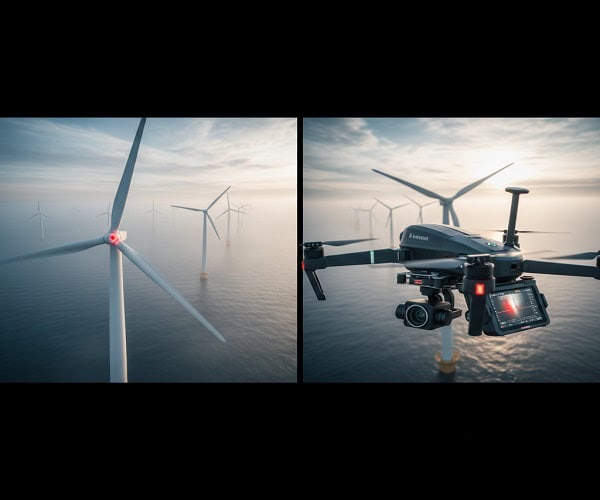
The technology of drones allows inspectors to collect essential data without ever leaving the safety of the ground. By using thermal and LiDAR sensors, drones can navigate tight confines like industrial tanks or assess the integrity of wind turbines.
Is safety a top priority for your maintenance team?
- Safe navigation within boilers, tanks, and cell towers.
- Rapid assessment of wind turbines without climbing.
- Significant reduction in human risk and insurance costs.
The efficiency gains are undeniable compared to traditional manual methods. You can often complete a site assessment in the time it would traditionally take just to set up the scaffolding.
Key Takeaway: Drone inspections maximize site safety while providing more comprehensive data than traditional manual checks.
| Asset Type | Traditional Time | Drone Time |
| Wind Turbine | 1 Day | 1 Hour |
| Power Line | 3 Days | 4 Hours |
| Storage Tank | 2 Days | 2 Hours |
Moving inspections to the air drastically improves safety records and operational uptime.
Is drone delivery the future of the technology of drones?
The technology of drones in the delivery sector is rapidly moving from a futuristic dream to a core part of the modern logistics landscape. Major enterprises are already completing tens of thousands of deliveries annually, particularly in the medical and food sectors.
How would a faster fulfillment cycle impact your bottom line?
- Direct-to-door delivery bypassing urban traffic congestion.
- Rapid transport of critical medical supplies to remote areas.
- Lower carbon footprint compared to traditional delivery vans.
The industry is evolving at a breakneck pace with companies focusing on bga-assembly for high-redundancy controllers. You may soon find that aerial delivery is the most cost-effective way to move small goods.
Key Takeaway: Drone delivery is solving the “last-mile” logistics problem by offering a faster and greener alternative.
| Delivery Item | Priority | Requirement |
| Medical | Critical | Redundant sensors |
| E-commerce | Speed | Pathfinding AI |
| Food | Volume | Precision landing |
Logistics efficiency is shifting from the road to the sky.
How does 3D mapping benefit from the technology of drones?
The technology of drones has revolutionized surveying by allowing for the creation of incredibly accurate digital twins of physical assets. By capturing data with speed and integrating it with photogrammetry software, drones produce models that guide urban planning and construction.
Could a digital twin of your site improve planning accuracy?
- Architects use models to ensure public spaces evolve cohesively.
- Construction managers track site progress and material volumes daily.
- Farmers analyze soil composition via 3D multi-spectral maps.
The insights provided by these models are invaluable for long-term project success. You can trust our hardware-startups program to help you prototype the next generation of mapping hardware.
Key Takeaway: High-fidelity 3D mapping provides a digital foundation that improves decision-making in construction and urban development.
| Mapping Sector | Output | Value |
| Construction | Volumetric Data | Cost tracking |
| Mining | 3D Models | Safety planning |
| Agriculture | Soil Maps | Yield optimization |
Digital twins are the most powerful planning tools in modern construction.
What is the future of autonomous flight?
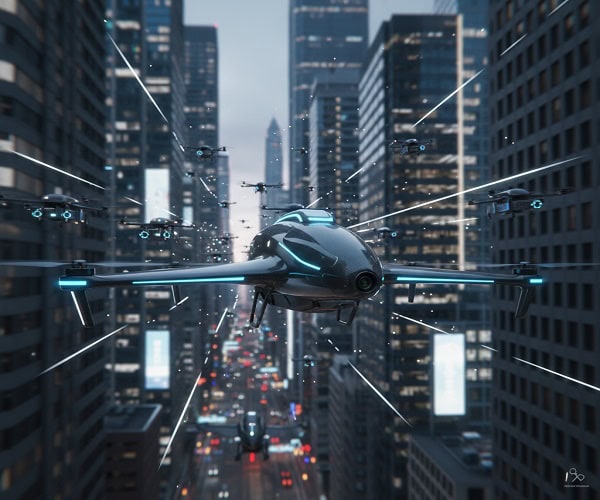
The technology of drones is moving toward a world where machines make complex decisions without human intervention. As 5G and 6G networks evolve, drones will become smarter and more integrated into the industry-automation infrastructure.
Are you ready for a world where drones manage themselves?
- Real-time decision-making powered by edge AI.
- Deployment of drone swarms for search and rescue operations.
- Transition to fully autonomous urban “drone taxis.”
The rapid development of these systems is closely tied to advancements in communication tech. You will see that our robotics assembly expertise is vital for these autonomous brains.
Key Takeaway: The shift toward autonomy will redefine transportation and emergency response, making operations more scalable.
| Future Trend | Technology | Timeline |
| Swarm Intelligence | 6G / AI | 2028-2030 |
| Drone Taxis | VTOL / 5G | 2026-2028 |
| Autonomous Cargo | Edge AI | 2025-2027 |
True autonomy is built on the back of sophisticated electronic decision-making.
Why is high-quality PCBA the heartbeat of drones?
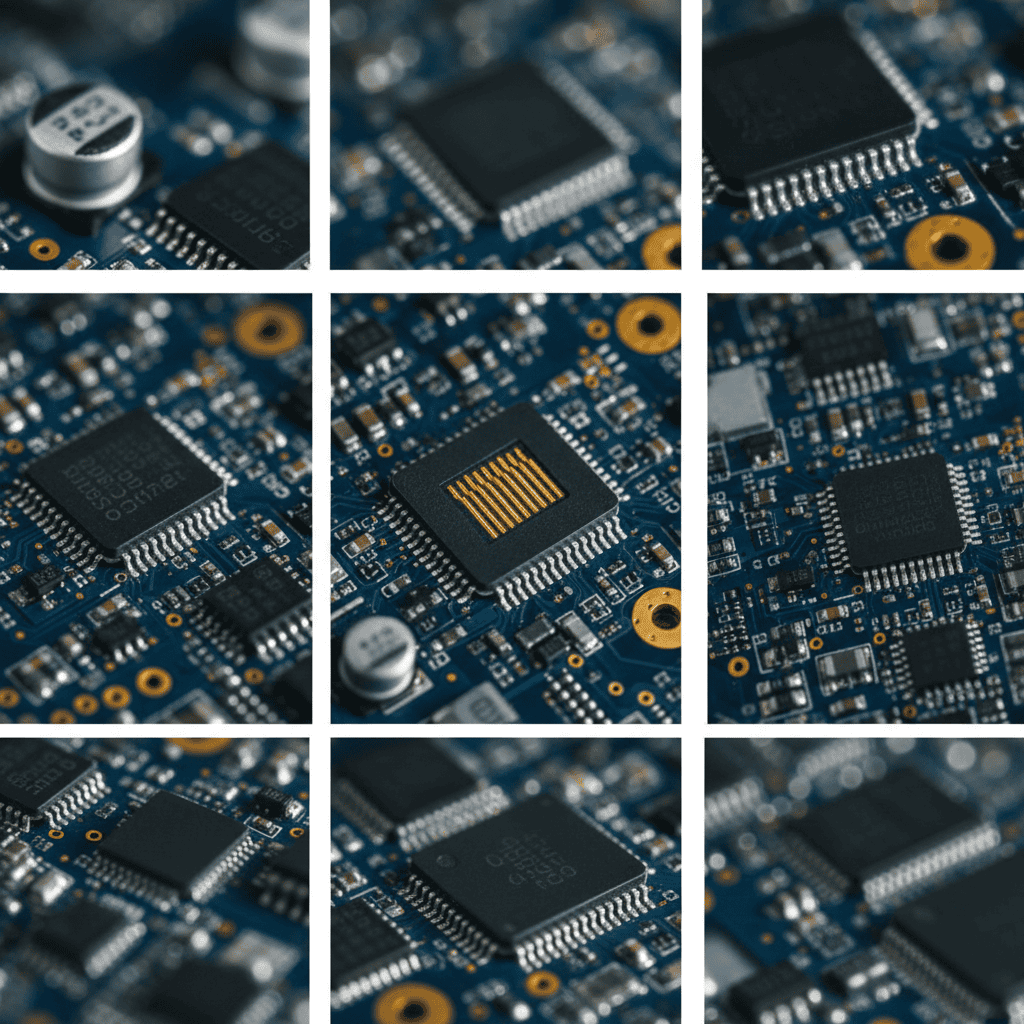
The technology of drones relies entirely on the internal Printed Circuit Board Assembly to manage flight stability and sensor data. As drones become more advanced, the demand for lightweight and durable electronics becomes paramount for mission success.
Why settle for anything less than perfection in your electronic backbone?
- Miniaturization allows for more sensors without increasing weight.
- Advanced coatings protect electronics from humidity and impact.
- High-speed processing ensures lag-free flight control.
It’s about more than just soldering; it’s about surviving the high vibrations of flight. You will notice that tht-pcb-assembly is still crucial for heavy power connectors.
Key Takeaway: The flight performance and reliability of a drone are entirely dependent on the quality of its internal PCBA.
| Feature | Solution | Impact |
| Miniaturization | HDI PCBs | More battery space |
| Durability | Conformal Coating | All-weather flight |
| Precision | SMT Lines | High signal integrity |
Internal electronic integrity is the silent hero of every successful UAV flight.
Can custom PCB designs enhance the technology of drones?
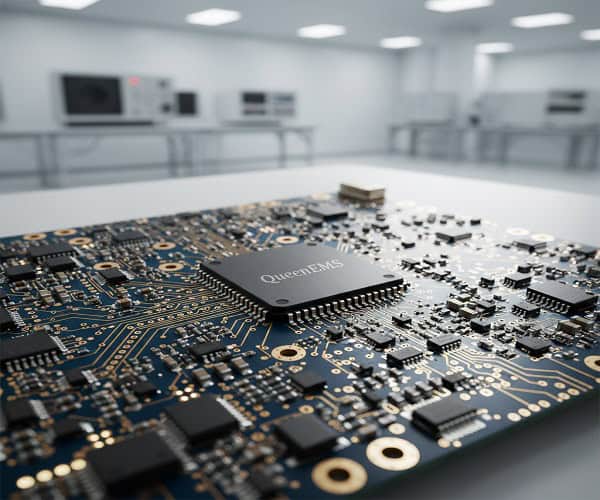
The technology of drones for industrial use often requires specific electronic configurations that off-the-shelf models cannot provide. Custom PCBA designs ensure that a drone excels in its designated function, whether that is agricultural surveying or cargo transport.
How can customization give you a competitive edge?
- Tailored power distribution for heavy-duty motors.
- Bespoke communication interfaces for encrypted data links.
- Integration of specialized scientific sensors.
This level of customization provides a strategic advantage in a crowded market. You can leverage our pcb-prototyping-and-quick-turn services to iterate your designs faster.
Key Takeaway: Custom electronics allow businesses to build drones that solve specific problems rather than relying on generic platforms.
| Customization | Benefit | Industry |
| Long-Range Link | 50km+ Range | Border Patrol |
| High-Torque ESC | Heavy Lift | Logistics |
| Secure ICs | Data Privacy | Government |
Bespoke hardware design is the secret weapon of industry leaders.
How do advanced batteries power the technology of drones?
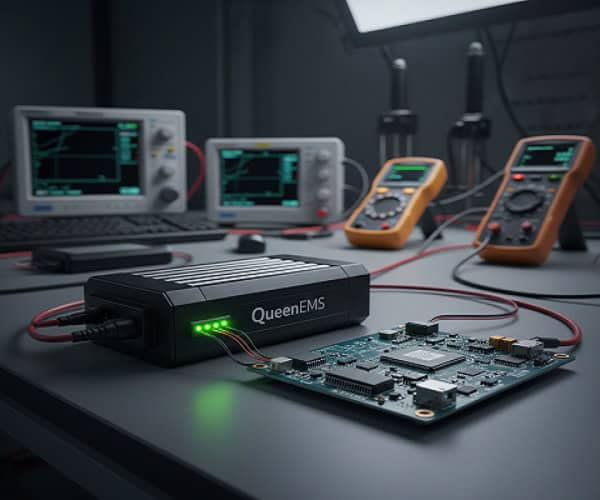
The technology of drones is only as good as the energy source powering it, making battery management systems (BMS) a core focus. High-density lithium and solid-state batteries are pushing the limits of mission duration.
Are you struggling with limited flight times?
- Smart BMS that monitors cell health in real-time.
- Utilization of high-discharge cells for heavy maneuvers.
- Research into hydrogen fuel cells for 4+ hour missions.
The heartbeat of the power system is the circuit board that manages it. You will see our btteryev-manufacturing expertise reflected in these high-efficiency power systems.
Key Takeaway: Breakthroughs in power management and battery tech are the primary drivers for extending UAV mission durations.
| Battery Type | Duration | Application |
| Li-Po | 30 Mins | Inspections |
| Solid State | 60+ Mins | Long Range |
| Hydrogen | 240+ Mins | Infrastructure |
Power efficiency is the ultimate constraint—and the ultimate opportunity—in drone design.
Conclusion
The evolution of technology of drones has shifted from a niche hobby to a cornerstone of modern industrial strategy. From the 3D mapping of cities to the high-stakes world of industrial inspections and last-mile delivery, UAVs are proving their value every day. We have addressed the critical need for safety, the challenges of market scaling, and the necessity of high-performance custom hardware. Whether you are a hardware startup or an established enterprise, we can help you manufacture the electronic backbone that powers your aerial ambitions. Our mission is to transform your complex UAV designs into consistent, high-quality reality. Please contact us today to discuss how our engineering-driven PCBA services can elevate your next project.
FAQ
Can I use any PCB manufacturer for drone electronics? No. Industrial drones require high-density, vibration-resistant assemblies that standard manufacturers often cannot handle.
What’s the best way to increase my drone’s flight time? Reducing weight through miniaturized HDI PCB design is the most effective method besides larger batteries.
How do I know if my design is ready for mass production? A thorough DFM review by an experienced PCBA factory will identify assembly bottlenecks before you scale.
Can autonomous drones operate without a constant GPS signal? Yes. Advanced drones use visual positioning systems and IMUs to maintain stability in GPS-denied environments.
What is the most critical component in a commercial drone? The flight controller is the brain. If its PCBA isn’t manufactured to high standards, the entire mission is at risk.