Quick Answer: To order a PCB prototype, you need to prepare your Gerber files and decide between a bare board (costing $2–$40 for 5 units) or a fully assembled prototype ($150–$400). The standard process takes 3 to 7 days, requiring you to upload your design, select specifications, approve the quote, and release the order to production.
Key takeaways:
- Bare boards only require Gerber and NC Drill files, while assembled prototypes also need a BOM and CPL.
- First-time buyers often overpay by $50–$200 by selecting unnecessary 24-hour expedite fees.
- QueenEMS offers free 2-4 layer FR4 bare board prototypes for new customers.
- Failing to include exact Manufacturer Part Numbers (MPNs) in the BOM is the #1 cause of assembly delays.
Table of Contents
- What files do you need before ordering a PCB prototype?
- How does the PCB prototype ordering process work?
- How much does a PCB prototype cost?
- How long does PCB prototyping take from order to delivery?
- What mistakes do first-time buyers make most often?
- Bare board only vs. assembled prototype — which should you order?
- FAQ
You’ve just finished routing your first board in KiCad, and now you need to actually get it made. Staring at the export menu, the fear of making a costly mistake paralyzes you—what if you send the wrong files and waste weeks of development time? After processing over 3,500 prototype orders last year, we know exactly how daunting it is to order a PCB prototype for the first time. Here is the exact checklist and step-by-step process we use to help our clients get their boards right on the first try.
What files do you need before ordering a PCB prototype?
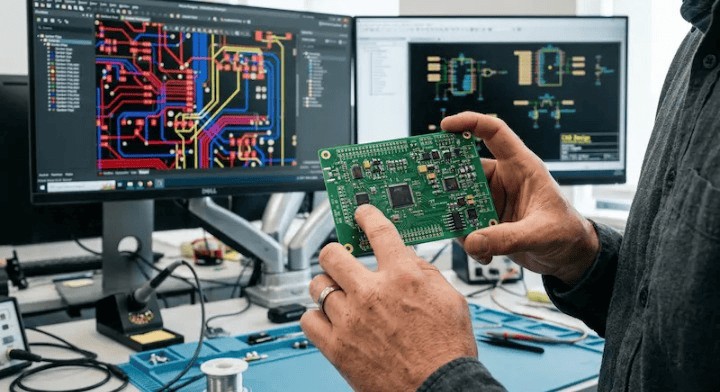
To order a bare PCB prototype, you only need to export your Gerber files and an NC Drill file in a single .zip folder. If you need a fully assembled prototype, you must also provide a Bill of Materials (BOM) in .xlsx format and a Component Placement List (CPL) in .csv format.
Here’s where it gets real. New engineers often freeze up when a factory asks for “manufacturing data.” Your CAD software (Altium, Eagle, KiCad) holds the visual design, but the factory machines read specific file extensions. You cannot just send a KiCad project file and expect the manufacturer to open it.
Here is your exact pre-order checklist:
- Gerber Files (RS-274X or X2): These are the individual 2D drawings of every layer of your board (copper, solder mask, silkscreen).
- NC Drill File: This tells our drilling machines exactly where to make holes and what size drill bits to use.
- BOM (Bill of Materials): If you want us to solder the parts, we need a list. Read our guide on how to prepare a BOM to see the exact format.
- CPL / Centroid File: This tells the pick-and-place robot the X/Y coordinates and rotation of every single component.
- ReadMe File (Optional): A simple text file noting any special requirements like impedance control or specific layer stackups.
If you are still unsure about the formats, review our complete breakdown of the PCB assembly quote files you actually need.
How does the PCB prototype ordering process work?
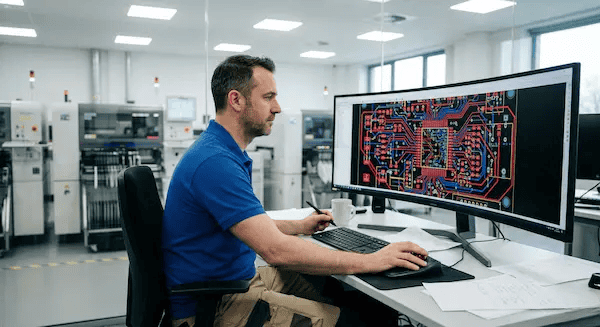
The prototype ordering process takes exactly 5 steps: exporting your design files, uploading them for an instant quote, confirming your manufacturing specifications, submitting payment, and performing incoming testing upon delivery. Most standard orders move from upload to the production floor within 12 hours.
Now, here’s the part that surprises most customers. You do not have to wait days for an email reply to get things moving. The modern manufacturing workflow is highly automated.
Follow this straightforward path:
- Upload Files: Drop your .zip file into the factory’s portal. The system automatically reads your board dimensions and layer count.
- Select Specifications: Choose your material type, surface finish, copper thickness, and desired quantity.
- Engineering Review (DFM): The factory runs a Design for Manufacturing check. We flag any traces that are too close together or holes that are too small before charging your card.
- Approve and Pay: Once you review the final quote and clear any DFM warnings, you pay for the order. Production begins immediately.
- Receive and Validate: When the boards arrive, grab your multimeter. Check for continuity on your power rails before plugging anything in.
| Order Stage | Your Responsibility | Factory Responsibility |
|---|---|---|
| 1. Quoting | Upload Gerber & BOM | Calculate material and labor fees |
| 2. DFM Check | Answer technical questions | Flag design errors and short circuits |
| 3. Production | Wait for delivery | Manufacture, test, and ship the boards |
How much does a PCB prototype cost?
A standard 2-layer bare PCB prototype costs between $2 and $10 for a batch of 5 boards, while a 4-layer bare board ranges from $15 to $40. If you order a fully assembled 4-layer prototype with 50 components, expect the total cost to fall between $150 and $400 including parts.
So what does this actually mean for your budget? Your final invoice combines fixed setup charges (NRE fees) and variable material costs. Factories charge a tooling fee just to set up the machines, which is why 5 boards seem expensive per unit compared to 5,000 boards.
Take a look at how different decisions change your baseline budget:
- Bare Board (2 Layers): $2–$10 total. Cheap, fast, and great for verifying footprints.
- Bare Board (4-6 Layers): $15–$60 total. Prices jump as you add internal copper layers.
- Setup / Tooling Fees: $0–$200. Some budget factories waive this for standard specs.
- Component Sourcing: You pay the retail price of the chips plus a 5-10% handling markup.
If you want a deeper look at the math, check our full breakdown of PCB fabrication cost and PCB assembly cost.
Upload your Gerber files to QueenEMS today—we currently offer free 2-4 layer FR4 bare board prototypes for new B2B customers to help you test your designs risk-free.
How long does PCB prototyping take from order to delivery?
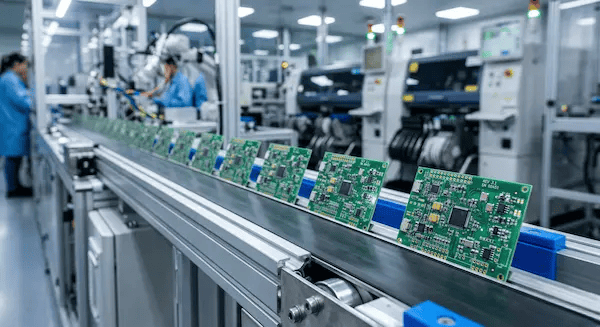
A standard bare board prototype takes 3 to 5 business days to manufacture, plus an additional 2 to 4 days for shipping. Fully assembled prototypes typically require 7 to 14 days, as the factory must source components and program the pick-and-place machines.
But here’s what most guides won’t tell you. The production clock does not start the second you upload your files. It starts when the factory clears your engineering questions.
If your Gerbers have missing layers, the factory pauses your order and emails you. Every day you take to reply pushes your delivery date back. For teams on a strict deadline, our rapid PCB prototyping service offers a 24-hour fastest turnaround for simple boards, provided all materials are in stock and the files are flawless.
What mistakes do first-time buyers make most often?
First-time buyers ruin their prototypes by exporting outdated Gerber versions, omitting exact Manufacturer Part Numbers (MPNs) from their BOMs, and forgetting to explicitly state special requirements. They also frequently waste money by selecting 24-hour expedites when standard 5-day delivery fits their schedule.
Want the honest answer? The factory rarely messes up the physical board. The vast majority of production nightmares happen during the data transfer phase.
Factory Veteran Insight: The Problem: 80% of first-time customers submit BOMs with at least one critical error. The most common mistake is listing “10k Resistor” without specifying the package size (e.g., 0402 vs 0603) or the exact MPN. The Action: We built an automated BOM pre-check system that flags missing footprints and ambiguous parts within 2 hours of upload. The Result: Catching these part mismatches early cuts our average prototype quote-to-production time from 5 days to 2, saving founders weeks of delayed shipping.
Do not forget your shipping transit times. Paying $100 for a 24-hour build speed is pointless if you select a 7-day budget shipping option. Always align your manufacturing lead time with your shipping method.
Bare board only vs. assembled prototype — which should you order?
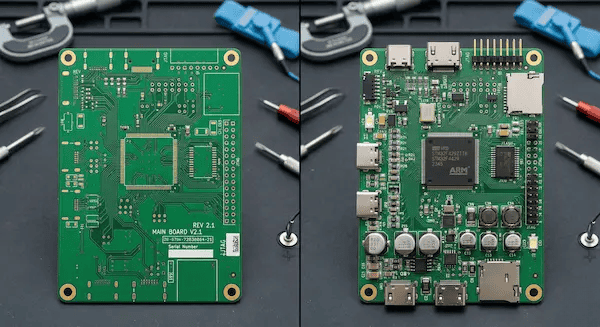
You should order a bare board if you have the internal tools to hand-solder 10-20 simple through-hole components yourself. You must order a fully assembled prototype if your design includes complex BGAs, tight-pitch QFNs, or more than 30 SMT components.
The real question is what your engineering time is worth. Spending an entire weekend hand-soldering 0402 capacitors with a pair of tweezers might save you $150, but it pulls you away from writing firmware or designing your enclosure.
| Feature | Bare Board Prototype | Fully Assembled Prototype (PCBA) |
|---|---|---|
| Best For | Simple through-hole designs, low budgets | High-density SMT, BGAs, tight deadlines |
| Files Required | Gerber, NC Drill | Gerber, NC Drill, BOM, CPL |
| Lead Time | 3–5 Days | 7–14 Days |
| Testing | E-Test for shorts/opens | 3D AOI and X-Ray on BGA joints |
For most B2B hardware startups, full turnkey service is the smartest path. Read our guide on turnkey vs consigned assembly to decide how to handle your component sourcing, or check out our quick turn PCB assembly capabilities to get your complete boards faster.
FAQ
Can I order a PCB prototype using just a schematic? No, factories cannot print boards from a schematic. A schematic shows the logical connections, but you must convert that into a physical layout and export Gerber files so the machines know exactly where to place the copper traces.
Will the factory test my prototype before shipping it? Yes, reputable manufacturers perform a flying probe electrical test (E-test) on bare boards to check for shorts. For assembled boards, we run 3D AOI (Automated Optical Inspection) and X-ray any bottom-terminated components like BGAs. Upload your files to see our testing protocols in action.
How do I transition from my prototype to mass production? Once you verify your prototype works perfectly, you lock the design version. Moving to mass production scales down your unit cost significantly because the fixed NRE fees are spread across thousands of boards. Contact our engineering team for a free design review to optimize your board for high-volume manufacturing.
Written by the QueenEMS Engineering Team. Ready to bring your design to life? Contact us today for a free DFM check and get your project started.