
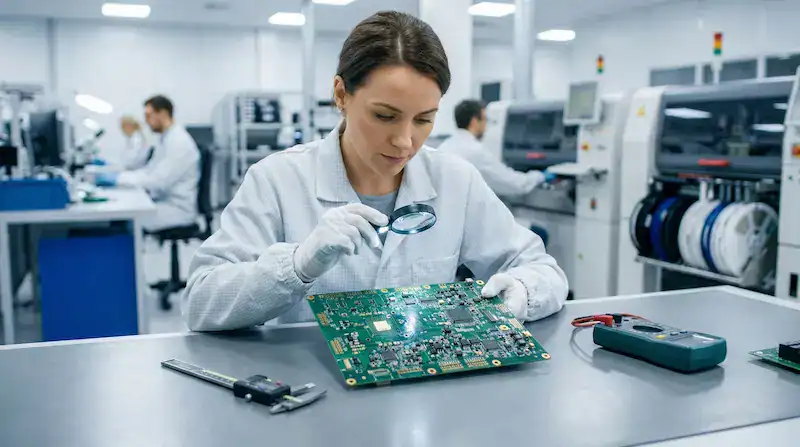
These specialized rules define global quality benchmarks during electronic board production processes. Faulty prototypes often cause severe budget overruns while ruining product launch schedules. A poorly built circuit board frustrates engineers immensely due to constant unexpected failures. Following precise IPC standards for PCB solves this major headache by establishing clear quality expectations immediately. My team crafts highly reliable hardware using these exact global manufacturing guidelines daily.
1. What define IPC standards for PCB exactly?

These global directives formulate strict acceptance criteria during electronic circuit board fabrication. Implementing IPC standards for PCB ensures every hardware component meets exact expected performance metrics. Designers require uniform language so factory operators avoid extremely costly rework mistakes. Buyers gain significant negotiation power after mastering these specific manufacturing requirement documents.
Why follow these specific rules?
Here’s the deal: following industry regulations guarantees absolute consistency across complex hardware projects. Factory managers rely heavily upon these documents while establishing baseline production parameters.
- They dictate exact component placement margins during early layout stages.
- Operators reference them while evaluating final visual soldering quality.
- Inspectors use them classifying minor visual flaws against fatal defects.
Key Takeaway: Understanding these foundation rules grants B2B buyers complete control over outsourced production.
Are there major document types?
Multiple specific documents address different critical steps within any modern assembly line. Finding exact technical matches requires matching your project with specific normative publications.
| Process Area | Primary Document | Target Audience |
| Design Stage | IPC-2221 | Hardware Engineers |
| Bare Board | IPC-A-600 | Quality Inspectors |
| Soldering Work | J-STD-001 | Assembly Operators |
Analyzing this categorical breakdown shows how specific guidelines target unique manufacturing roles effectively.
2. Why implement IPC standards for PCB today?
Companies execute IPC standards for PCB protocols guaranteeing long-term reliability inside harsh operating environments. Skipping rigorous quality checks puts brands at massive risk regarding catastrophic hardware recalls. Standardized workflows reduce miscommunication drastically across international electronic supply chain partnerships. Top-tier tech brands mandate these exact factory regulations protecting their valuable market reputations.
How do they improve quality?
What’s the real story? Unified defect definitions prevent factories from shipping marginally acceptable units. Consistent defect screening drops field failure rates significantly across massive production batches.
- They eliminate subjective visual interpretations during final outgoing quality checks.
- Strict rules force suppliers into upgrading their internal facility equipment naturally.
- Buyers receive highly consistent batches regardless of multiple factory shifts.
Key Takeaway: Adopting these practices transforms unpredictable prototype runs into highly stable mass production.
Can standardizing reduce your costs?
Standardized inspection routines catch minor errors before they become unfixable complete assemblies. Reducing scrap materials directly boosts net profit margins on every single order.
| Financial Benefit | Addressed Problem | Market Impact |
| Less Scrap | Component damage | Higher profit margins |
| Faster Runs | Setup confusion | Quicker product launches |
| Fewer Returns | Field failures | Better brand loyalty |
This table clearly proves how adopting strict procedures directly increases your business profitability.
3. Which IPC standards for PCB cover making?
Specific IPC standards for PCB publications meticulously govern bare board fabrication alongside complex assembly tasks. Familiarity with exact document numbers helps procurement teams draft accurate supplier contracts easily. One specification specifically outlines stringent performance qualifications regarding rigid printed boards. Another critical publication dictates acceptable visual characteristics seen on completed electronic assemblies.
What covers rigid board specs?
Ready for the good part? Knowing specific rulebooks allows you complete authority over technical disputes. Factories must comply entirely with performance mandates regarding internal copper plating thickness.
- One code sets rigid benchmarks regarding structural integrity under thermal stress.
- Another document dictates whether minor surface scratches warrant immediate board rejection.
- A separate file establishes baseline rules affecting minimum conductor spacing requirements.
Key Takeaway: Master these specific codes so you negotiate better terms against large factories.
Which document handles the soldering?
High-quality soldering relies heavily upon strict adherence towards mandated methodology regulations. Operators must verify flux application volumes alongside precise heating profile times accurately.
| Document Name | Primary Focus | Factory Application |
| IPC-6012 | Rigid board specs | Bare board fabrication |
| IPC-A-610 | Visual acceptability | Final PCBA inspection |
| J-STD-001 | Material requirements | SMT and Wave soldering |
Reviewing these specific numbers helps technical buyers specify exact expectations on purchase orders.
4. How are IPC standards for PCB classified?

Industry experts divide IPC standards for PCB into three distinct performance categories based upon reliability. These targeted tiers help project managers allocate manufacturing budgets appropriately without overspending blindly. General consumer items fall under lower tiers due to their shorter expected lifespans. Military-grade hardware mandates maximum tier compliance guaranteeing zero failures during mission-critical operations.
What fits into Class 1?
This is where it gets interesting… Tier one products accept minor cosmetic imperfections willingly. Everyday electronic toys utilize this lowest category saving massive production expenses immediately.
- They tolerate slight misalignment assuming electrical connections remain functionally intact.
- Factories spend less time inspecting these cheap disposable consumer units.
- Manufacturers utilize standard materials lacking extreme thermal resistance capabilities entirely.
Key Takeaway: Choose this lowest tier only when device failure causes zero safety concerns.
When should Class 3 apply?
Medical life-support equipment absolutely demands tier three manufacturing eliminating any chance of failure. Factories dedicate extra inspection hours verifying perfection across every single solder joint.
| Performance Tier | Expected Lifespan | Typical Hardware Examples |
| Tier 1 | Very short | Toys, cheap flashlights |
| Tier 2 | Extended usage | Laptops, home routers |
| Tier 3 | Infinite reliability | Pacemakers, military radar |
Matching your product against this tier system prevents wasting huge amounts of capital.
5. What are IPC standards for PCB defects?
Common defects violating IPC standards for PCB include insufficient hole fill alongside misaligned surface components. Identifying these precise faults quickly prevents entire shipments from facing costly customer rejections. Savvy engineers utilize automated optical inspection machines catching tiny solder bridges instantly. We routinely train factory workers recognizing cold solder joints under high magnification microscopes.
Can misaligned parts fail boards?
Here’s the kicker… even slight physical offsets create massive electrical shorts across dense designs. High-speed signal integrity degrades rapidly when tiny microchips sit slightly askew.
- Inspectors check whether tiny pins hang completely off their designated pads.
- Scanning machines reveal hidden voids trapped underneath large ball grid arrays.
- Operators verify acceptable solder volume ratios across every single terminal.
Key Takeaway: Early defect recognition empowers buyers rejecting substandard batches before shipping containers leave.
How does barrel fill matter?
Through-hole parts require adequate molten metal penetration securing pins physically. Insufficient filling leaves mechanical joints incredibly vulnerable towards future vibrational stress fractures.
| Defect Category | Potential System Risk | Optimal Detection Method |
| Cold Solder | Intermittent power loss | High-power magnification |
| Part Shift | Direct electrical shorts | Automated Optical Scanner |
| Thin Plating | Overheating trace burns | Destructive micro-sectioning |
This specific fault matrix provides quality teams actionable ways detecting hidden manufacturing errors.
6. How do IPC standards for PCB classes differ?
Quality tiers within IPC standards for PCB separate acceptable visual flaws from fatal manufacturing errors. Reviewing quotes reveals how higher tier demands drastically increase baseline material consumption rates. Top-tier boards require significantly thicker internal copper walls handling extreme environmental heat. Minor resin scratches pass inspection freely on standard boards but fail medical-grade requirements automatically.
Is plating thickness totally different?
What’s the real story? Exact thickness mandates separate high-end hardware from cheap disposable gadgets. Robust copper walls survive multiple harsh thermal cycles without cracking open unexpectedly.
- Tier three mandates maximum thickness eliminating internal barrel fatigue completely.
- Tier two allows slight visual blemishes leaving functional traces perfectly intact.
- Aerospace boards forbid any microscopic blistering across green solder mask layers.
Key Takeaway: Understanding these minute tolerance gaps helps engineers balance absolute reliability against budgets.
Are cosmetic flaws acceptable here?
Lower tiers forgive tiny scratches assuming they never cross active electrical lines. Top-tier inspectors reject entire batches displaying microscopic imperfections unconditionally.
| Manufacturing Metric | Tier 2 Tolerance | Tier 3 Strictness |
| Surface Scratches | Allowed if traces safe | Zero scratches permitted |
| Mask Adhesion | Minor peeling accepted | Perfect bonding required |
| Via Wall Copper | Meets basic power needs | Maximum thickness mandated |
Reviewing these precise tolerances explains exactly why military-grade circuits cost significantly extra money.
7. Do IPC standards for PCB affect assembly?

Assembly parameters inside IPC standards for PCB dictate precise solder volumes alongside rigorous cleanliness testing. Advanced life-saving monitors forbid any technical compromises during rapid surface mount assembly procedures. Standard gadgets merely require fifty percent metal fill inside their tiny conductive vias. Top-tier military contracts forcefully demand seventy-five percent minimum fill preventing any mechanical breakages.
Does solder volume change heavily?
Ready for the good part? Minute volume differences separate functional hardware from sudden catastrophic breakdowns. Extreme vibrations tear weakly soldered pins straight off fragile circuit substrates easily.
- Tier three components must align perfectly underneath microscopic laser guidance systems.
- Hidden trapped gas pockets trigger immediate rejections during critical wave soldering.
- Medical batches undergo brutal ionic cleanliness testing removing all chemical residues.
Key Takeaway: Monitoring these tiny assembly variables forms your ultimate defense against unexpected field breakdowns.
Are cleanliness rules always strict?
Leftover acidic flux residues corrode delicate copper traces silently over passing months. Advanced factories utilize aggressive aqueous wash systems securing zero ionic contamination results.
| Assembly Parameter | Tier 2 Standard | Tier 3 Requirement |
| Through-Hole Fill | Fifty percent minimum | Seventy-five percent minimum |
| Component Alignment | Slight off-center okay | Absolute perfect centering |
| Board Cleanliness | Basic visual cleaning | Zero ionic chemical residue |
These specific assembly metrics prove how stricter regulations directly increase overall product survivability.
8. Can IPC standards for PCB use cross-sections?

Destructive cross-section tests verify IPC standards for PCB compliance by physically cutting sample boards open. This violent internal microscopic examination remains the only reliable method spotting hidden cracks. Expert lab technicians routinely polish tiny encapsulated fragments evaluating deep internal interconnection quality. Checking these hidden structures guarantees complex multilayer pathways never fail under extreme thermal shock.
What does destructive testing reveal?
This is where it gets interesting… Slicing physical samples exposes terrible manufacturing secrets hidden deeply underneath layers. High-power microscopes reveal thin copper plating threatening massive electrical fires eventually.
- Technicians slice exact critical zones exposing tiny vertical hidden connections clearly.
- Specialized hard epoxy resins lock fragile sample edges preventing mechanical distortion.
- Engineers measure internal misalignments measuring severe deviations against strict baseline tolerances.
Key Takeaway: Maintaining independent cross-sectioning capabilities demonstrates massive factory confidence regarding hidden internal quality.
How do labs perform this?
Workers grind samples perfectly flat creating highly polished optical viewing surfaces carefully. Digital measurement tools compare physical microscopic layers against published international baseline drawings.
| Lab Testing Step | Primary Engineering Goal | Common Discovered Defect |
| Targeted Sectioning | Expose critical hidden vias | Internal layer misalignment |
| Epoxy Encapsulation | Create smooth viewing plane | Extremely thin copper walls |
| Microscopic Review | Measure interconnection health | Thermal stress micro-cracks |
Reading this detailed testing breakdown reveals how invisible structural faults get completely eliminated.
9. How to pick IPC standards for PCB levels?
Selecting appropriate IPC standards for PCB tiers requires evaluating expected lifespan against total project budgets. Grasping this scientific grading logic helps buyers avoid paying massive unnecessary premium fees. Blindly ordering military-grade specs for simple consumer items drains valuable development capital instantly. Smart business strategy means finding optimal balance points blending moderate costs alongside solid performance.
Should costs influence your choice?
Here’s the kicker… Choosing highest specifications blindly ruins hardware startup financial sheets overnight. You must evaluate whether consumers will willingly pay premium prices covering those expenses.
- Determine exact financial damages caused whenever one unit fails unexpectedly outdoors.
- Audit overseas suppliers ensuring they genuinely possess advanced high-tier production machinery.
- Calculate exact profit margins lost while paying extra manual inspection labor fees.
Key Takeaway: Selecting precise quality rules represents a massive strategic business decision affecting total profitability.
Does end-use environment matter most?
Extreme outdoor freezing conditions demand entirely different substrate materials than indoor office applications. Matching environmental threats against proper fabrication rules saves incredible amounts of money.
| Strategic Factor | Business Planning Focus | Direct Budgetary Impact |
| Application Environment | Surviving heavy physical shocks | Drives base material costs |
| Failure Tolerance | Risking human safety injuries | Drives manual inspection fees |
| Market Pricing | Consumer willingness paying extra | Sets final profit margins |
This analytical matrix helps ambitious hardware teams plot their most profitable manufacturing roadmap securely.
10. What pairs with IPC standards for PCB?
Global certifications like UL naturally complement IPC standards for PCB expanding total product safety nets. While base guidelines govern manufacturing precision they ignore raw material flammability ratings entirely. Combining multiple world-class industry frameworks provides corporate clients an indestructible hardware quality guarantee. Serious B2B buyers always demand viewing all overlapping factory compliance certificates before signing contracts.
Does UL certification add value?
What’s the real story? Displaying multiple international compliance badges skyrockets foreign buyer trust levels instantly. Global testing verifies bare substrates resist extreme heat without bursting into flames.
- Rigorous environmental mandates ban toxic lead chemicals across all modern assembly stations.
- Systematic management guidelines secure continuous workflow improvements across massive factory floors.
- Overlapping quality systems prevent minor isolated errors ruining entire shipping containers.
Key Takeaway: Building a deeply layered certification network shortens lengthy sales cycles winning large overseas accounts.
How does ISO management help?
Structured management frameworks force factories into tracking every single minor production deviation meticulously. This constant systematic auditing guarantees incredible consistency across multiple consecutive mass production runs.
| Framework Name | Primary Control Focus | Core B2B Client Value |
| UL Certification | Material fire resistance safety | Prevents fatal electrical fires |
| RoHS Directive | Banning toxic chemical usage | Grants European market access |
| ISO Management | Systematic factory workflow auditing | Ensures mass production stability |
Fusing these complementary frameworks builds an absolutely solid foundation supporting world-class electronic products.
Mastering these precise manufacturing benchmarks grants buyers ultimate control over international hardware supply chains. This article outlined distinct quality tiers while highlighting specific catastrophic defects you must avoid. We manufacture brilliant hardware daily matching every single rigorous global regulation perfectly. Let us protect your next hardware innovation through our elite assembly services; contact us today initiating your flawless global production run. We always build electronics designed surviving anything.
FAQ
- Q1: Can I check if my supplier follows the rules? Yes, completely easily. You should immediately demand seeing their latest official certification documents alongside internal operator training records.
- Q2: What’s the best way deciding the right class? Evaluating terminal applications works best. Your engineering team must consider extreme usage environments against expected lifespans finding optimal cost balances.
- Q3: How do I know if boards hold defects? Request high-precision machinery reports. You can boldly ask factories for detailed automated optical inspection results catching invisible cold solder joints.
- Q4: Can I use lower tiers for expensive products? Yes, quite often. Assuming your hardware never sustains human life directly standard tier two provides massive performance reliability.
- Q5: What’s the best standard regulating the soldering? It remains supreme. One absolute global authority dictates precise chemical paste attributes alongside final ionic cleanliness.