Quick Answer: Knowing how to choose a PCB manufacturer comes down to validating 10 specific metrics, where scoring below 40 out of 50 means high risk. A reliable partner should deliver DFM feedback within 24 hours, maintain a 99% first-pass yield, and hold active ISO 9001 and IPC-A-600 Class 2/3 certifications. Key takeaways:
- Missing ISO/UL/IPC certifications is a non-negotiable red flag that should halt any deal.
- True board cost equals the quoted price plus a 15-30% buffer for rework and timeline delays.
- Always run a 5-10 piece prototype test order to verify physical quality before committing to mass production.
- Local USA suppliers save 3-5 days on shipping, while overseas factories cut volume costs by 40-60%.
- When figuring out how to choose a PCB manufacturer, what should you evaluate?
- How much do certifications matter and what should you look for?
- What are the immediate red flags when evaluating a PCB supplier?
- How do you calculate the true cost of a PCB supplier?
- How do you test a new PCB manufacturer before committing to volume?
- China vs USA vs local: which type of manufacturer fits your needs?
- FAQ
You’ve sent your Gerber files out, but figuring out how to choose a PCB manufacturer from dozens of identical-looking websites feels impossible. One promises a 3-day turnaround but ignores your impedance requirements. Another quotes half the price but communicates only through a salesperson who cannot answer technical questions. Making the wrong choice here doesn’t just mean losing a few hundred dollars on bad boards; it means missing your product launch window entirely. After processing thousands of complex orders last year, we know exactly what separates reliable factory partners from risky brokers. Here is the exact scorecard you need to evaluate vendors objectively and protect your project timeline.
When figuring out how to choose a PCB manufacturer, what should you evaluate?
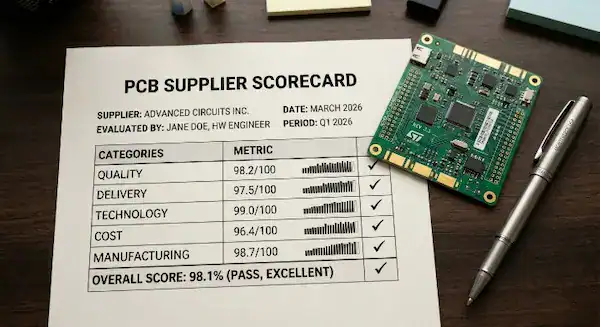
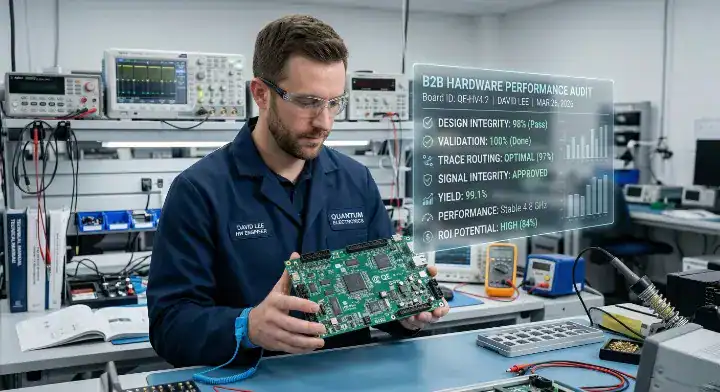
Knowing how to choose a PCB manufacturer means evaluating them using a structured 10-point scorecard covering quality systems, technical capabilities, communication speed, and testing protocols, aiming for a minimum score of 40 out of 50. This prevents emotional decisions and exposes hidden risks before you wire any money.
Here is exactly what you need to ask. Print this table and use it to score your next three quotes. Rate each category from 1 (terrible) to 5 (excellent).
| Evaluation Metric | The Exact Question to Ask | The 5-Point “Green Flag” Answer |
|---|---|---|
| 1. Certifications | “Can you provide your latest ISO 9001 audit report?” | Yes, actively certified and verified in the database. |
| 2. Manufacturing Limits | “Can you handle 3/3 mil trace/space and blind vias?” | Yes, up to 60-layer PCB fabrication capability in-house. |
| 3. Industry Experience | “Do you have medical or automotive case studies?” | Yes, with documented strict quality control protocols. |
| 4. Lead Time Capacity | “What is your on-time delivery rate for rush orders?” | >98% on-time rate with a 24-hour fastest turnaround option. |
| 5. Quote Transparency | “Are NRE and testing fees line-itemed?” | Yes, all setup and tooling fees are clearly separated. |
| 6. Communication | “Will I talk directly to a CAM engineer?” | Yes, direct engineering support is available. |
| 7. Testing Protocols | “Do you use 3D AOI and flying probe on 100% of boards?” | Yes, mandatory 3D AOI + X-Ray inspection on every BGA joint. |
| 8. DFM Support | “Is your DFM check free, and how long does it take?” | Free, comprehensive report delivered within 24 hours. |
| 9. Prototype Quality | “Can I do a 5-piece test run first?” | Yes, dedicated prototype lines available without volume pressure. |
| 10. After-Sales | “What is your RMA process for defective boards?” | Clear, documented refund or fast-rework policy. |
You need precise data to get accurate scores here. Before they can even score high on DFM or quoting, you have to know exactly what PCB assembly quote files do you actually need to send them. Sending incomplete packages just leads to inaccurate pricing. Getting a transparent quote within 24 hours requires a complete BOM, Gerbers, and pick-and-place files.
How much do certifications matter and what should you look for?
Certifications are non-negotiable baselines that prove a manufacturer follows documented quality controls, reducing your defect rate from an industry average of 5% down to under 0.5%. You must verify active ISO 9001:2015, UL flammability ratings, and strict adherence to IPC-A-600 Class 2 or 3 standards.
70% of new clients tell us they previously received boards that delaminated during assembly. Why? Their last vendor fabricated to loose internal guidelines rather than strict industry specifications. We execute a free DFM/DFA engineering review on every order and build strictly to standardized IPC guidelines. Catching these stack-up errors early saved our clients an average of $3,200 in scrapped boards last quarter while driving our 99.7% first-pass yield rate.
But here is what most guides won’t tell you… Anyone can paste a UL logo into their website footer. You have to ask for their specific certificate number and look it up on the issuing body’s official database. If your product needs to pass safety testing later, sourcing UL 94V-0 circuit boards from an unverified supplier will cause you to fail your own compliance checks instantly.
What are the immediate red flags when evaluating a PCB supplier?
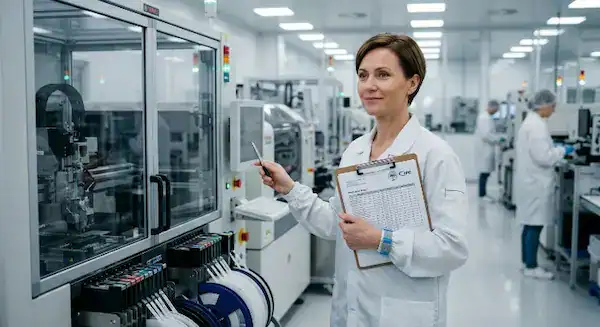
The five biggest red flags when evaluating a PCB supplier are missing certifications, bundled vague quotes, restricted engineer access, refusal to run small prototypes, and mathematically impossible lead times like promising an 8-layer HDI board in 3 days. Seeing even one of these signals means you should immediately walk away.
Let’s get straight to the warning signs. Brokers and low-tier factories use specific tactics to hide their limitations.
- No direct engineer communication: You only ever speak to a sales rep named “Kevin” who has to “check with the factory” for every technical question. This means you are dealing with a middleman, not the actual manufacturer.
- Refusing small batch prototypes: If a supplier demands a 1,000-piece minimum order quantity right away, they only want easy volume money and do not care about verifying your design.
- Unrealistic lead times: Fabrication chemistry takes time. Curing solder mask takes time. If someone promises a complex multi-layer board drastically faster than standard PCB fabrication lead time limits, they are skipping mandatory baking and testing steps.
| The Red Flag | What They Say | What It Actually Means |
|---|---|---|
| Vague Pricing | “Here is the total cost for 500 boards.” | They are hiding massive setup and testing fees. |
| Sales Only | “I will forward your question to our tech team.” | It will take 3 days to fix a simple trace width issue. |
| No Protos | “Our MOQ is 500 pieces.” | They will not risk setting up machines for a small test. |
How do you calculate the true cost of a PCB supplier?

The true cost of a PCB supplier is not the quoted unit price, but a specific formula: Bare Board Price + Rework Risk (10-20%) + Delay Cost ($X per day) + Communication Time Cost. A supplier quoting $2 per board often ends up costing $5 per board when factoring in three weeks of late delivery and multiple defective units.
So what does this actually mean for your budget? Let’s say Supplier A quotes $2,000 and Supplier B quotes $2,300. Supplier A uses cheap FR4 material and skips electrical testing. You receive the boards a week late, and 5% of them fail in the field. Your engineers spend 20 hours debugging the bad traces. That $300 “savings” just cost your company $4,000 in engineering time and lost customer trust.
To stop overpaying, you need to understand the baseline mechanics of PCB fabrication cost. Layer count, material type, and surface finish dictate the raw price. Then, factor in the PCB assembly cost, where component density and package types (like fine-pitch BGAs) shift the numbers. Upload your BOM for a free DFM check with a transparent vendor to see these exact line items separated out.
How do you test a new PCB manufacturer before committing to volume?
You test a new PCB manufacturer safely by running a golden rule strategy: place a 5-10 piece prototype order first, evaluating their DFM feedback speed under 24 hours, physical board quality, and packaging integrity. Only after this micro-batch passes your strict internal inspection should you scale up to a 100-500 piece run.
80% of hardware startups make the fatal mistake of sending a 5,000-unit mass production order to an untested factory just to save five cents a board. We implemented a strict policy offering free 2-4 layer FR4 prototypes for new customers under specific conditions. This eliminates upfront financial risk, letting our clients physically verify our capabilities before moving to volume.
Here is the exact testing sequence you should follow. – Step 1: The File Review Test. Submit your files with a minor, deliberate error. A good factory will catch it and flag it during their DFM process within 24 hours. If they just push it to production, drop them. Check our guide on DFM PCB design to see what they should be catching.
- Step 2: The Micro-Batch. Learn exactly how to order a PCB prototype properly. Ask for 5 to 10 pieces.
- Step 3: Physical Verification. When the boards arrive, check the silkscreen clarity. Check the solder mask registration. Look at the packaging—did they use proper vacuum sealing and desiccant packs?
China vs USA vs local: which type of manufacturer fits your needs?
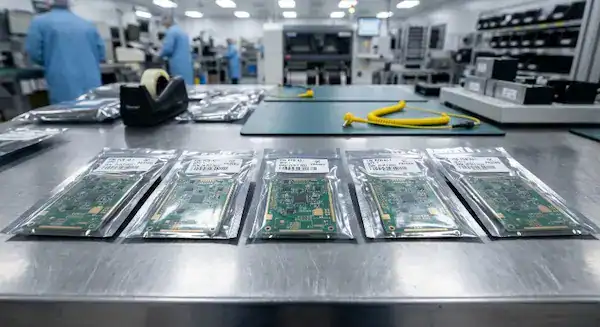
Choosing between a Chinese, US, or local PCB manufacturer depends strictly on your volume and timeline; local US shops excel at 24-hour ITAR-compliant prototypes, while Chinese factories reduce costs by 40-60% for mid-to-high volume production without sacrificing quality.
The real question is, what are your project constraints? If you are building military hardware that legally cannot leave the country, you must pay the premium for a local facility. But for commercial consumer electronics, industrial automation, or medical devices, scaling requires overseas efficiency.
| Manufacturer Type | Best Used For | Expected Cost Profile |
|---|---|---|
| Local / USA Shop | ITAR compliance, extreme 24-hour physical audits. | Highest premium (often 3x-5x the cost). |
| Overseas Factory | Mass production scaling, full turnkey service. | Highly cost-efficient, saving 40-60%. |
| Broker/Trading Co. | Finding obsolete parts across multiple random shops. | Moderate premium, high quality risk. |
A true full turnkey service handles component sourcing through to final testing. You want a partner who can take you from a 5-piece prototype all the way to mass production scaling without changing facilities. Read more about our facility capabilities to see how seamless this transition should be.
FAQ
Should I use the same manufacturer for fabrication and assembly? Yes, absolutely. Using a single turnkey manufacturer prevents finger-pointing between the bare board fab house and the assembly shop if a defect occurs. Having one vendor take full responsibility guarantees better quality control and faster turnaround times. Get a free quote for full turnkey assembly to simplify your supply chain.
Can I trust a supplier if they are just a broker and not a factory? No, you generally should avoid brokers for critical projects. Brokers add a 15-30% markup and restrict your access to the actual CAM engineers fabricating your boards, making technical problem-solving incredibly slow. Upload your BOM directly to an actual manufacturer instead.
What happens if my PCB manufacturer delays my order? It depends entirely on your contract terms. A reputable supplier will offer shipping upgrades or partial refunds for missed deadlines, but cheap vendors will simply ignore your emails while keeping your money. Get a reliable, guaranteed lead time estimate from our engineering team today.
Written by the QueenEMS Engineering Team. Ready to work with a factory that passes the 10-point scorecard? Contact us today to start your project.